The senior Israeli official rejected the premise directly. "There is no chance that we will allow Qatar and Turkey to oversee our operations in Gaza," the official said, according to Segal's reporting.
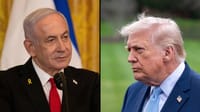
Israel's position on Turkish and Qatari involvement has remained constant since the Board of Peace's executive committee was announced in January. Prime Minister Benjamin Netanyahu stated at that time that Turkey and Qatar would have "no authority and no influence" in bodies overseeing Gaza's postwar management. Netanyahu instructed Foreign Minister Gideon Sa'ar to formally convey Israel's objections to the United States.
The current dispute centers on the International Verification Committee proposed in the Board of Peace's roadmap. According to the document, the committee would oversee Hamas disarmament, monitor Gaza developments and have authority to extend the implementation timeline if necessary. Mladenov indicated Saturday that Turkey and Qatar would participate in verification procedures.
Israeli diplomatic officials view Turkish and Qatari participation in oversight mechanisms as undermining Israeli sovereignty and as an indirect grant of authority to countries that have been hostile to Israel and have hosted Hamas leadership. Turkey's Foreign Minister Hakan Fidan is appointed to the Board of Peace's Executive Council, as is Qatari diplomat Ali al-Thawadi. Both appointments were made without prior Israeli coordination, according to U.S. officials who told Channel 12 in January that the move was deliberate.
Netanyahu's skepticism of the entire roadmap crystallized Sunday in his formal rejection of the 15-point plan, delivered in a cabinet statement hours after Mladenov's Channel 12 interview aired. The prime minister stated that Israel would not withdraw from Gaza until Hamas achieved complete disarmament and that any Israeli military operations would continue as necessary to respond to threats. His rejection contradicted security establishment assessments that had supported earlier phases of the withdrawal-and-disarmament sequencing.
Israeli security officials have expressed concern that verification mechanisms involving Turkey and Qatar could constrain Israeli operational freedom and create external constraints on IDF activity. The concern reflects deeper disagreement over whether external verification should precede, accompany or follow Israeli military operations in Gaza.
Mladenov acknowledged the risks inherent in the process but argued that verification rather than trust was the foundation. "I'm not building any of this on the basis of trust. And none of us are," he told Channel 12. "We're building it on verification." He emphasized that the entire process would halt if any party failed to meet its commitments and that the ultimate objective remained preventing October 7-scale attacks from recurring.
Israel has also opposed the deployment of foreign troops in Gaza in any stabilization force, though Mladenov indicated Saturday that an International Stabilization Force would eventually replace Israeli troops in areas from which the IDF withdraws.