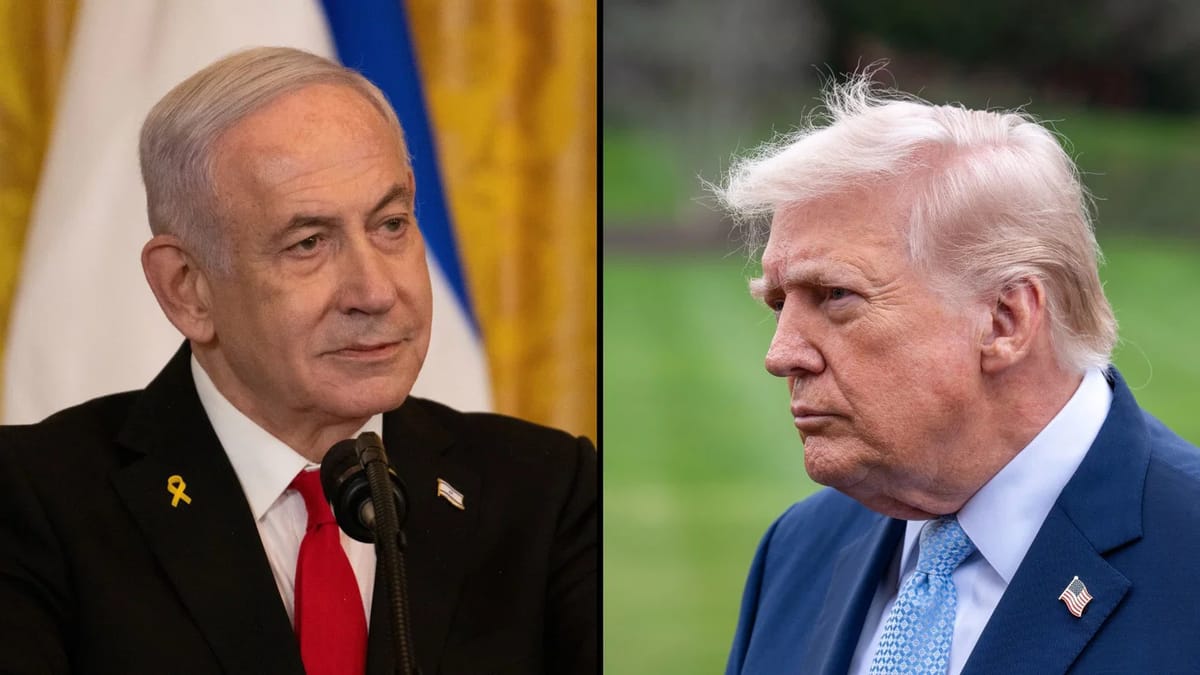
Prime Minister Benjamin Netanyahu announced in a cabinet meeting Sunday that Israel formally rejects the 15-point Gaza Peace Council plan backed by President Donald Trump, insisting instead on complete Hamas weapons dismantling as a precondition for Israeli military withdrawal.
"There will be no withdrawal from Gaza without real dismantling of Hamas from its weapons," Netanyahu declared unambiguously. He elaborated on what "dismantling" means: "When I say dismantling Hamas from its weapons, that means heavy weapons, less heavy weapons, all weapons. And we're talking about real dismantling, not fake dismantling."
Netanyahu emphasized that Israel is engaged in direct discussions with the Trump administration on the Gaza issue. "They have ideas, some of which are acceptable to us and some are not acceptable to us, and we know how to stand against these things. We proved it before and we're proving it today," he said. He added that the IDF will continue military operations: "In addition, the IDF will continue to thwart threats against our forces and against our citizens."
The Trump-Backed Peace Plan: What Israel Rejects
Last week, President Trump announced that the "Gaza Peace Council" had reached an agreement on disarming Hamas and all armed organizations in Gaza. The plan establishes a sequence: fighting ceases, then Hamas gradually dismantles its weapons—including heavy weapons, tunnels, weapons caches, and production facilities. Collected weapons would be stored under Palestinian committee supervision and international monitoring.
The plan envisions parallel establishment of Palestinian civilian governance through a technocratic Palestinian committee to manage public services, alongside an international stabilization force and a new Palestinian police. Israeli forces would then gradually withdraw according to an agreed timeline.
The Critical Dispute: Order of Operations
A fundamental disagreement divides the parties on implementation sequence. Hamas demands that Israeli withdrawal from Gaza must occur before weapons dismantling begins. Israel—now firmly articulated by Netanyahu—insists that complete Hamas weapons dismantling is a condition for any Israeli withdrawal.
This sequencing dispute represents the core impasse. Netanyahu's rejection of the Trump plan indicates Israel will not accept frameworks that condition withdrawal on promises of future disarmament. The Israeli position demands verification of weapons destruction before military pullout.
Strategic Implications for Israel-U.S. Relations
Netanyahu's direct rejection of the Trump proposal puts Israel at odds with a core American initiative at a moment of heightened U.S.-Israel strategic coordination. Trump has been aligned with Israel throughout the regional conflict cycle, particularly during the five-month U.S.-Iran war. Netanyahu's statement suggests Israel is willing to publicly diverge from Washington on sequencing and preconditions—a notable diplomatic stance.
The disagreement centers on trust and verification. Israel's position reflects long-standing security doctrine: do not trade territory for promises of future compliance. Hamas's position reflects leverage calculation: withdrawal is their only practical guarantee of security once disarmed.
Political Context
The cabinet meeting and Netanyahu's announcement come amid ongoing tensions between government hawks, who oppose any framework permitting Hamas political survival or gradual withdrawal, and Trump administration officials hoping to establish a regional off-ramp after months of intensive U.S.-Iran conflict.
Netanyahu's statement clarifies that the Israeli government will not ratify frameworks drafted without direct Israeli input on fundamental security preconditions, regardless of U.S. sponsorship.