Get our mobile app
Download on the App StoreGet it on Google Play

The end of secrets

AI cracks Napoleon's secret code

Thousands of symbols, dozens invented for the cipher, and a key lost for two centuries, until an Israeli researcher used AI to decode what Napoleon wanted his general to know on the eve of war with Austria

Israeli AI Cracks Napoleon's 217-Year-Old Secret Code in Six hours

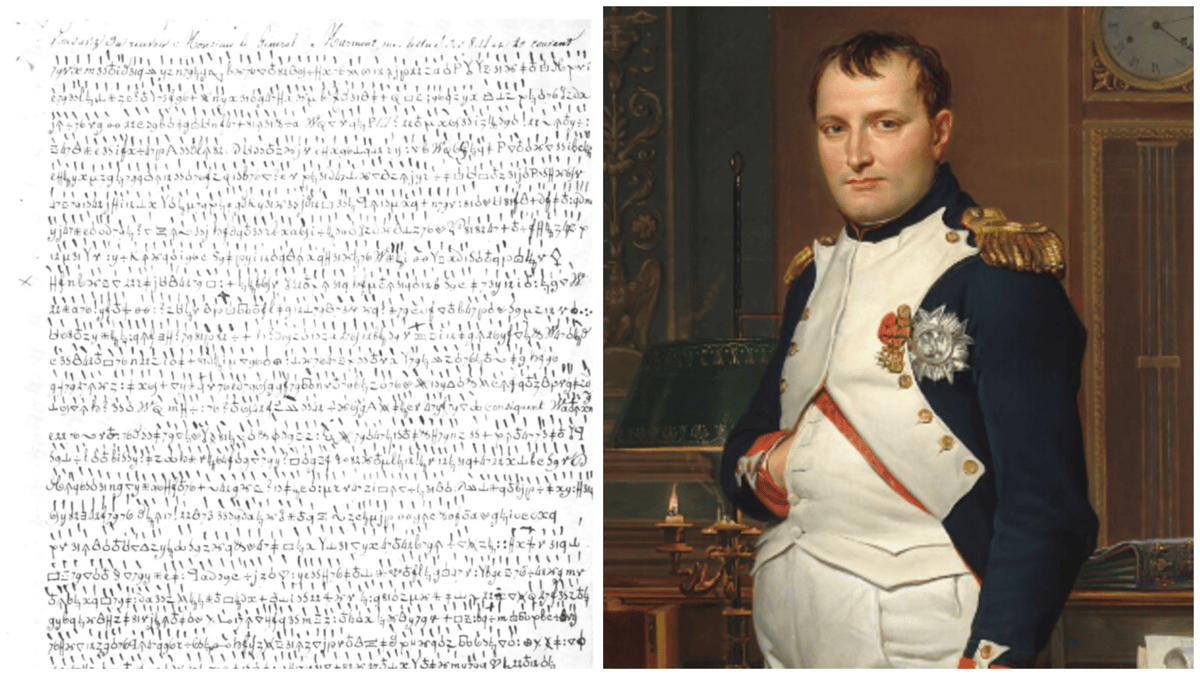
Two hundred and seventeen years ago, a secret military message was sent in Napoleon Bonaparte's name to one of his senior generals. It was written in a complex cipher that included numbers, letters and symbols invented specifically for the encryption. The cipher key was lost over the years, and the message remained nearly impenetrable to researchers for more than two centuries.

Now, an artificial intelligence researcher from Israeli cybersecurity firm SentinelOne has succeeded in decoding the message using an AI system, after 217 years in which its contents were not fully known.

According to published reports, the entire operation took approximately six hours of running the model.

Behind the breakthrough stands Carter Church, an AI engineer at SentinelOne. According to him, he began the work with only a single scanned image of the document. The image itself was not particularly high quality, but the system managed to identify the symbols, transcribe them, compare them to previous research on the cipher, and attempt to reconstruct the missing key.
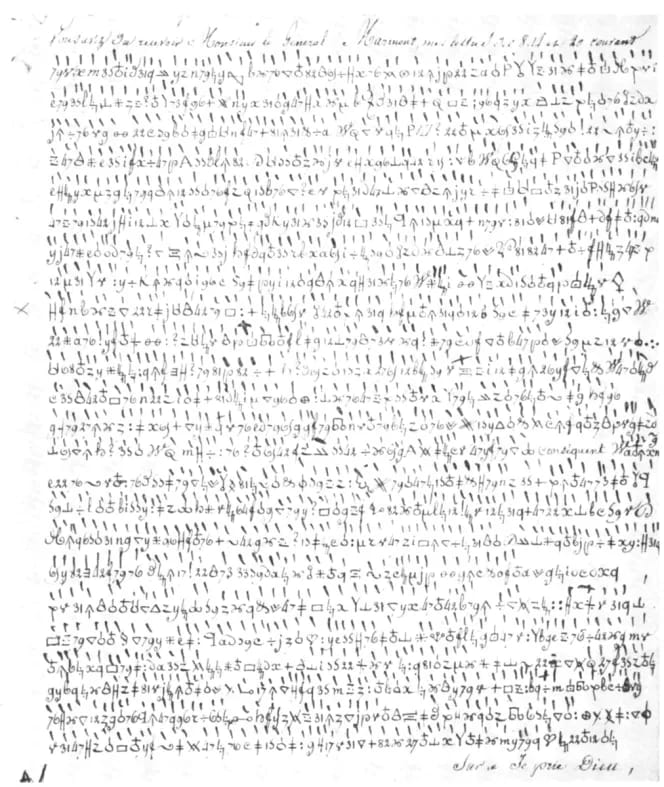

The cipher cracked
The cipher cracked (Photo: Social media)

After decoding, it was revealed to be a detailed military message:

"To General Marmont, from the headquarters of the King, end of March 1809. You have certainly received my letters of the 8th, 14th and 20th of this month. The Duke of Danzig is at the head of 40,000 Bavarians and holds Munich and Passau. Prince Poniatowski is at the head of 30,000 Poles on the Vistula and threatens Krakow.

The Prince of Pontecorvo is at the head of the Saxon army opposite Dresden. The Duke of Auerstädt is in Bayreuth with 80,000 French. The Duke of Rivoli is with 60,000 men at Ulm and Donauwörth. General Oudinot, with 40,000 men, is at Augsburg and along the Lech River. The Russians are marching against Austria, and the Army of Friuli numbers 80,000 men. Austria is about to be attacked from all sides at once. When you receive the order to march, do not allow yourself to be threatened by a few soldiers or by a gathering of rabble."

The artificial intelligence did not settle for identifying the symbols. It combined several operations that normally require the work of multiple experts: reading the document, transcribing the cipher, analyzing patterns, attempting to reconstruct the encryption mechanism, and checking the result against additional historical information.

Live Science described the document as a kind of "Rosetta Stone" for decoding historical ciphers, due to the ability to use knowledge already in researchers' hands to gradually arrive at a reading of the full text.

The result brought back to life an event that occurred on the eve of one of Napoleon's important campaigns. General Marmont was at that time in the Dalmatia region, in present-day Croatian territory, when French forces were spread over great distances from one another. The encrypted message was meant to provide him with a situation picture and instructions ahead of the approaching campaign.

Subsequently, Marmont succeeded in carrying out Napoleon's instructions, leaving the area where he was stationed and joining the campaign against Austria. Months later, the campaign ended in a French victory at the Battle of Wagram, and Marmont continued to climb the military hierarchy of the French Empire.

Ready for more?

Join our newsletter to receive updates on new articles and exclusive content.

We respect your privacy and will never share your information.

Enjoyed this article?

Yes
No
Follow Us:

Unmissable content


Loading comments...

Also of Interest