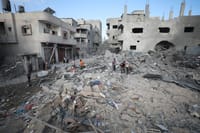
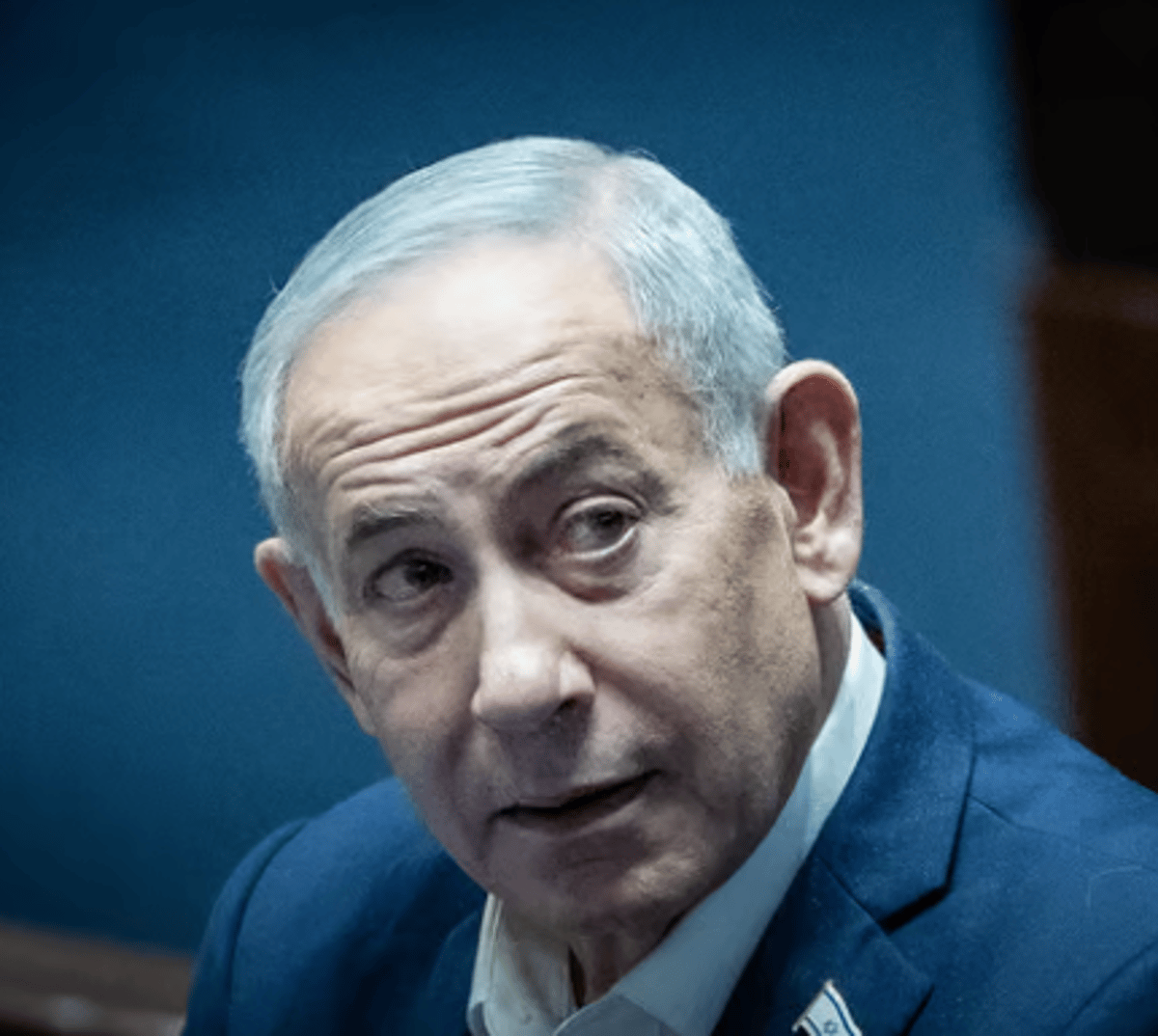
Benjamin Netanyahu’s government insists that Israel will not withdraw from Gaza before Hamas is disarmed. But the emerging international roadmap raises a more fundamental question: What does “disarmament” actually mean, and who will enforce it after Israel leaves?
Under the published plan, Hamas is formally required to surrender civilian government and security authority to a new Palestinian technocratic body, the National Committee for the Administration of Gaza. Heavy weapons, tunnels and military facilities are supposed to be decommissioned gradually. Yet the weapons would not be removed from Gaza or handed to Israel. They would be placed under the control of the new Palestinian administration.
This is not the destruction of Hamas’s military infrastructure as Israelis were promised. It is an internationally supervised storage arrangement managed by another Palestinian body.
The proposed International Stabilization Force is not authorized to police Palestinian society or hunt Hamas members. Its role is to separate Israeli forces from areas controlled by the Palestinian administration, monitor the ceasefire, train Palestinian police and support ''humanitarian'' operations.
In other words, the international force may eventually become less a mechanism for defeating Hamas than a barrier limiting Israel’s freedom to act inside Gaza.
The cabinet has already approved the possible entry of 200 soldiers from “friendly countries,” initially around a planned ''humanitarian'' zone near Rafah. Their deployment would still require the approval of Netanyahu, Defense Minister Israel Katz and Foreign Minister Gideon Sa’ar.
Finance Minister Bezalel Smotrich and Settlements Minister Orit Strock have now demanded that Netanyahu reverse the decision. They claim the cabinet approved it based on information that did not accurately reflect the published roadmap.
Their objections are substantial. The ministers argue that the plan allows weapons to remain inside Gaza, begins a phased Israeli withdrawal alongside the disarmament process, grants governing authority to a Palestinian body operating under Palestinian law and creates an international verification committee that could restrict Israeli military action.
Following the controversy, the Board of Peace clarified that Israel would not have to withdraw beyond the Yellow Line before Hamas’s weapons, including light arms, heavy weapons and tunnels, were fully decommissioned. Israel has similarly stated that it will not withdraw from its current positions without “genuine disarmament.”
That clarification matters. But it does not solve the underlying problem.
Israel is once again accepting the principle that its military presence in Gaza is temporary, while Palestinian control of Gaza is treated as permanent and unquestionable.
The legitimate question is not whether Gaza’s civilian population should be forcibly removed. The question is why every international proposal begins with the assumption that Jews must eventually leave Gaza, while the political society from which Hamas emerged is entitled to remain, rebuild and receive another opportunity to govern .
Gaza did not become a terrorist base only in 2007. From the fedayeen attacks of the early Israeli period to the PLO, Islamic Jihad and Hamas, the territory has repeatedly been used to attack Israel. Israel withdrew its civilians and military forces in 2005. Rather than producing peace, the disengagement was followed by Hamas rule, rocket warfare, tunnels and ultimately October 7.
Yet the lesson being drawn is apparently that Israel must withdraw again—this time under international guarantees.
Israel is also increasingly being pressured over when, where and against whom it may operate. The Board of Peace’s representative reportedly urged Netanyahu to halt Israeli strikes while negotiations over the disarmament process continued.
Meanwhile, reconstruction is supposed to proceed under international and Palestinian supervision. If Hamas retains personnel, social networks, money, local influence and access to weapons stored inside Gaza, the distinction between “disarmed Hamas” and a temporarily dormant Hamas could quickly become meaningless.
Hamas does not need to parade openly through Gaza to survive. It needs time, money, recruits and an Israeli withdrawal.
A genuine right-wing policy would begin with the opposite assumption: Israel remains responsible for Gaza’s security and does not surrender territory until a new reality has been irreversibly established. Israeli civilian communities would provide permanence, while the IDF would retain freedom of action rather than requesting international permission to strike emerging threats.
Settlement is not merely a religious slogan. In the Israeli experience, civilian presence creates political permanence. Where Jewish communities disappear, Israeli military control usually becomes temporary as well.
Netanyahu appears to have accepted the old formula: international forces, Palestinian administrators, foreign guarantees and an Israeli withdrawal postponed until some future condition is supposedly fulfilled.
Perhaps he intends to delay implementation. Perhaps he believes Hamas will violate the agreement before Israel is required to leave. But postponing a retreat is not the same as rejecting it.
This is the central political contradiction facing Israel’s right.
If the most right-wing government in Israeli history ultimately implements territorial withdrawal, Palestinian reconstruction and international restrictions on the IDF, what policy remains for the Israeli left to offer?
Netanyahu has not yet withdrawn from the Yellow Line. But he may already have accepted the principle that Israel must eventually abandon Gaza again.
The only remaining dispute is over how long he can delay admitting it.