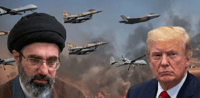
A New York Times report published this week detailed a widening rift within Iran's ruling establishment, describing a power struggle between officials pushing to preserve the ceasefire with Washington and hardliners opposed to any agreement, a divide that spilled into open hostility during this week's funeral processions for slain Supreme Leader Ali Khamenei.
According to the report, the more pragmatic camp includes parliament speaker and lead negotiator Mohammad Bagher Ghalibaf, President Masoud Pezeshkian, Supreme National Security Council chief Mohammad Bagher Zolghadr, and unnamed senior IRGC generals, a bloc that has so far prevailed in advancing the memorandum of understanding and direct talks with the United States. The hardline camp has responded with open attacks on the negotiating team, including an episode in which a live television interview with Ghalibaf was abruptly cut off while he discussed details of the agreement, prompting public calls in Iran to remove the head of state broadcasting, an appointee of the late Khamenei aligned with the hardline camp.
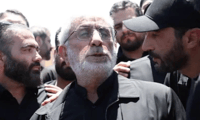
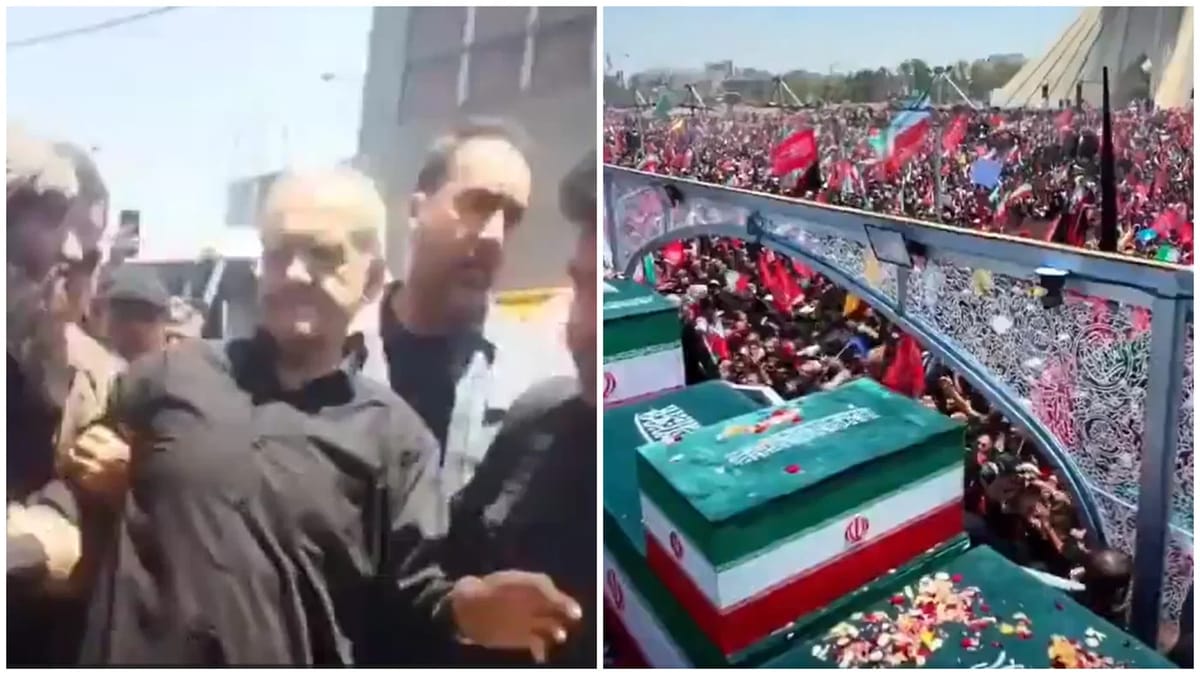
That internal tension turned physical during this week's funeral ceremonies. Videos circulating on social media and reported by Iran International showed President Pezeshkian being hurried through crowds by his security detail as mourners shouted "death to the compromiser," while Foreign Minister Abbas Araghchi, identified with the more moderate camp, received an even more hostile reception, with chants of "death to the traitor" and "shameless" directed at him. The president's son and adviser, Yousef Pezeshkian, condemned the incident, warning that turning anger against Iran's own officials undermines domestic unity and hands an opening to the country's enemies. The episode drew criticism from reformists as well as conservatives aligned with Ghalibaf's approach.
Separately, the Hebrew-language outlet Kikar HaShabbat has reported that Araghchi was struck by a thrown stone during the ceremonies in Iraq and was forced to flee down an alleyway, citing footage it said showed a heavy object, apparently a large stone, striking a vehicle near him as security personnel rushed to pull him from the scene. This specific claim has not yet been independently verified by other outlets and is being reported here solely on Kikar HaShabbat's account.
The Times report also disclosed new details about how the ceasefire came together in the first place. According to four Iranian officials cited by the paper, Pezeshkian personally warned Khamenei before his death that Iran's economy was in severe distress under the American naval blockade and threatened to resign if the agreement were rejected, while central bank governor Abdolnaser Hemati separately warned that critical food and medical supplies could run out by the end of August without an end to the blockade. Those warnings were described as decisive in Khamenei's eventual decision to allow the agreement to proceed, even as he stated in writing that he opposed the deal in principle.
The Times report noted that the succession leadership, now under Khamenei's son and successor Mojtaba, will face its clearest test once the funeral period ends, when it must make key appointments to head the judiciary, state broadcasting, and the Basij militia, decisions Iranian officials told the paper will signal which faction holds greater sway going forward.