Get our mobile app
Download on the App StoreGet it on Google Play

Still no decisive majority

Eisenkot leads Netanyahu in new poll

Eisenkot's party overtakes Likud with 20 seats to 18 • 47% distrust government on security decisions ahead of election • Full breakdown of blocs and mandates

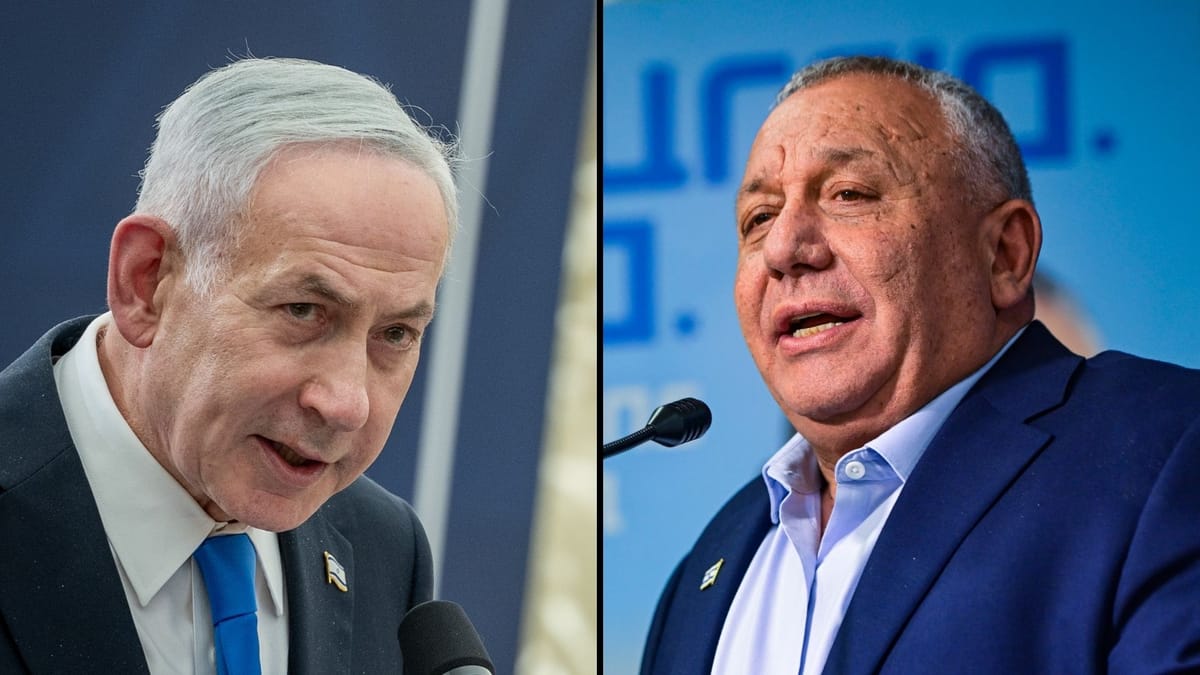
Right: Gadi Eisenkot; left: Benjamin Netanyahu

A Channel 13 poll published Monday night shows a complex picture in Israel's political arena, with just one week separating the public from election day.

According to the survey, Gadi Eisenkot's "Yashar!" party continues to lead with 20 mandates, while Benjamin Netanyahu's Likud receives only 18 mandates.

In the bloc breakdown, the "change bloc" holds a narrow advantage with 51 mandates, against 50 mandates for the "Netanyahu bloc." The picture reflects an exceptionally tight election race, with neither bloc reaching a clear decision.

Full mandate breakdown

The poll gives Eisenkot's party 20 mandates, Likud 18 mandates, and the Bennett-Lapid union 14 mandates. The Democrats and the Joint List each receive 9 mandates, and Yisrael Beiteinu 8 mandates.

Among the chareidi parties, Shas and United Torah Judaism each receive 7 mandates. Otzma Yehudit and Religious Zionism also get 7 mandates each. Ra'am receives 6 mandates, while the Amcha Yisrael and Hendel-Zelicha parties each get 4 mandates.

On the question of suitability for prime minister, Gadi Eisenkot receives support from 46%, while Prime Minister Benjamin Netanyahu gets 38%.

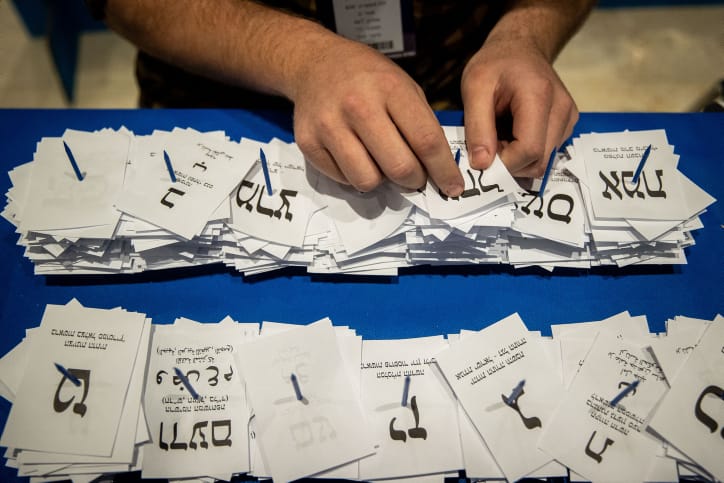
Vote counting. Illustration
Vote counting. Illustration (Photo: Yonatan Sindel/Flash90)

The turnout battle

The poll points to a slight advantage in voting motivation among opposition supporters: 82% of this bloc's voters declare they will definitely vote, compared to 78% of coalition voters. Among coalition voters, 18% are "fairly certain" they will vote and 1% "don't know," while in the opposition 13% are "fairly certain," 2% "not so certain," and 3% declare there is "a high chance they won't vote."

The share of undecided voters who do not lean toward any party stands at 3.9%, of whom 2.4% declare they will definitely vote but have not yet decided for whom.

A dramatic finding in the poll relates to public trust in security decisions ahead of the election. In a scenario of an Israeli strike on Iran before going to the polls, 47% of respondents answered that they do not trust the government and are certain it is a political move. In contrast, 33% trust the government and believe it is a necessary move, and 20% answered "depends on circumstances" or "don't know."

Regarding the preferred government structure after the election, the public is divided: 33% prefer a broad unity government, 31% want a full right-wing government, and 23% support a full opposition government. 6% answered "something else" and 7% have not yet formed an opinion.

In a scenario where neither bloc succeeds in forming a government and deciding the election, more than half the public (52%) prefers going to another election, while 32% would prefer a unity government with rotation between Netanyahu and Eisenkot. An additional 16% refused or did not know how to answer this question.


Ready for more?

Join our newsletter to receive updates on new articles and exclusive content.

We respect your privacy and will never share your information.

Enjoyed this article?

Yes
No
Follow Us:

Unmissable content


Loading comments...

Also of Interest