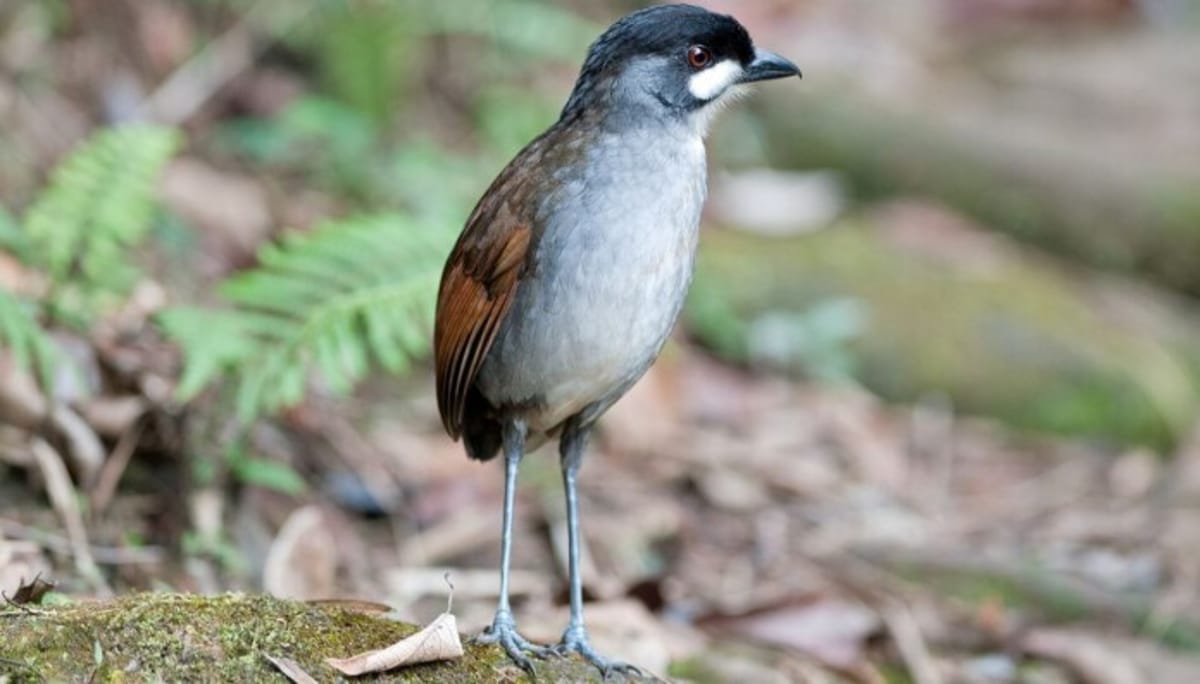
In the late 1990s, a team of ornithologists ventured into a remote forest in Ecuador's Andes mountains. During their expedition, they heard an unusual call, and when they tracked it down, they spotted a relatively large bird with gray, black, and brown plumage and long legs. None of the researchers recognized it. The bird turned out to be a species entirely unknown to science.
Local residents called the bird "Jocotoco," and the species later received the scientific name Grallaria ridgelyi, honoring ornithologist Robert Ridgely, who organized the 1997 expedition that discovered it. The bird was found on the eastern slopes of the Andes, near the Ecuador-Peru border.
But the discovery didn't end with describing a new species. Researchers quickly realized that the bird's limited habitat was at risk of disappearing, and Ridgely began raising funds to purchase the land where it had been found. Those efforts led to the establishment of the Tapichalaca Reserve, which became the first protected area of the Jocotoco Foundation, created to safeguard unique habitats in the country.
Since then, the initiative has expanded dramatically. According to recently published data, nearly 30 years later, the foundation now manages a network of 19 private nature reserves spanning approximately 123,000 acres, alongside an additional 200,000 acres of community-owned land managed in partnership for conservation, forest restoration, and ecotourism.
The reserve network has documented around 1,350 bird species, a figure representing, according to the foundation, approximately 12.5% of all bird species worldwide. Alongside rare birds, the protected areas provide habitat for the Andean condor, the Andean bear, and endangered species including the El Oro parakeet and the Galápagos petrel.
A chance sighting of a bird unknown to science has thus transformed into a large-scale conservation project. More than a quarter-century after the Jocotoco's discovery, the relatively small species continues to serve as a symbol of how a single scientific finding can drive fundraising, land acquisition, and the preservation of entire ecosystems.