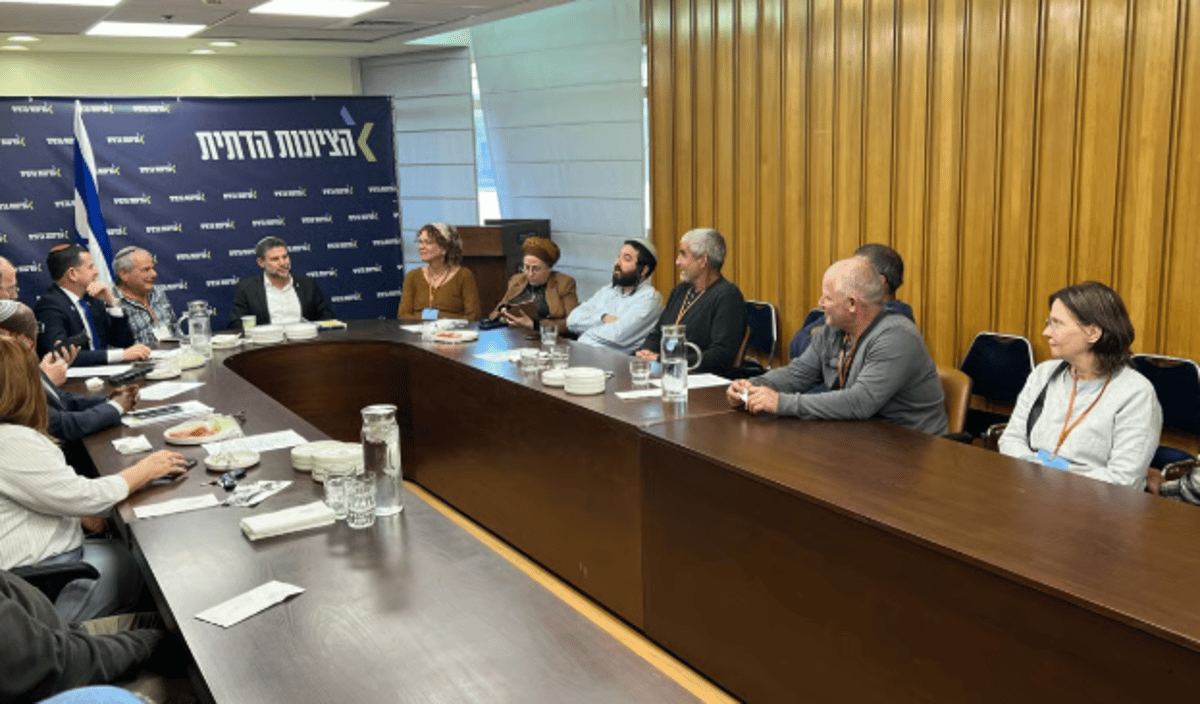
The Religious Zionism party holds its primary elections today to determine its candidate list for the 26th Knesset. Alongside complex logistical planning and voting restricted to just two locations, the event is shadowed by internal tensions: anger within the Jewish Home faction, fears of an overly Ashkenazi slate, and harsh allegations of centralizing power directed at party chairman Bezalel Smotrich.
Where and When Are They Voting?
Physical voting is taking place at only two polling stations.
Morning voting was held at party headquarters near Shoham between 8:00 AM and 11:00 AM (Israel Time) for central committee members unable to attend the main evening event. Evening voting is set for 4:30 PM to 7:30 PM (Israel Time) at the Ramada Hotel in Jerusalem.
After polls close, a full central committee meeting will convene at the hotel. At 8:00 PM (Israel Time), party chairman and Finance Minister Bezalel Smotrich, alongside Director-General Yehuda Vald, is expected to officially announce the results.
In previous elections, roughly 20,000 registered party members voted for a relatively diverse list. This time, only about 160 central committee members are selecting five candidates, with just three likely to win realistic Knesset seats. The party currently projects around five seats in polls, with Smotrich holding the top slot and Zvika Mor secured via a reserved spot.
The Candidates
Ten candidates are competing for a spot on the party slate today:
- Eitan Tam – Lawyer and Deputy Mayor of Rosh HaAyin
- Orit Strock – Cabinet Minister
- Michal Woldiger – Member of Knesset
- Natan Zauberman – CEO of the "Tikvah" initiative for French immigration, entrepreneur, and startup manager
- Ohad Tal – Member of Knesset
- Omer Rachamim – CEO of the Yesha Council
- Zvi Sukkot – Member of Knesset
- Tzvika Visengrad – Lawyer and Deputy Mayor of Petah Tikva
- Shmuel Sasson – Rabbi and head of the 'Hadar' community nucleus in Haifa
- Simcha Rothman – Member of Knesset
The Social Voice: "Religious Zionism Means Responsibility"
One of the prominent figures on the slate, MK Michal Woldiger, addressed central committee members to emphasize her social vision:
"For me, Religious Zionism isn't just about wearing a knitted skullcap, it means responsibility, building bridges, and loving people. Social action, mental health care, and supporting shell-shocked veterans, the wounded, and reservist families aren't a 'niche' issue, they are the beating heart of our faith. I entered politics to be a voice for the unheard, and that social melody must continue to echo in our home."
Anger in Jewish Home: "Built on Falsehoods"
Despite the planned event at the Ramada, the entire process is marred by severe accusations and internal political storms.
Under the original plan, about 80 central committee members from the Jewish Home party were supposed to join the voting body after Smotrich signed an agreement to merge them into the Religious Zionism central committee. However, the merger was never implemented, stripping them of their ability to influence the outcome.
Sources within Jewish Home voiced sharp criticism today: "Anything built on falsehoods is bound to collapse. There is nothing democratic about this primary process—Bezalel Smotrich calls all the shots".
Departures of Sofer and Salomon: The "Lieberman-ization" of the Party?
Today's vote takes place without two of the party's most prominent voices: Minister Ofir Sofer and MK Moshe Salomon, both of whom announced their departure. Sources close to them indicate that both realized Smotrich tolerates neither independent thinking nor open debate, particularly on sensitive topics like drafting ultra-Orthodox men into the IDF.
In an open primary involving all registered party members, Sofer and Salomon, who represent large segments of the Religious Zionist community, likely would have placed high on the slate. Moving the decision to a tiny central committee is widely viewed as a move by Smotrich to consolidate absolute control while disenfranchising rank-and-file voters.
"This party has become like Avigdor Lieberman's Yisrael Beytenu," some party members claim. "Knesset members have independent opinions only when choosing the color of their car. On everything else, they are forced to toe the line. By pushing Sofer and Salomon out, Smotrich sent a clear message to all current and future MKs: express an independent view, and you're out."
Reserved Spots and Diversity Efforts
Dr. Zvika Mor will be placed in the top five via a reserved slot chosen by the chairman, with additional reserved spots under consideration. Against this backdrop, critics argue that the emerging list appears overly Ashkenazi and disconnected from broader Israeli society. Reports even emerged that Smotrich approached commentator Dr. Avishai Ben-Haim to join the slate, though Ben-Haim denied the claim. Analysts note that such recruiting efforts face uphill battles, as independent public figures hesitate to join a party where the leader stifles criticism and rules with an iron fist.
Economic Criticism: Rising Housing Prices in Judea and Samaria
Beyond structural complaints, harsh criticism is directed at the party's socioeconomic track record. While Religious Zionism points to achievements in establishing new settlements in Judea and Samaria, local residents and activists argue that Smotrich has failed to confront private real estate developers.
Today, housing prices in Judea and Samaria have skyrocketed to extreme levels, sometimes surpassing central Israeli cities like Petah Tikva. Critics express frustration that developers reportedly enjoy billions of shekels in infrastructure subsidies and lobbying benefits, turning huge profits on the backs of residents while the Finance Minister fails to take firm action to lower costs.
Official voting results will be revealed tonight at 8:00 PM (Israel Time), determining the party's face for the upcoming political campaign