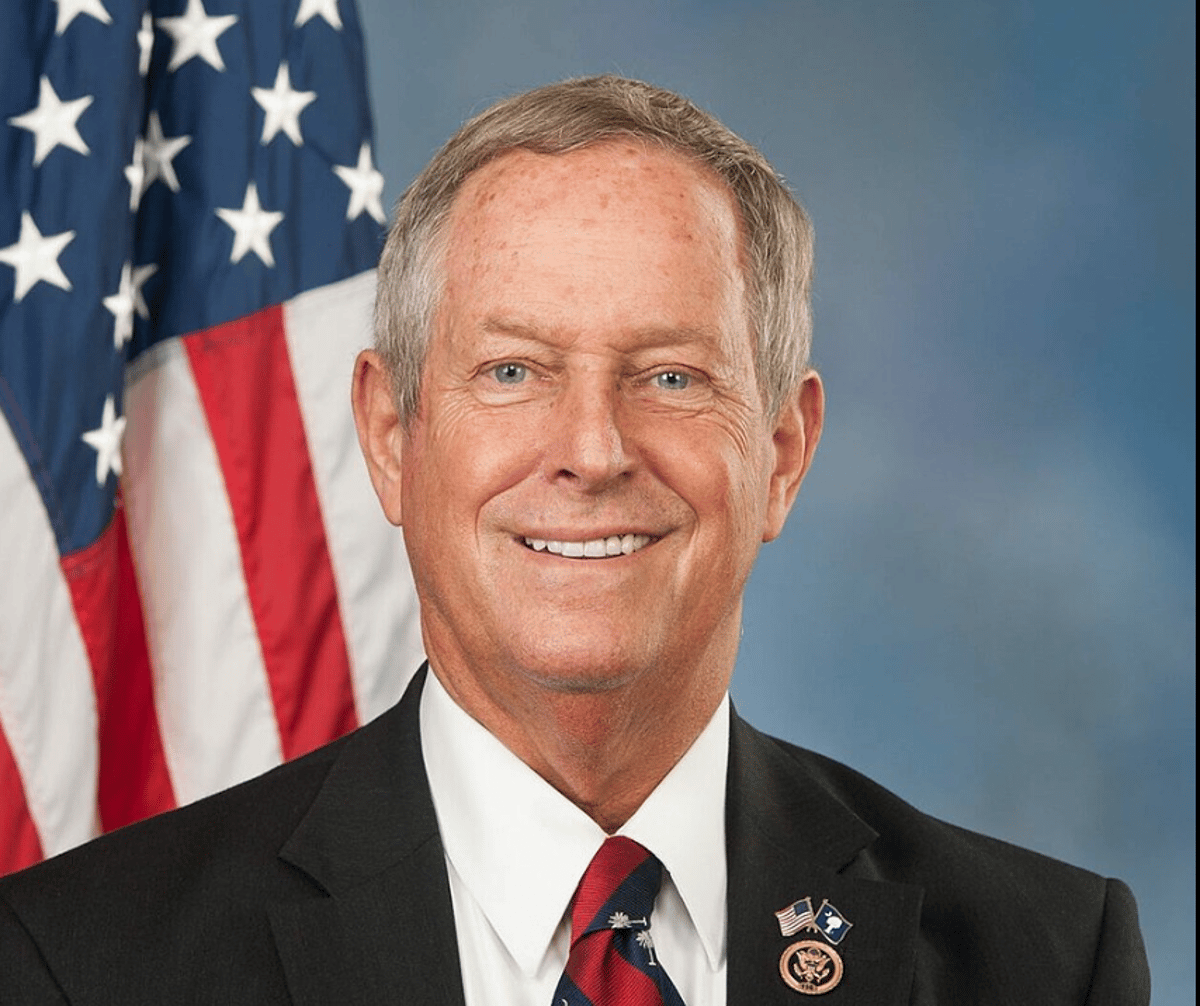
In the wake of the sudden passing of longtime U.S. Senator Lindsey Graham (R-SC), political attention has shifted rapidly to U.S. Representative Joe Wilson (R-SC-2) as a primary contender to fill the vacant seat.
Wilson, a senior fixture in South Carolina Republican politics who has served in the House since 2001, is widely viewed as a leading candidate for Governor Henry McMaster's interim Senate appointment. Observers also expect him to launch a bid for the full term in the upcoming special primary, positioning him to carry the mantle of South Carolina's heavyweight foreign policy presence on Capitol Hill.
However, as Wilson faces the national spotlight, analysts are highlighting the unique, multi-layered foreign policy worldview he would bring to the Senate, most notably a distinct Middle East strategy that blends ironclad pro-Israel advocacy with a pragmatic, post-Assad stabilization push in Syria.
An Unshakable Pro-Israel Record
For decades, Wilson has established himself as one of the most vocally pro-Israel lawmakers in Congress. His current legislative portfolio underscores this focus:
- Key Committee Leadership: Wilson serves as the Chairman of the House Foreign Affairs Subcommittee on the Middle East, a pivotal post for shaping U.S. regional strategy and oversight.
- Caucus Leadership: He is a co-founder of the Congressional Israel Allies Caucus, working directly to fortify ties between lawmakers and Israeli leadership.
- Legislative Action: He has consistently championed robust U.S. military aid packages to Israel, vocally opposed anti-Israel resolutions at the United Nations, and maintained a hardline stance against Iran and its regional proxies, including Hamas and Hezbollah.
The Post-Assad Strategy: Embracing a New Syria
While Wilson’s pro-Israel credentials are traditional, his recent spearheading of a diplomatic pivot toward Damascus sets him apart. Following the collapse of the Bashar al-Assad regime, Wilson has emerged as a chief architect behind efforts to fundamentally reset U.S.-Syria relations.
Working in a bipartisan coalition alongside legislators like Senator Jeanne Shaheen (D-NH), Wilson recently led a congressional delegation to Syria. The trip included high-level meetings with transitional President Ahmed al-Sharaa to evaluate the country's rapid political evolution.
Wilson is actively pushing a legislative agenda to reward the transitional government and stabilize the country, advocating for:
- The repeal of the heavy sanctions under the Caesar Act.
- The removal of Syria from the U.S. State Sponsors of Terrorism list.
- Immediate economic relief to facilitate reconstruction and foster counterterrorism cooperation.
Defending the swift policy shift, Wilson recently aligned with the Trump administration’s stance, summarizing his pragmatic view by stating: "We don’t sanction friends."
Contradiction or Strategy?
To some observers, Wilson’s eagerness to embrace a post-Assad administration led by elements tied to Hay'at Tahrir al-Sham (HTS), a group with historical ties to Al-Qaeda, raises skepticism among traditional pro-Israel circles wary of a new Islamist power center on Israel's northern border.
However, Wilson and his allies view the strategy not as a contradiction, but as geopolitical realism. In Wilson's view, a stabilized, economically viable Syria backed by Turkey and the West serves as the ultimate buffer to permanently eliminate Iranian influence and clear out Hezbollah infrastructure from the Levant. By rebuilding Syria's economy, the U.S. can dry up the corridor Iran long used to threaten Israel.
The Path Forward
With Governor McMaster weighing a temporary appointment and the state preparing for a compressed special primary cycle to replace Graham on the November ballot, Wilson's seasoned foreign policy platform will likely take center stage. Whether South Carolina voters and Washington colleagues fully embrace his blueprint for a rewritten Middle East map remains the defining question of his impending Senate push.