Get our mobile app
Download on the App StoreGet it on Google Play

The Battle Above

Space Becomes New Military Battleground

Satellites now maneuver, attack, and attempt to capture rival spacecraft as major powers wage a shadow war above Earth's atmosphere, with potentially catastrophic consequences for civilian life

Space wars

Imagine receiving an alert on your mobile phone warning of an incoming missile, similar to alerts that have become routine during conflicts in the Middle East. But minutes later, you discover the missile isn't launched from any country on Earth. It's coming from space.

The prospect of nations positioning weapons in orbital facilities beyond the atmosphere is deeply alarming. It would mean no place on Earth remains safe, since a launch point in space provides access to any location on the globe, unrestricted by distance or territorial boundaries.

This scenario is no longer science fiction. It's quietly unfolding right now, far from public awareness.

The orbital zone surrounding Earth, which for decades served as a peaceful platform for research and civilian communications, is undergoing its most dramatic transformation since the dawn of the space age.

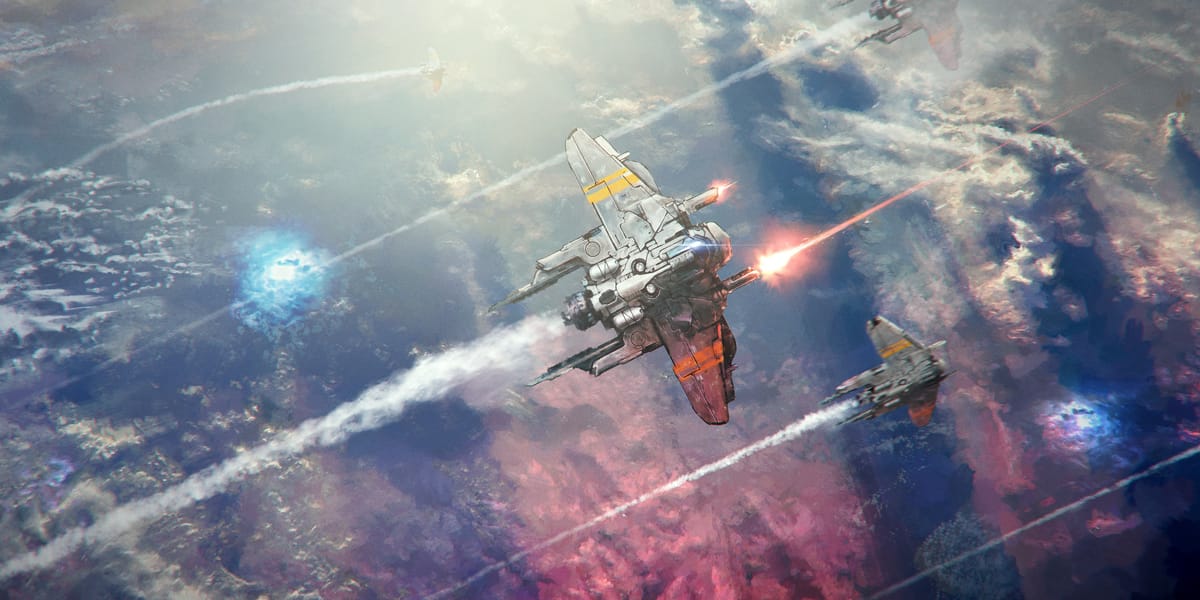
Major powers, led by the United States and China, are converting the satellite belt into an active, complex combat arena. Satellites are no longer viewed as stationary objects or mere support tools, but as offensive, dynamic weapons systems designed to maneuver, attack, disable, and even capture rival spacecraft.

A recent in-depth investigation by Reuters attempted to understand the scope of this phenomenon and reveal some of the secrets behind the most ambitious programs the superpowers have developed for space.

Dependence on satellite infrastructure in the modern world is nearly absolute. Almost every advanced military system on Earth, from precision missile guidance to encrypted communications between air and naval forces to real-time intelligence gathering, relies directly on the orbital network. Widespread damage to these capabilities would cause immediate operational blindness and paralyze fighting forces on land, sea, and air.

Everett Dolman, a former professor at the U.S. Air Force's Air War College, emphasized the severity of this scenario. According to him, an attack on America's space capabilities "would paralyze our massive ground-based military."

The world's most advanced militaries would find themselves cut off from their central command and control capabilities, neutralizing the West's qualitative technological advantage and setting the battlefield back decades. This is precisely why a new, quiet war has erupted: the war for space.

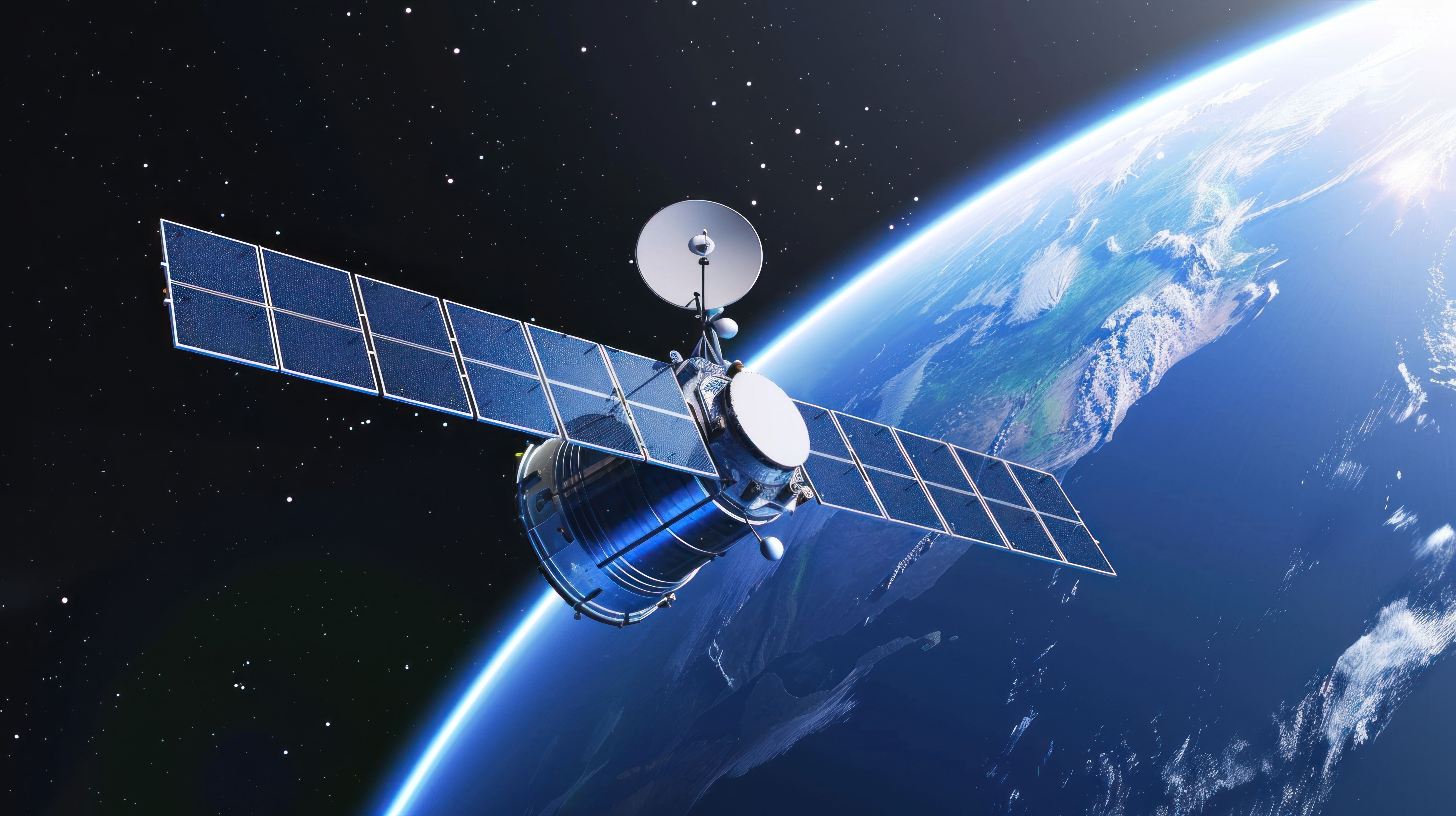
צילום: שאטרסטוק
צילום: שאטרסטוק

Catastrophic Impact on Civilian Life

The consequences of such a conflict don't stop at the military battlefield—they immediately and deeply penetrate civilian life across the globe.

Disabling global navigation satellite networks through a space attack by an enemy state would bring air and maritime transportation to a complete halt, severely disrupt global supply chains, and paralyze electrical and energy grids that depend on precise timing signals from satellites.

Moreover, international financial systems, stock exchanges, and interbank transfers all rely on precise satellite time synchronization.

Widespread damage to the satellite network would trigger the collapse of banking systems and overnight global economic chaos. Civilian communications, the global internet, emergency services, and meteorological forecasting would also be disabled, causing mass confusion and rendering governments unable to respond to events.

First-Ever Joint Space Operation

Against this backdrop, the superpowers are no longer satisfied with declarations—they're conducting maneuvers and demonstrations of force in the field. In September 2025, the first joint military space operation of its kind was conducted between the United States and Britain.

During the operation, U.S. Space Force personnel from a base in Colorado directed a military satellite to approach very close to a British satellite, precisely as the Chinese satellite Shiyan 12-01 passed 83 kilometers beneath them. The operation, conducted simultaneously with a naval deployment in the Far East, was designed to send a strong deterrent message to Beijing.

Former commander of British Space Command, Air Vice-Marshal Paul Tedman, noted that using space to influence the outcome of ground warfare is "very, very important." His remarks reflect a profound conceptual shift among the allies, who now view orbital space as a domain requiring active defense.

Lieutenant General Douglas Schiess, the incoming commander of the U.S. Space Force, explained that operating in proximity to another spacecraft helps verify the integrity of friendly satellites or check whether an adversary is "doing something they shouldn't be doing."


Trump and the Golden Dome
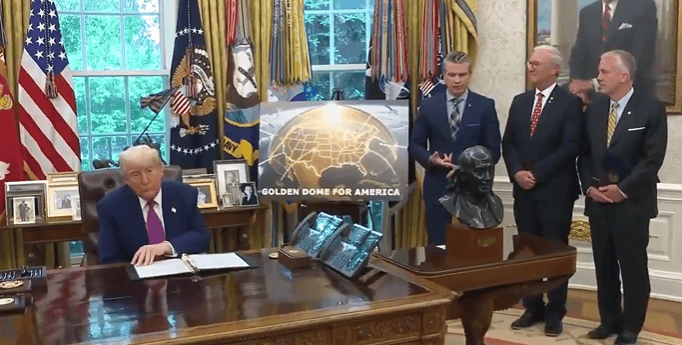
Trump and the Golden Dome (The White House)

"We Will Fight and Win"

American military leadership has adopted a far more combative and open stance than in the past. Commander of U.S. Space Command, General Stephen Whiting, articulated the new space warfare doctrine and emphasized the readiness required to face growing threats.

In public remarks, the general clarified the importance of preparing forces above the atmosphere, stating: "We must be well-prepared for conflict in space. And if deterrence fails, we will fight and win."

To support this doctrine, the U.S. Space Force unveiled a new ground-based electromagnetic weapon in June 2026, manufactured by L3Harris, designed to jam, block, and disable enemy satellites in real time. Meanwhile, President Donald Trump's "Golden Dome" missile defense program includes plans to integrate space-based interceptors capable of striking threats during their early flight phases.

China Accelerates Development

On the other side, Beijing is accelerating its technological development at a pace that surprises Western intelligence agencies. Outgoing U.S. Space Force Chief of Space Operations, General Chance Saltzman, stated that "the Chinese are developing capabilities rapidly" and characterized the threat from them as "significant."

China's satellite fleet now includes highly maneuverable assets conducting experiments dubbed "dogfights" in space, where multiple satellites move in tight coordination and unusually close proximity.

Additionally, China has demonstrated the technological capability to capture an inactive satellite and move it to a different orbit, and has conducted initial experiments in refueling satellites in orbit. In-space refueling capability represents a strategic game-changer, as it allows satellites to maneuver without fuel constraints and maintain offensive operations indefinitely. Various documents and patents show that research institutions linked to the Chinese military are developing advanced technologies for hunting and capturing spacecraft using specialized nets.

Jessica Meir in the ISS
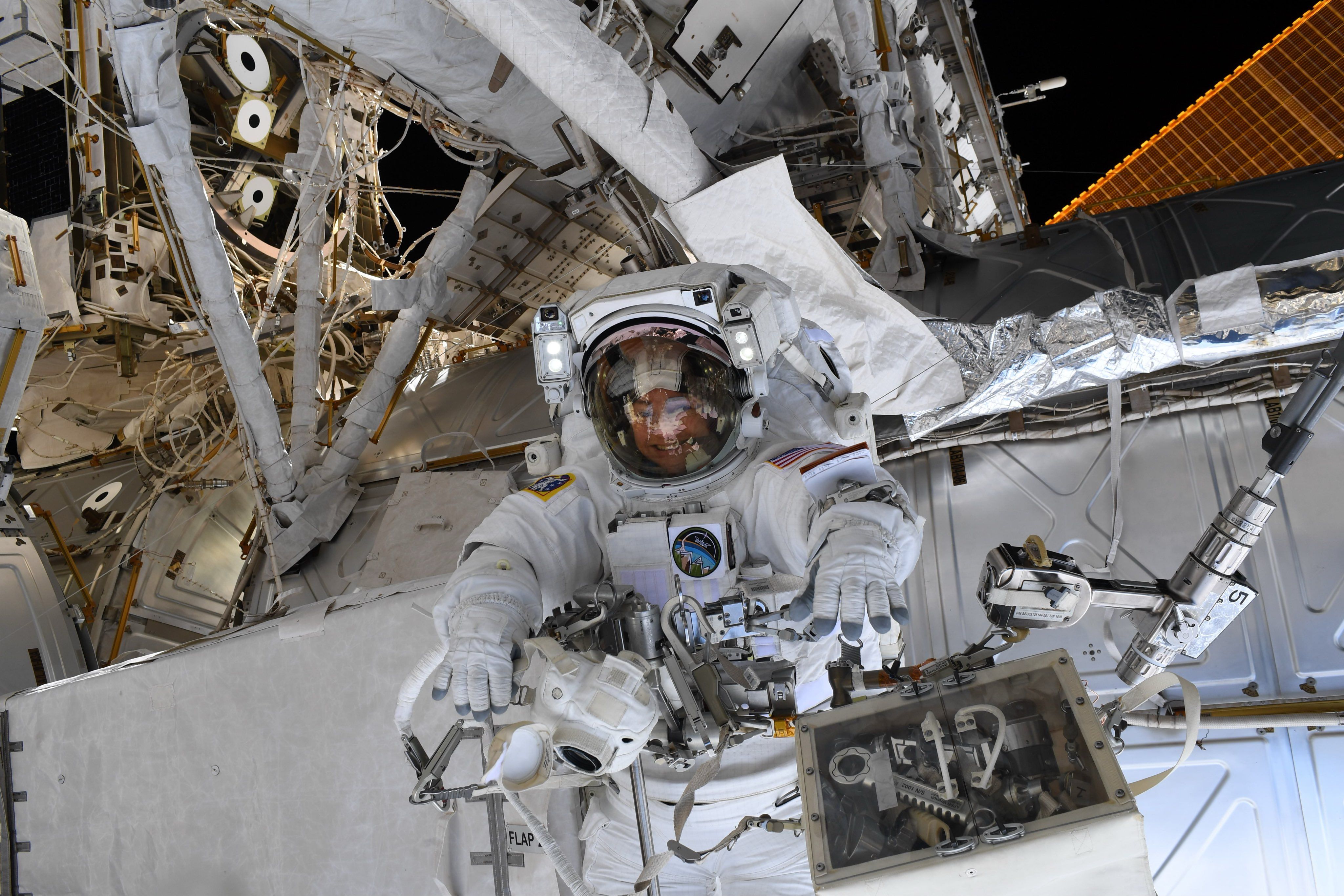
Jessica Meir in the ISS (צילום: Jessica Meir)

"Space Control Is Vital to National Security"

Officially, Beijing attempts to soften the impression, clarifying that all its activities are intended for peaceful purposes, environmental research, and protecting its assets.

However, the strategic doctrine reflected in its military writings is entirely different. An editorial published in the official military newspaper PLA Daily clarified the strategic importance of the domain, noting that space control is vital for safeguarding national security and achieving victory in battle.

One of the most striking illustrations of this tension occurred in June 2026, when a secretive, unmanned Chinese research spacecraft released a small satellite hundreds of kilometers above Earth.

According to data from space tracking company LeoLabs, the small satellite orbited around another Chinese satellite before returning to the mother spacecraft. Simultaneously, the United States operates its own secretive unmanned spacecraft program, the X-37B, which resembles a small shuttle and conducts complex experimental missions in orbit.

The risk of confrontation is further heightened by unprecedented congestion in orbital space, caused by the rise of massive commercial players. SpaceX alone operates approximately 11,000 Starlink satellites and plans to establish artificial intelligence-based data centers in space. This density creates additional risks for collisions and incidents that could rapidly escalate into international crises.

Among experts, the conclusion is clear: the battle for space is no longer a science fiction scenario, but a strategic reality already unfolding among the world's major powers. For now, it's a quiet war happening above our heads, but that could change soon.

As technology advances and daily dependence on satellites deepens, the line separating safe skies from a destructive battlefield continues to blur. If the fragile deterrence between the superpowers collapses, the price won't be paid only in distant orbital space, but first and foremost in the infrastructure and daily lives of all of us down here on Earth.

Ready for more?

Join our newsletter to receive updates on new articles and exclusive content.

We respect your privacy and will never share your information.

Enjoyed this article?

Yes (30)
No (1)
Follow Us:

Unmissable content


Loading comments...

Also of Interest