Get our mobile app
Download on the App StoreGet it on Google Play

amid recent outbreaks

Viral and Dangerous: The Viruses That Could Become the Next Security Threat

Fears of a "Black Plague" outbreak in Russia are sparking a thirst for information regarding viruses that could pose a real threat to humanity in the near future.  

בדיקות מעבדה לבידוד נגיפים

The worrying report from Russia regarding fears of a "Black Death" outbreak (caused by a bacterial strain named Yersinia pestis) has brought back the fear of historical pandemics and dangerous biological warfare into public consciousness in a sweeping wave of panic.

The "Black Death," which in the past wiped out a third of Europe's population, is a classic example of a biological agent isolated in a laboratory that holds devastating potential and high transmissibility. Alongside it exist other lethal viruses and bacteria that cause hemorrhagic fever (originating from exposure to the "Marburg" or "Ebola" viruses), which in the wrong hands could undergo genetic engineering, making them resistant to vaccines and turning them into weapons for deadly, mass casualties among humans.


נגיפים לא ידועים ומסוכנים
נגיפים לא ידועים ומסוכנים ((צילום: שאטרסטוק))

The Hidden Lethal Threat

Beyond the familiar threats that have already caused severe illnesses in the past through viruses such as polio, various strains of cancer, and infectious skin pathogens, as well as the COVID-19 virus, there are viruses stored in laboratories and freezers that are less known to the general public. However, they cause great concern among intelligence agencies over fears they could be stolen and sold to terror organizations:

Nipah virus: Transmitted from bats to humans, causing lethal encephalitis with mortality rates of up to 75%.

Lassa virus: Prevalent in West Africa, transmitted by rodents, causing severe fever and rapid multi-system damage.

Hendra virus: A rare and particularly lethal virus transmitted from fruit bats to horses and from them to humans, leading to the collapse of vital body systems, primarily the respiratory system and the brain.

Crimean-Congo Hemorrhagic Fever (CCHF): A virus transmitted mainly by particularly small ticks, posing a major risk by causing severe internal bleeding with an estimated mortality rate of around 30%.

Chapare virus: A rare South American virus from the Arenavirus family that causes hemorrhagic fever and can spread between humans through direct contact or bodily fluids (saliva).

The lack of widespread vaccines or effective treatments for most of these viruses turns them into potential doomsday weapons, as controlled dissemination in population centers could lead to the rapid collapse of healthcare systems and critical infrastructure.

מחקר נגיפי והתגוננות מפני זיהומים מסוכנים
מחקר נגיפי והתגוננות מפני זיהומים מסוכנים (יונתן זינדל/פלאש90/ שאטרסטוק)

Ebola is a Weapon

In Israel as well, the viral threat is not merely theoretical: several isolated cases of suspected Ebola infection were recently identified in the country, primarily involving travelers returning from outbreak regions in Africa who were placed in isolation until test results ruled out exposure to the dangerous virus.

Ebola is considered one of the most threatening and lethal pathogens known to science due to its role as a cause of severe hemorrhagic fever leading to multi-organ failure, with mortality rates ranging between 50% and 90% among infected individuals.

The danger of the virus lies not only in its extreme lethality, but also in its ease of transmission from person to person through direct contact or bodily fluids. This turns any leakage beyond its natural outbreak areas into a "red alert" health and security threat that must be prevented before it occurs.

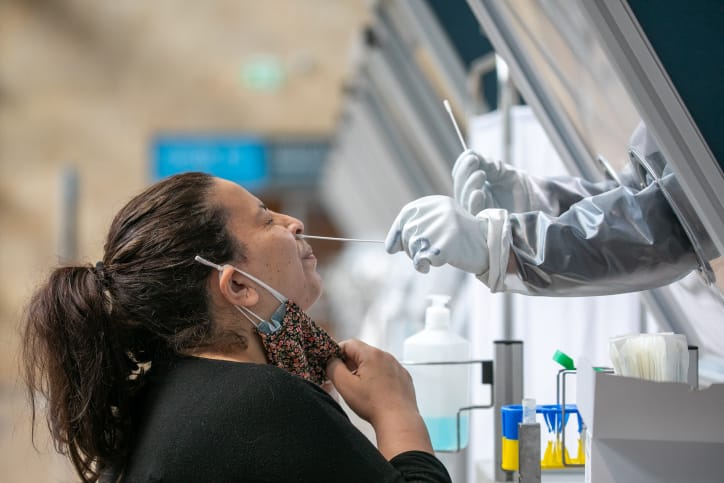
בדיקת קורונה
בדיקת קורונה ((צילום: יוסי אלוני / פלאש90))

Remembering COVID-19

The outbreak of the COVID-19 pandemic, which remains present in our lives through changing variants and strains though significantly weakened, proved to the world just how fragile and vulnerable the global fabric is to infectious diseases.

The last major pandemic, which caught the world completely by surprise, made it clear that paralyzing countries, cutting off supply chains, and exacting a heavy toll in human lives does not require the use of missiles, advanced chemicals, or laboratory-engineered agents.

The main lesson from past and present events is sharp and clear: it is not only nuclear or chemical weapons that pose an existential threat to humanity. In modern reality, even a microscopic bacterium or virus invisible to the naked eye can become an exceptionally lethal and destructive bomb that must be neutralized long before any threat to use it arises.

Ready for more?

Join our newsletter to receive updates on new articles and exclusive content.

We respect your privacy and will never share your information.

Enjoyed this article?

Yes
No
Follow Us:

Unmissable content


Loading comments...

Also of Interest