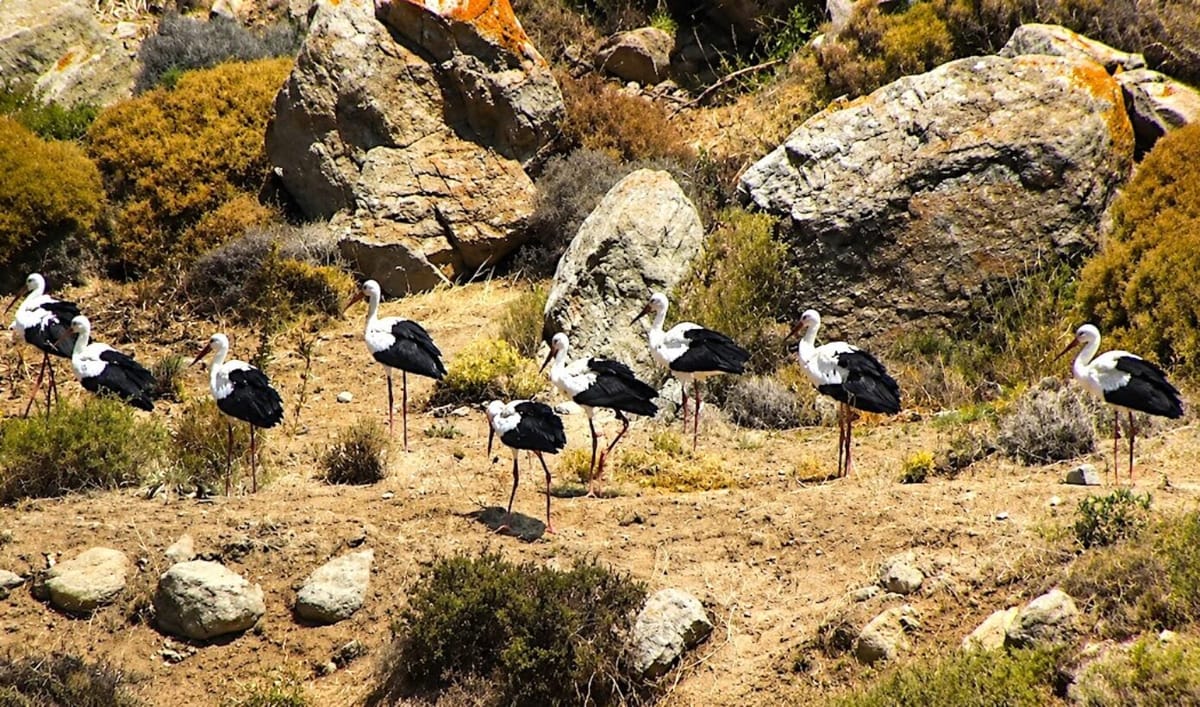
The Greek island of Mykonos is best known for its beaches, luxury hotels, and vibrant tourism scene. But this week, an unexpected natural phenomenon captured local attention: a large flock of white storks descended on the island for a rest stop during their migration journey.
The birds were spotted scattered across open fields, perched on the island's characteristic stone walls, and resting on rocky hillsides. For Mykonos residents and visitors, the sight was relatively uncommon, as the island is not typically recognized as a major waypoint along the storks' migration route.
According to wildlife and bird experts quoted by Greek Reporter, the storks' appearance coincides with the start of the annual autumn migration. Each year, thousands of white storks depart from their European nesting grounds and travel southward toward Africa, where they spend the winter months in warmer regions with more abundant food sources.
The lengthy journey demands considerable physical effort from the birds, making rest stops along the way essential. Storks use these breaks to recuperate and regain strength before continuing their migration route.
However, these stopovers can also expose the birds to hazards. One major danger involves electrical infrastructure. Storks are sometimes drawn to utility poles and high-voltage power lines, which offer convenient vantage points and resting spots, but unsuccessful landings can result in electrocution, serious injuries, or death.
The sight of dozens of white storks against the blue and rocky backdrop of the Aegean Sea quickly became an additional local attraction—though these visitors will remain only briefly. Once they have gathered sufficient strength, the storks are expected to resume their long journey southward to Africa.