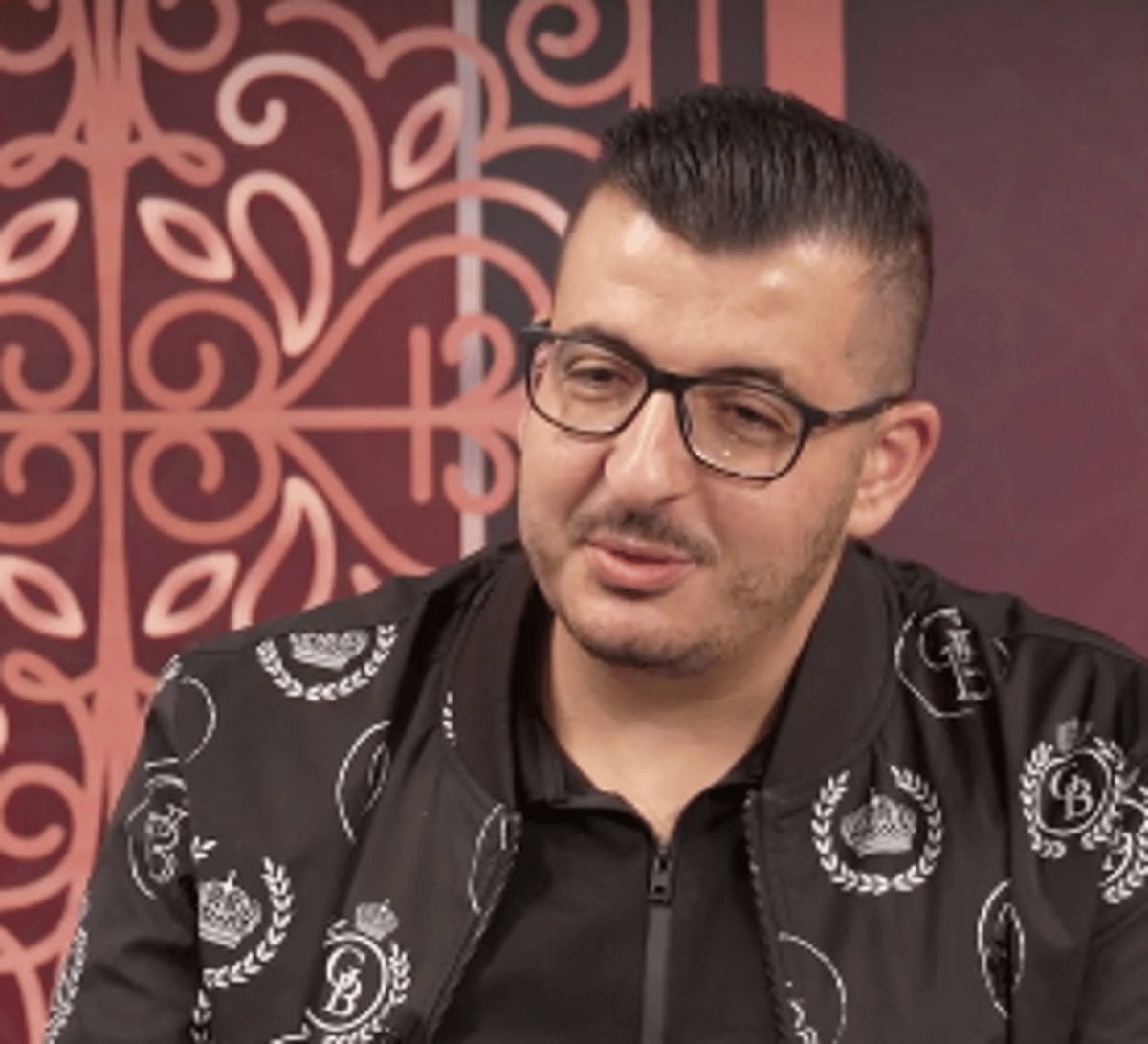
What is a religious Muslim doing sitting for an interview at a Haredi news outlet? It is a question that follows Moamen Jaber almost everywhere he goes, and he has learned to enjoy the surprise on people's faces. His own story, as it turns out, is really three stories that happen to live in one person.
It starts in childhood, in a religious home, where Jaber learned to recite the Quran the traditional way, with its full vocal ornamentation. He loved it, but underneath that love was another one he could not quite put away: a pull toward music and singing more broadly. Not everyone around him was thrilled about that. Some people told him plainly to drop it, that singing wasn't appropriate. He never quite believed them. The talent felt like something he had been given, not something he had gone looking for, and he wasn't ready to treat it as a problem.
That instinct won out. Jaber grew up on Umm Kulthum and Abdel Halim Hafez, soaking in the classical Arabic repertoire, and came to love the livelier, celebratory side of the tradition too, the dabke rhythms that get an entire wedding hall on its feet. Today he is the one leading that hall, performing traditional Arabic music at weddings and events for audiences well beyond his own community. It hasn't always been smooth. There has been pushback, confusion, people who didn't quite know what to make of him. He kept singing anyway.
The more surprising turn, though, is what Jaber does during the day. He's a physiotherapist, working with child development, and somewhere along the way he realized that the same gift he uses on stage is also his sharpest clinical tool. Try telling a child on the autism spectrum, or a child with other special needs, to simply jump or climb a flight of stairs, and you'll often hit a wall. But turn that same instruction into a song, one built around the child's own name, and something shifts. The child laughs. Plays. Forgets, mid-tantrum, that there was ever anything to cry about. Somewhere inside that little performance, the movement and the thinking start to follow.
Jaber talks about music the way some people talk about faith: as a bridge. Between cultures, between people who don't speak the same language, and most of all between a struggling child and the version of themselves that's still in there, waiting. A child on the verge of tears hears their own name tucked into a melody, and the tears simply lose their grip.
When asked what he'd say to the boy he once was, the one who was told to give up singing, Jaber didn't hesitate. Stay exactly who you are, he said. Don't be afraid of your own success, or of standing out. Believe in yourself first, and eventually everyone else catches up. It's the same thing he tells the children he treats: believe in what makes you different, and don't be in a hurry to hide it.