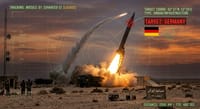

A senior Houthi official in Yemen threatened Israel Monday morning, hours after a missile launched from Yemen triggered sirens in central Israel and the Shfela.
Hazam al-Assad, a senior figure in the Houthi organization, said the latest regional developments show that Iran and its allied forces are moving toward tighter coordination across the Middle East.
“Tehran, Beirut, Sanaa, Baghdad and Gaza,” he said. “There is a major change in the balance of the confrontation. The era of acting in isolation and abandonment is over.”
According to al-Assad, the pro-Iranian axis is now building what he called a new “unity of fronts” equation, meant to ensure that any Israeli action in one arena will not remain limited to that arena alone.
“Today, the equation of unity of fronts is taking shape on the ground,” he said, “to emphasize that no aggression will remain confined to one geographic front or isolated from its surroundings.”
The comments came hours after a missile launched from Yemen toward Israel activated sirens in several areas of central Israel and the Shfela.
The launch followed a night of Israeli strikes in Iran, carried out amid the escalating confrontation between Jerusalem and Tehran. The Houthi statement joins a broader wave of threats from Iranian-backed forces across the region, including Hezbollah in Lebanon and other elements of the axis in Iraq and Gaza.