Iran is reportedly accelerating major underground construction at a secluded mountain site, prompting fresh international concern that Tehran is cautiously rebuilding its suspected nuclear infrastructure months after devastating US-Israeli airstrikes. Satellite images, corroborated by independent analysis, show heightened activity at Kuh-e Kolang Gaz La, known as Pickaxe Mountain, suggesting a shift in strategy toward extreme secrecy.
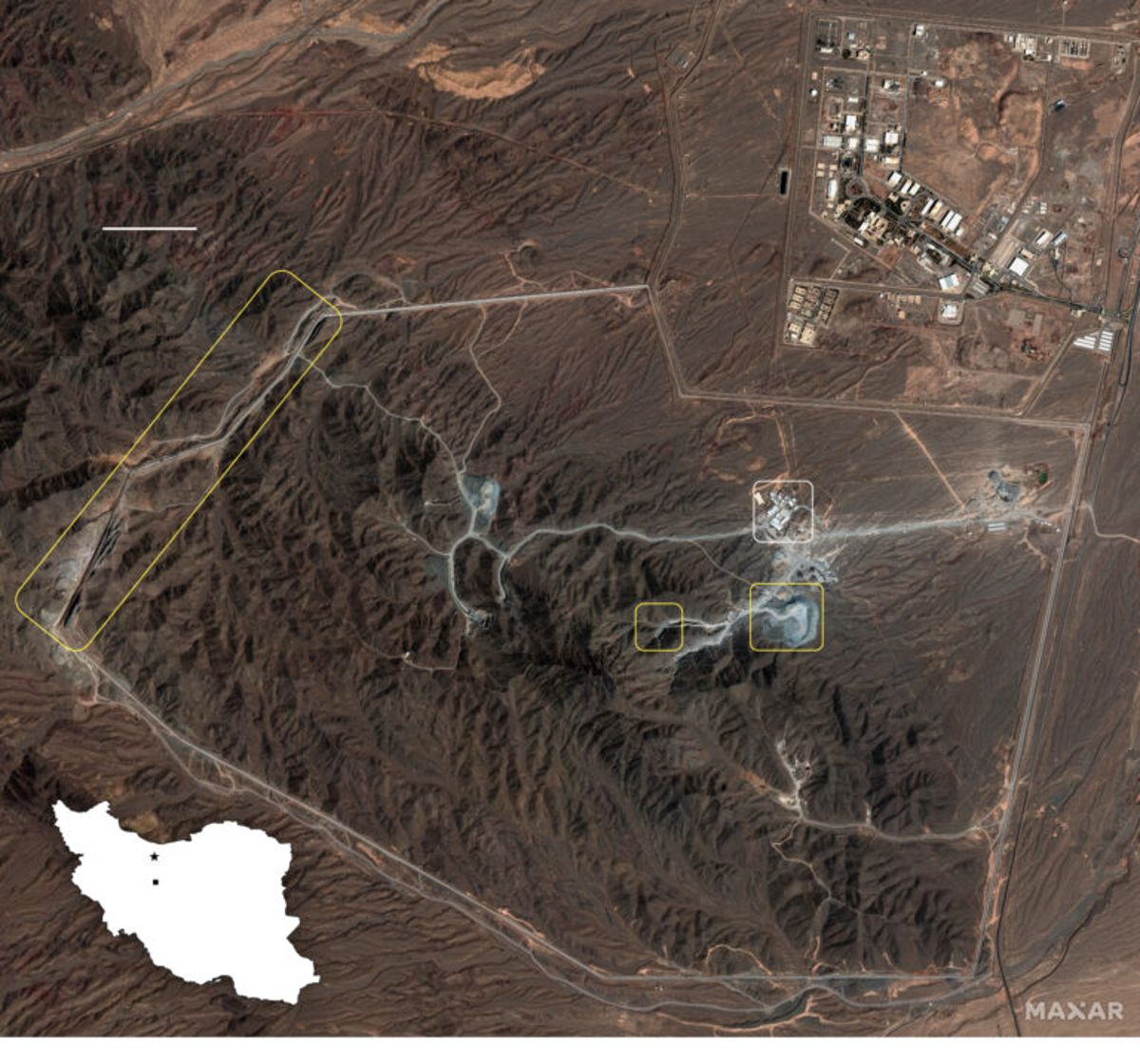
Engineers initiated tunneling into the Zagros Mountains near the Natanz complex in 2020. The facility is being built at an estimated depth of 260 to 330 feet underground, making it even deeper than the Fordow site. While Iran claims the project is merely a replacement centrifuge production plant, analysts caution that the dimensions and depth are more suitable for highly secretive activities, such as advanced uranium enrichment or the storage of near-weapons-grade material.
The true purpose of the facility remains opaque, as international inspectors have been denied access. IAEA Director Rafael Mariano Grossi confirmed earlier this year that Iranian officials rebuffed his requests for clarity on the site. Anonymous US officials have verified that intelligence agencies are closely monitoring the construction, though the CIA has offered no public comment.
Satellite imagery reveals distinct changes since the June 22 US-Israeli bombing campaign, which targeted Iran’s main nuclear sites. New perimeter walls, reinforced tunnel entrances, and expanding spoil piles indicative of heavy excavation are visible. The clustering of dump trucks and trailers at both eastern and western entrances underscores the intensity of the ongoing work. Experts believe the effort to bury the tunnels under massive amounts of dirt and rock is a clear attempt to harden the site against any future airstrikes.
This construction comes as Iran continues to restrict full cooperation with international inspectors. Despite an agreement struck with the IAEA on September 9 that was supposed to allow broader access to nuclear sites, Iranian officials have since cast doubt on its implementation. Politically, the issue is volatile: President Masoud Pezeshkian has warned that rebuilding facilities will only invite more US attacks, while hard-liners have criticized him for weakness. Ultimately, the nuclear program remains under the control of Supreme Leader Ayatollah Ali Khamenei.
Meanwhile, the status of Iran’s most concerning material, nearly 900 pounds of uranium enriched to 60 percent purity before the June strikes, is uncertain. US intelligence suggests much of it may now be buried under the rubble at Isfahan and Fordow. Analysts warn that without clear accountability, Tehran retains the capacity to quickly covertly fashion a nuclear device. Experts believe Tehran has traded the speed of its pre-strike program for the secrecy and protection afforded by hardened underground sites like Pickaxe Mountain.