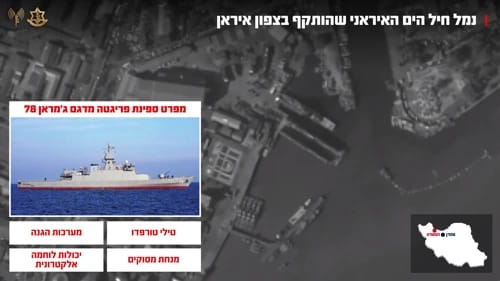
In a revealing briefing following the historic operation against the Iranian Navy, a senior officer from the Israeli Navy has detailed the immense strategic impact of the strikes in the Caspian Sea. The mission, which targeted four missile boats, a corvette, and a major military shipyard, was designed to strip the Iranian regime of its maritime capabilities for years to come. By combining satellite imagery with precision air power, the IDF managed to strike at the heart of Iran’s northern naval command, an area previously considered out of reach. This operation, part of the broader "Lion's Roar" campaign, highlights a new level of intelligence penetration and operational reach in the ongoing war against the Iranian regime.
The Intelligence Behind the Strike
The success of the mission relied heavily on the collaboration between Naval Intelligence and Unit 9900 of the Intelligence Directorate. Led by Brigadier General S., Unit 9900 provided critical satellite analysis that allowed the military to map out the exact locations of Iran's five primary vessels in the Caspian Sea. The research revealed a tactical split in the Iranian forces: four of the warships were operating in open waters, while the fifth was docked for maintenance. This real-time data allowed planners to develop a comprehensive strike package that ensured the complete destruction of each target.
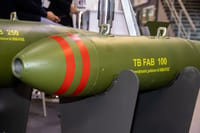
To guarantee that the vessels were not just damaged but permanently put out of commission, joint teams from the Air Force and Navy worked together to recommend specific munitions and optimal impact points. "We find great value in the fact that we attacked the Iranian Navy on an additional maritime front," the senior officer explained. He noted that the regime has suffered a "very severe blow" that will be extremely difficult to recover from. Beyond the ships themselves, the IDF also targeted a military shipyard and the local naval headquarters to ensure that the infrastructure required to rebuild the fleet was also eliminated.
Neutralizing a Multi-Layered Threat
The officer emphasized that the destroyed vessels were not merely symbolic; they possessed both offensive and defensive capabilities that posed a direct threat to regional stability. By removing these ships from the board, the IDF has significantly reduced the enemy's ability to monitor or strike at a distance. While the officer remained silent on the specific involvement of submarines in "Lion's Roar," he noted that the submarine fleet plays a "very significant role" against Iran and that every vessel is currently deployed on active missions.
Closer to home, the Navy has also been active in defending Israel’s sovereign waters. The officer confirmed that the missile boat flotilla recently intercepted several suicide drones that were heading toward strategic gas rigs in the Mediterranean. These platforms, which are vital to the national economy, have been primary targets for Iranian-backed groups. The senior official concluded by stating that the military is prepared for any threat that may emerge, whether from the distant shores of the Caspian or the immediate waters surrounding the country, as the war continues to escalate across multiple fronts.