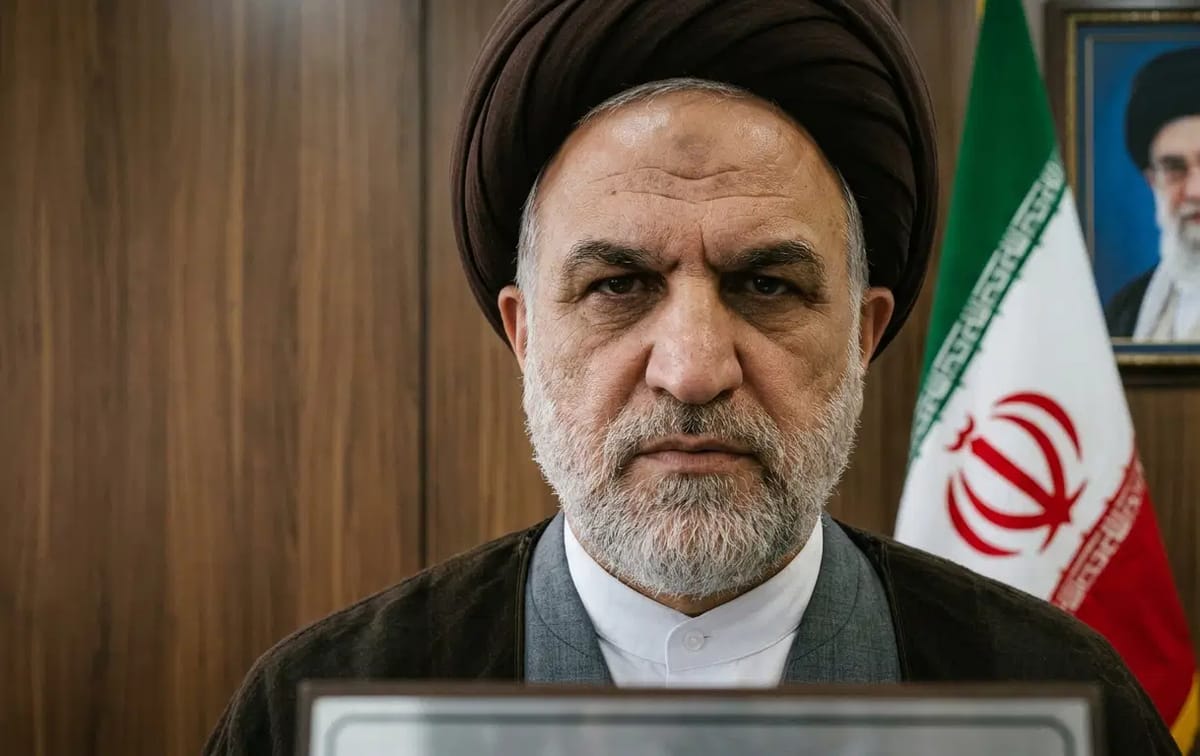
A major political drama is unfolding at the highest levels of the Iranian regime as the new Supreme Leader of the Islamic Republic, Mojtaba Khamenei, plans to remove the powerful head of the judicial branch, Gholam-Hossein Mohseni Ejei, at the end of his initial five-year term. Sources close to the matter inside Iran have reported that the younger Khamenei, who recently inherited leadership of the state, has firmly decided not to extend Ejei tenure for an additional five years. This constitutes a dramatic and highly unusual step that shatters a tradition of nearly forty years, during which supreme leaders routinely granted judicial chiefs two consecutive terms to ensure institutional stability.
This impending purge does not stem from a desire to introduce legal reforms or liberalization within the system, but rather forms part of a broader restructuring of the balance of power in Iran following the recent war and change in leadership. Since taking office, the younger Khamenei has worked aggressively to replace key figures across central state institutions, aiming to surround himself with officials who are completely loyal to him. The planned removal of Ejei, widely considered one of the most powerful individuals in the republic, marks one of the first major steps by the new leader to secure total control over the judicial, security, and political apparatus of the country.
The background of the dismissal is also tied to heavy pressure and growing criticism from hardline radical factions within the regime against the judiciary chief. Tensions reached a peak after the exposure of the names of Supreme National Security Council members who voted in favor of a controversial memorandum of understanding with the United States, revealing that Ejei had supported the move. Critics argue that Ejei vote directly contradicted the official stance of the Supreme Leader, who clarified in an official letter that he had fundamental reservations and a completely different view regarding the agreement with the Americans.
Public signs of dissatisfaction with Ejei performance have emerged recently in official and semi-official media outlets closely associated with the leader court. In a special message delivered for Judiciary Week, Khamenei pointedly avoided expressing public support for the continuation of Ejei term, instead addressing the institution as a whole and demanding the immediate implementation of the directives of his late father, Ali Khamenei. The message contained repeated calls for a war against corruption within the judicial system itself, protection of public rights, blocking the influence of lobbying, and improving relations with citizens, which was interpreted in Tehran as a sharp rebuke of the current chief.
In response to the threatening message, Ejei quickly published a submissive and elaborate public letter to the Supreme Leader the following day, attempting to defend the achievements of the judiciary under his leadership and pledging to continue the judicial transformation program. Ejei declared that he and all branches of the system view themselves as obligated to execute the orders of the leader precisely, quickly, and without any reservation. However, media outlets close to the establishment criticized Ejei for only writing the letter after receiving criticism, arguing that the necessity for Khamenei to repeat his father demands proves the judiciary failed to achieve practical results.
Meanwhile, internal struggles among various factions within the Iranian government are intensifying across the capital. Media outlets aligned with Parliament Speaker Mohammad Baqer Qalibaf and President Masoud Pezeshkian claim that the attacks on Ejei are being driven by the extremist faction of Saeed Jalili and the Paydari Front, who are attempting to sow division at the top and destabilize the post-war political environment. Conversely, supporters of Ejei and media outlets close to him are trying to present his tenure as a massive success, highlighting statistics regarding a reduction in the number of prisoners, a transition to digital hearings, shorter trial durations, and frequent visits to peripheral regions.
International human rights organizations emphasize that Ejei was never a moderate or reformist figure, but rather an integral part of the Iranian apparatus of repression for decades, including past roles in the Special Clerical Court and the Ministry of Intelligence. Human rights activists note that his period as head of the judiciary was characterized by the continued issuance of death sentences and heavy punishments against protesters, journalists, and minorities, and that the system under his control continued to serve as the executive arm of the security agencies. According to these organizations, replacing Ejei with a confidant of the younger Khamenei will not bring real change to the human rights situation without a deep structural reform and an end to torture and forced confessions.