Get our mobile app
Download on the App StoreGet it on Google Play

Syria After Assad

Butcher of Baniyas Seized in Beirut Raid

Ali Kayali, architect of the 2013 Baniyas massacre that killed over 450 civilians, abducted from his Beirut home in joint Syrian-Turkish intelligence operation, Lebanon opens probe into sovereignty breach

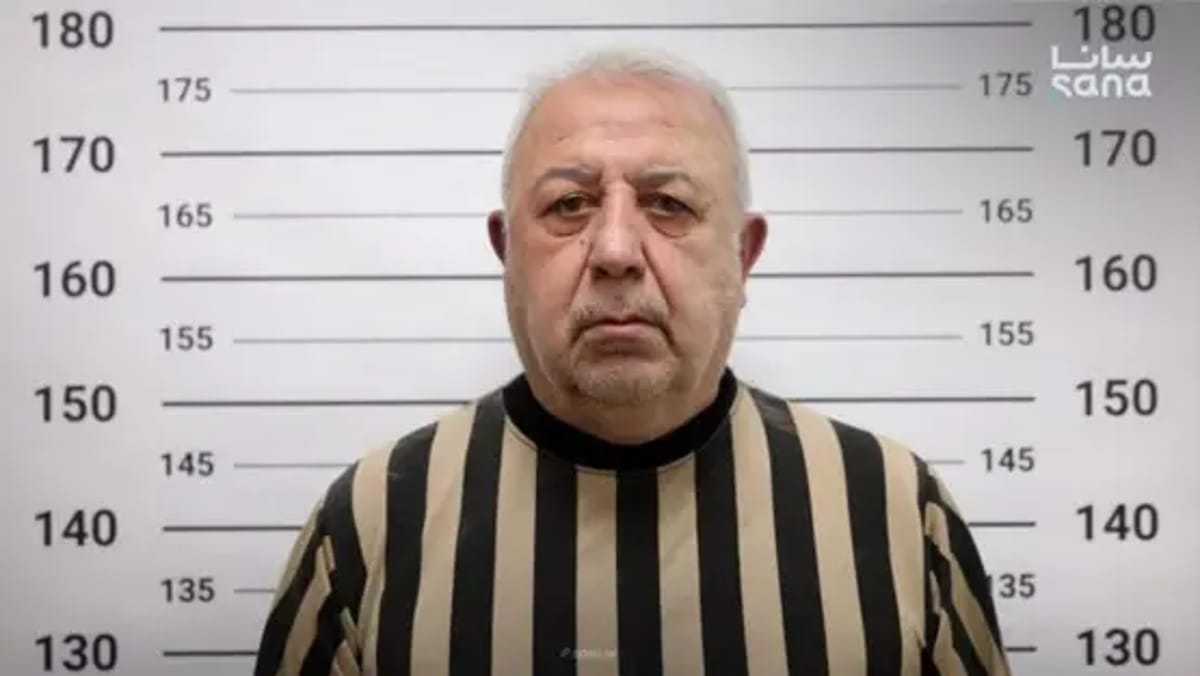
Ali Kayali, known as "the Butcher of Baniyas"

Ali Kayali, the former pro-Assad militia commander known as "the Butcher of Baniyas" and one of the most notorious figures of Syria's civil war atrocities, has been arrested in a covert joint operation by Syrian and Turkish intelligence. The official statement from Syria's state news agency SANA on Thursday claimed he was captured at the border while attempting to flee. But Lebanese security sources and media reports tell a sharply different story: he was abducted from his home in the al-Mansouriyeh area near Beirut, smuggled into Syria without the knowledge of the Lebanese government — and Beirut has now opened a formal investigation into the breach of its sovereignty.

Who Is the Man They Call "the Butcher of Baniyas"?

Ali Kayali, 70, was born in Turkey under the name Mihraç Ural. A veteran militant and military operative, he was deeply connected to the Assad family. During the civil war, he commanded the dangerous "Syrian Resistance" militia (the Popular Front for the Liberation of the Sanjak of Alexandretta), which fought alongside Bashar al-Assad's forces.

The brutal nickname "the Butcher of Baniyas" stems from his direct responsibility for the horrific massacre in the coastal city of Baniyas and the village of al-Bayda in May 2013. In that massacre, more than 450 civilians were executed without trial, including dozens of women and children. Beyond his crimes in Syria, Kayali was wanted for years by Ankara for his involvement in the deadly car bombings in the Turkish town of Reyhanlı that same year — attacks that claimed dozens of lives.

Turkish military training exercises
Turkish military training exercises (Photo: Turkish Armed Forces)

After the fall of the Assad regime in December 2024, many senior officials and militia commanders fled Syria. Kayali found refuge in Lebanon, living there with his family under a low profile.

According to reports from Lebanon, armed men with Lebanese accents broke into his home, tied up his wife and son, and took him to an unknown destination, apparently straight across the Syrian border. Lebanese law enforcement has opened an investigation and identified at least five individuals involved (four Syrians and one Lebanese) who assisted in the covert abduction. The gap between SANA's version ("arrested at the border") and the testimony from Lebanon underscores the secret (and provocative) nature of the operation.

The urgency and the willingness to risk damaging diplomatic relations with Lebanon stem from the dramatic geopolitical shift in Syria and the internal and external interests of Syria's new government. For the new authorities in Damascus, bringing the architects of the Assad-era massacres to justice is a critical step in demonstrating accountability, establishing the rule of law, and proving to the Syrian people that war crimes do not expire.

The operation was carried out in full coordination with Turkish intelligence (MIT). Turkey has marked Kayali as a sworn enemy of the state for decades. The cooperation is designed to strengthen ties between the new government in Damascus and Ankara, and his extradition or prosecution is a politically valuable "gift" to the Turks.

Syrian and Turkish intelligence feared that Kayali, sensing the net tightening around him, would exploit Lebanon's fragile security situation to obtain a forged passport and escape to a third country from which he could not be extradited. Damascus knew that turning to official diplomatic channels for an extradition request would encounter prolonged bureaucracy and the possibility of interference from pro-Syrian elements or remnants of militias. So the decision was made to carry out a covert "leap" over the head of the Beirut government, on the assumption that Lebanon is too weak to respond beyond a diplomatic protest or internal investigation.

The arrest of "the Butcher of Baniyas" marks a symbolic moment in post-Assad Syria. On one hand, hope for the families of victims who have waited more than 13 years for a day of reckoning. On the other, a sharp reminder that even new justice often arrives with old tools: abductions, covert intelligence coordination, and violations of neighboring states' sovereignty.

Meanwhile, Kayali is in custody in Syria. The big question is whether he will stand trial in Damascus, be extradited to Turkey or both. What is clear is that the message sent is unambiguous: even after the regime's fall, even after years on the run, there are those who continue to pursue those who spilled civilian blood.

Ready for more?

Join our newsletter to receive updates on new articles and exclusive content.

We respect your privacy and will never share your information.

Enjoyed this article?

Yes
No
Follow Us:

Unmissable content


Loading comments...

Also of Interest