Get our mobile app
Download on the App StoreGet it on Google Play

Underwater warfare

Iran smuggling arms to Houthis by submarine

Wall Street Journal investigation reveals dramatic tactical shift as Tehran deploys mini-subs to evade detection and deliver advanced weapons to Yemen rebels beneath international naval patrols

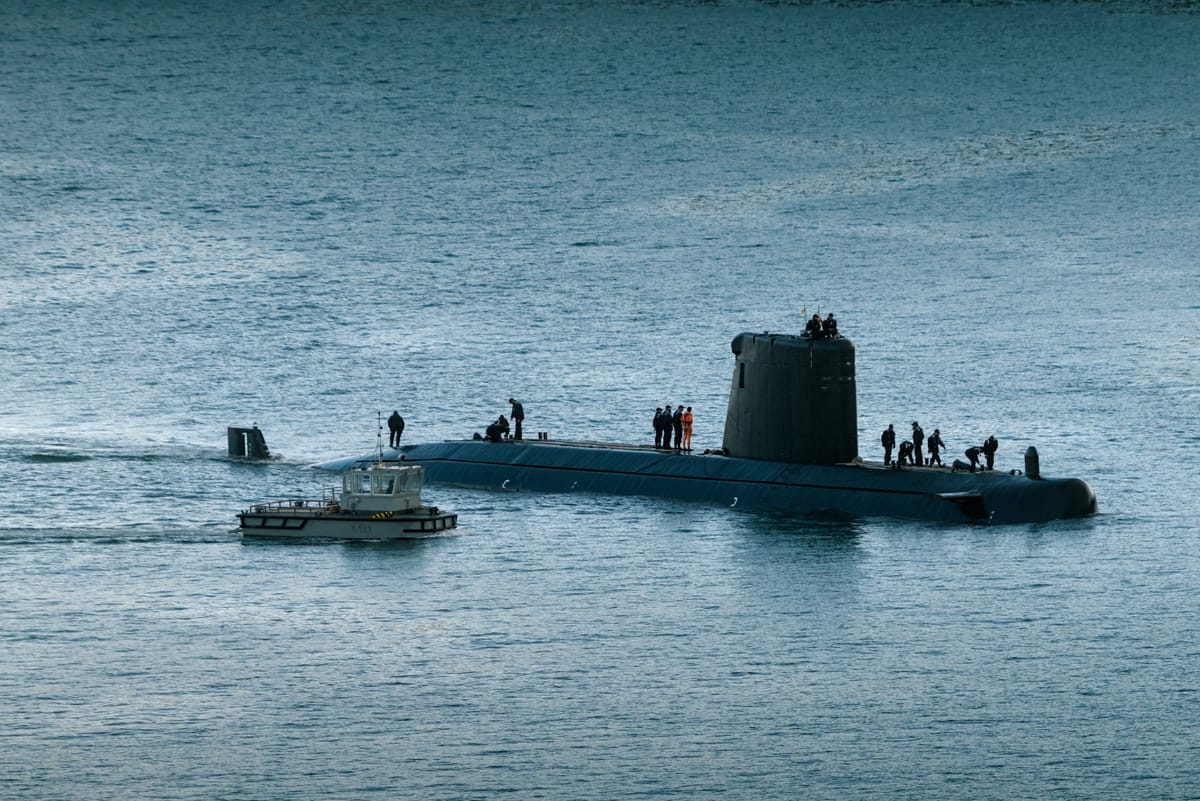
Submarine, illustration

An extensive Wall Street Journal investigation has uncovered a major tactical shift in Iran's smuggling operations: after years of relying on fishing boats and small civilian vessels, Tehran has begun deploying small submarines to transport weapons and military equipment to the Houthi rebels in Yemen. The report, based on sources from European governments, Yemen and Saudi Arabia, is considered credible within the international intelligence community.

For over a decade, Iran depended on fishing boats and small civilian craft to smuggle missiles, drone components, radar systems and ammunition to the Houthis. These routes worked well until military pressure and naval blockades tightened. American and Israeli strikes, alongside international coalition activity, severely disrupted the traditional smuggling networks.

Tehran's answer is asymmetric warfare in the underwater domain. According to the investigation, Iran has begun operating tiny submarines, likely the Ghadir model or similar variants adapted for shallow waters. These submarines, with small crews and the ability to dive and evade radar and conventional tracking systems, make detection extremely difficult.


The submarines enable the transfer of high-value cargo, critical components, guidance systems or advanced weapons parts, while bypassing Western satellite and naval surveillance. The use of submarines is only one piece of a broader picture of deep Iranian involvement.

The investigation describes a physical presence of officers from the Islamic Revolutionary Guard Corps (IRGC) and Hezbollah on the front lines in Yemen. They provide real-time tactical intelligence, assist in selecting targets for attacks against Saudi Arabia, and deliver advanced technological training. Alongside this, reports detail flights by Mahan Air to areas under Houthi control, carrying officers, weapons and spare parts for drones.

The result: the Houthis are able to carry out more precise and sophisticated attacks against Saudi targets and local forces, while strengthening their control over strategic areas, including around the Bab al-Mandab strait.

Houthis | Bin Salman
Houthis | Bin Salman (Photo: Arab networks - Shutterstock)

The information comes from European and Arab government sources and aligns with Iran's proven history of developing miniature naval technologies that it also uses in the Persian Gulf. However, intelligence officials emphasise that while the information is intelligence-based and credible, not every detail has been independently and publicly verified.

Tehran, as expected, denies direct weapons supply or active involvement in combat, claiming its support for the Houthis is "political only". For the West and regional states, this is a clear warning sign. The ability to smuggle military equipment underwater poses a direct threat to freedom of navigation in the Red Sea and the Bab al-Mandab strait, one of the world's most important trade routes.

The shift to submarines marks an escalation in Iran's proxy warfare strategy. As long as pressure on overland routes continues, Tehran is expected to keep seeking creative (and quieter) ways to deliver weapons to its allies. The question is how successfully international naval forces will adapt to the new underwater threat.

Ready for more?

Join our newsletter to receive updates on new articles and exclusive content.

We respect your privacy and will never share your information.

Enjoyed this article?

Yes
No
Follow Us:

Unmissable content


Loading comments...

Also of Interest