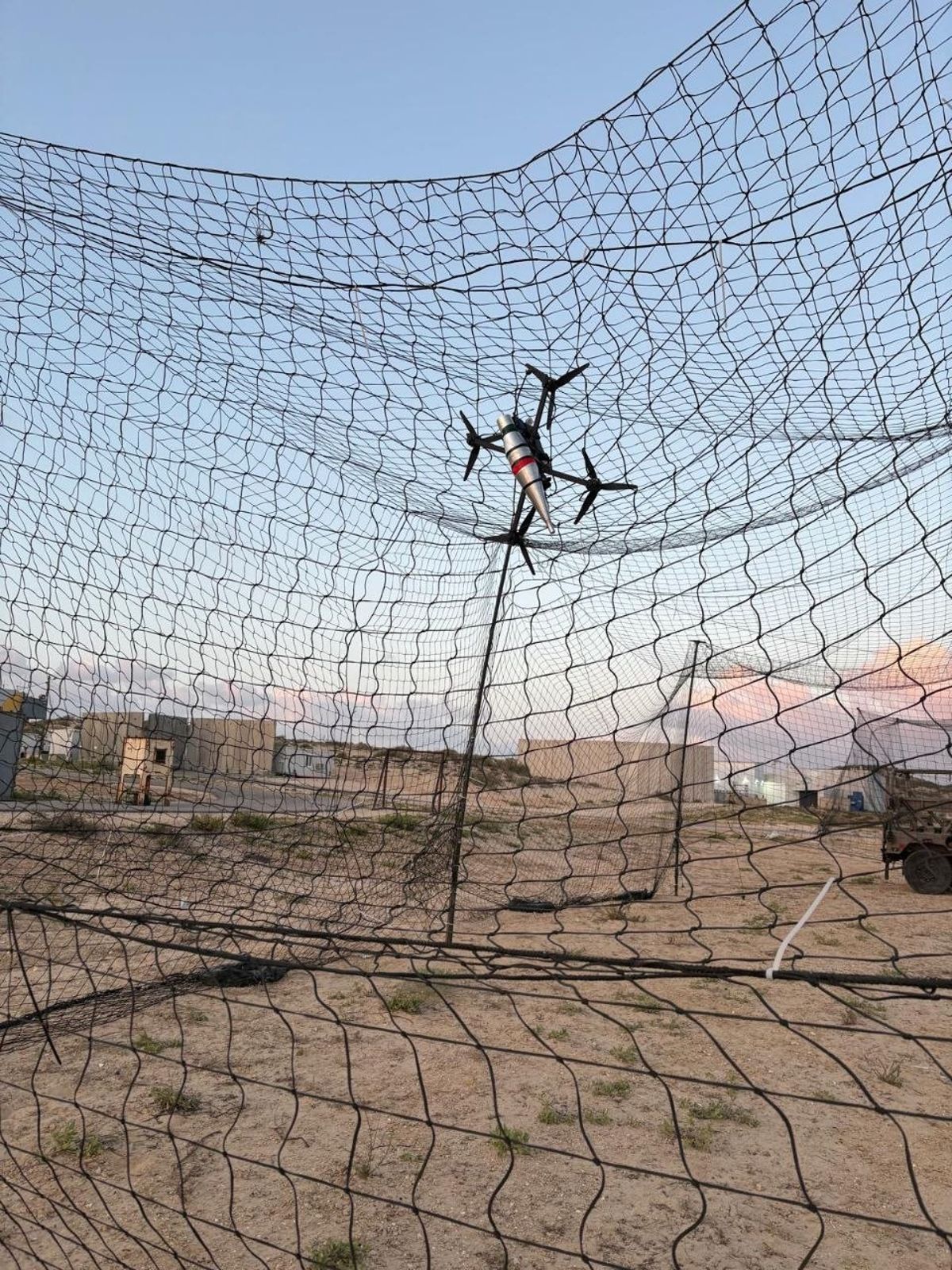
The rapid proliferation of low cost, highly lethal explosive drones has forced a massive tactical adaptation across frontline combat zones in southern Lebanon. In an effort to mitigate the single most persistent threat facing infantry units, the Technological and Logistics Directorate has initiated a rapid deployment of massive physical barriers designed to envelop temporary military bases. The emergency program represents a significant financial investment, with over twenty million shekels spent to date on acquiring and importing specialized heavy duty netting from international manufacturers to satisfy immediate operational demands.
Under the newly implemented defense protocol, multi story residential structures utilized by occupying infantry units are being completely encased in massive, tent like netting systems anchored by heavy support pillars. The primary engineering goal of this physical layer is to trigger the premature detonation of incoming suicide aircraft at a safe distance from the core walls and windows of the facility, or alternatively, to physically entangle the rotors of the device before it can impact personnel. This mechanical solution has become an absolute necessity as the enemy increases its reliance on close range aerial ambushes that bypass standard electronic warfare shielding.
Aviation and defense experts explain that while long range ballistic missiles and large scale loitering munitions launched from distant territories like Yemen or Iran are regularly intercepted by advanced air defense networks, small scale explosive drones present a far more complex tracking challenge. Unlike conventional unmanned aircraft, which rely on active radio frequencies and wireless signals that can be easily jammed or intercepted by military software, the latest generation of regional suicide drones utilizes a direct, physical fiber optic wire connected directly to the operator.
This wire guided configuration means that there is zero electromagnetic emission for electronic warfare units to target, rendering standard digital jamming completely useless. The physical tether limits the functional range of the drone to approximately five kilometers, but its exceptionally low flight path, often skimming just meters above the terrain, allows it to remain completely invisible to tactical radar arrays until the final seconds of its approach. Frontline monitors are frequently forced to rely on raw human eyesight and acoustic signatures to detect the incoming weapons, which often cost less than a few hundred dollars to assemble but possess the capability to disable a main battle tank.
The severe strategic challenge posed by these low cost flying bombs recently formed the central focus of a highly contentious, classified debate within the Knesset Foreign Affairs and Defense Committee. During the extended session, professional instructors warned that the state’s defense industries had adapted to the threat far too slowly, allowing a simple two thousand shekel commercial asset to neutralize sophisticated multi million dollar platforms. While the military is actively testing advanced countermeasures like rapid interceptor drones and multi barrel short range projectile systems, senior commanders acknowledge that a perfect, hundred percent solution against wire guided weapons does not exist, making primitive physical netting the most reliable shield currently available to protect human lives.