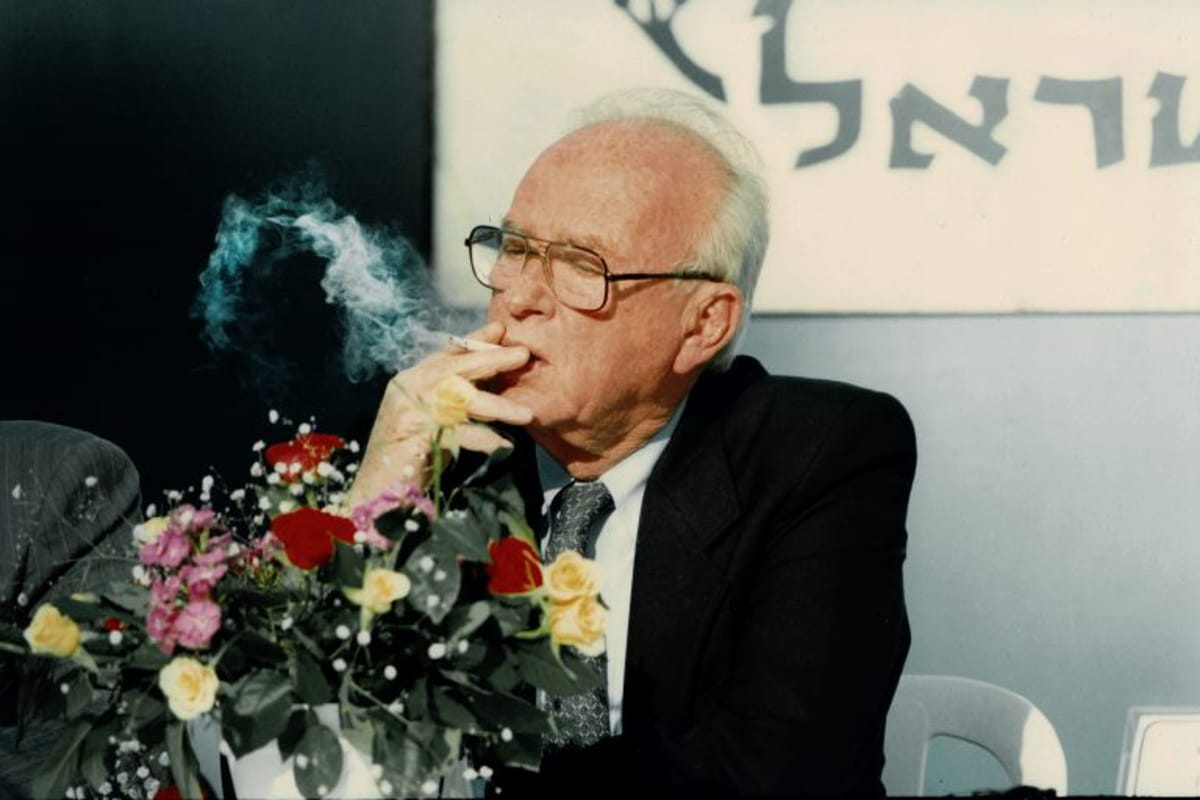
Fifty years after Operation Entebbe, the Knesset Archives has released classified protocols from the Foreign Affairs and Defense Committee, revealing dramatic behind-the-scenes discussions from the months before the hijacking of the Air France plane.
The documents show that Israel’s leadership had dealt with a similar terrorist threat in the region just months earlier, and that Prime Minister Yitzhak Rabin warned at the time that the incident could lead to a future hostage crisis.
On March 19, 1976, Rabin appeared before the committee and briefed MKs on a highly secret operation later known as Operation Heartburn. In that operation, the Shin Bet and Mossad thwarted an attempt to shoot down an El Al plane carrying 140 passengers as it approached Nairobi, Kenya.
The plot was organized by Wadie Haddad, a senior figure in the Popular Front for the Liberation of Palestine.
According to Natan Last, who heads the release of classified material at the Knesset Archives, the newly revealed protocols show that Rabin told the committee five terrorists had been arrested in Kenya during the final preparation stage for firing a shoulder-launched missile at the Israeli plane. The group included three Palestinians and two Germans from the Baader-Meinhof group, who were also connected to the terrorist known as Carlos.
Rabin described the extraordinary sensitivity of the operation, the cooperation with Kenya and the Kenyan demand for total secrecy surrounding the arrests.
During that same discussion, Rabin issued a warning that now appears chillingly accurate.
“My fear,” Rabin told the committee, “is that there will be an attempt at a bargaining attack against the Kenyans, and then they will pressure us to extradite them.”
Three months later, on June 27, 1976, an Air France plane was hijacked to Entebbe by Haddad’s men. Among the hijackers’ demands was the release of the five terrorists arrested in Kenya, the very same detainees Rabin had discussed with the committee.
Another newly released protocol documents a committee meeting held on June 29, two days after the hijacking. Rabin linked the two events himself.
“I once reported to the committee about something that almost happened to an El Al plane in the Nairobi area,” he said. “I admit that all along, until this moment, I hope my fear is a false fear, that this is an operation by Wadie Haddad to secure the return of the people held by us.”
The next day, Rabin detailed the hijackers’ demands and urged MKs to maintain strict secrecy, since Kenya had officially denied the arrests and Israel feared harming ties with Nairobi or endangering the hostages.
“If the Israeli chatter does not break this matter, we can withstand it. If not, God help us,” Rabin warned. “I ask you to be very careful regarding the special problem of the African country, because our lives depend on it. I am sorry to say that I rely more on their ability to stand firm than on our ability to hold our tongues.”
The newly released material also reveals the uncertainty that surrounded the first days of the crisis. Contrary to the later image of the military rescue as almost inevitable, the protocols show that an operation in Uganda initially seemed nearly impossible.
Rabin told committee members that “we have no ability to reach an Israeli presence in Uganda at this stage,” and said the intelligence picture was extremely limited.
Justice Minister Shmuel Tamir questioned whether Phantoms or Yasur helicopters could even reach the area. Rabin answered bluntly: “To get there, yes. To return, I do not know.”
Knesset Director General Moshe Edri said the release opens a rare window into the secret archives behind one of Israel’s defining operations. The Knesset Visitors Center will hold special tours next week marking 50 years since the rescue, including access to the newly released protocols, a presentation in the historic government room and a meeting with one of the fighters who took part in the Entebbe operation.