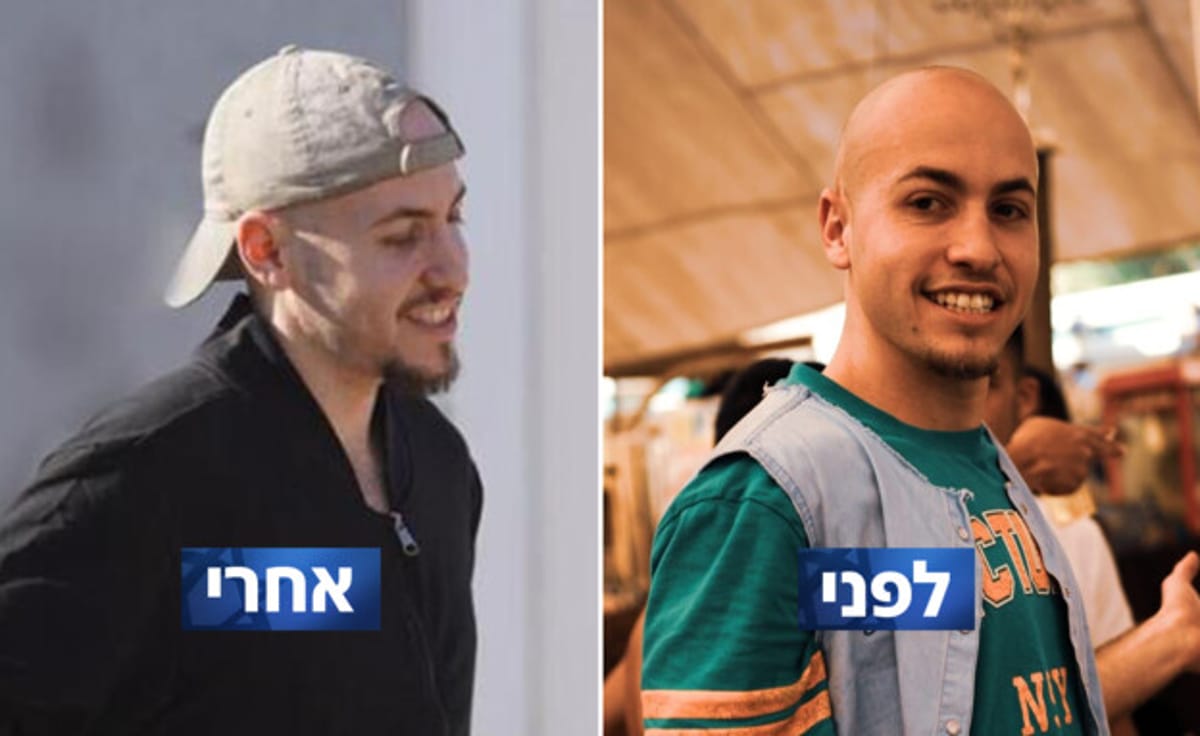
Just days after the historic exchange that brought Eitan Mor and 19 other hostages home to Israel, new details are emerging about the extraordinary ways Mor managed to survive 738 days in Hamas captivity. Eitan’s father, Dr. Zvika Mor, shared intimate details of his son's physical and mental resilience during his time in Gaza City, highlighting his dedication to self-improvement and unique interactions with his captors.
When asked about his son's condition, Dr. Mor expressed optimism: "Eitan is walking, he's getting stronger every day. We can really see him gaining strength. You see it in his vitality, even in the amount of food he puts on his plate. We are very optimistic, and we knew, we trust him. We trust that he would be strong, and he is strong. So, thank G-d, he's on a good track."
While security considerations currently prevent Eitan from sharing the full details of his ordeal publicly, Dr. Mor revealed the precise moment his son believed he was coming home. "Four days before he was released, they told them there was a deal, but they didn't really believe it. Because there had been such statements throughout the war. They didn't really believe it until they saw it happening." Eitan's belief was solidified when his captors began preparing them for the transfer: "The moment he understood it was really happening was when they prepared them for it. When they allowed them to get organized, to wear different clothes, I can’t say beautiful or normal clothes, but better, cleaner clothes than they had before, to get a haircut, to take a shower. That’s when they understood this time it was serious."
Survival Through Self-Mastery
The most remarkable revelation concerns Eitan’s focus on personal growth. He returned home fluent in reading, writing, and speaking Arabic in the Gazan dialect. "We are totally amazed by his level of Arabic. He writes Arabic as well as I write Hebrew. He reads Arabic books, Arabic newspapers," Dr. Mor said. "He essentially dedicated those two years to learning Arabic."
Eitan took a proactive approach to his education. "He simply took a Hamas member and asked him to teach him the letters in Arabic and he started connecting letters and words. And from talking to them there, and occasionally Al Jazeera was on, he learned from that. He simply took it as a challenge. He took it as a challenge and a mission for the period of his captivity that he would come out with something in hand. And he indeed came out with something in hand." Beyond language, Eitan used another skill to pass the time and engage his captors: cooking. "I can tell you that Eitan cooked in captivity and he also taught the Hamas members there to cook. He arrived there with a very high level of cooking because he had worked in it." Today, Eitan has no special requests for food, simply expressing gratitude for the abundance after subsisting mainly on rice and beans.
An Unconventional Dialogue
The father also recounted a conversation Eitan overheard between his captor and a Hamas military commander, Ezz a-Din al-Haddad, regarding Dr. Mor's public advocacy for his son's release. Eitan's captor told al-Haddad that Eitan’s father did not "want him home" because he did not join public demonstrations. Al-Haddad reportedly corrected the captor, saying that Eitan’s father loved him very much but had a different approach to securing the "prisoners'" release. Al-Haddad then suggested that Eitan should be released as quickly as possible because "his father isn't helping us. He is not serving our goals because he is not going to the demonstrations."