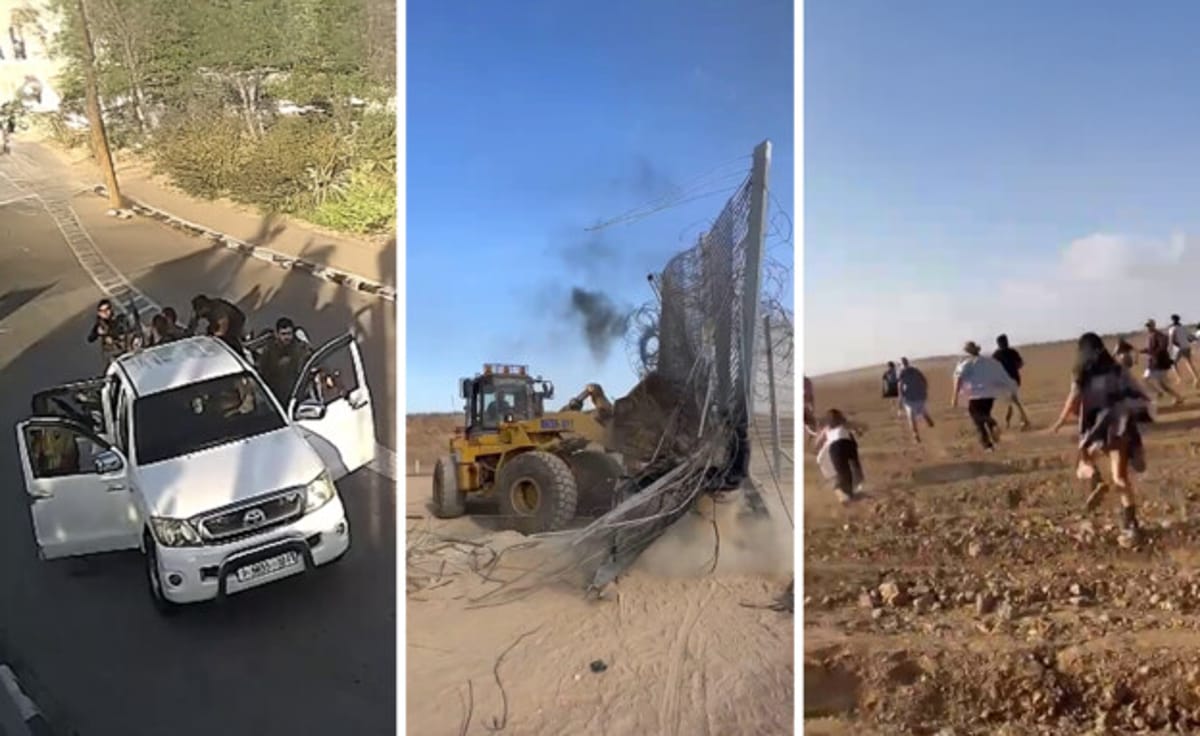
The Israeli military has publicly released the findings of its comprehensive external review, dubbed the "Inquiry of Inquiries," which investigated the catastrophic events leading up to the October 7 massacre. The report, conducted by an external team led by Major General (Res.) Sami Turgeman, delivers a devastating conclusion: The massacre could have been prevented, and "not a single meaningful action was taken during the critical hours" leading up to the attack.
The extensive inquiry, commissioned by Chief of Staff Eyal Zamir, identified six primary factors contributing to the massive failure, asserting that Israel's enemies identified a moment of internal weakening that damaged Israeli deterrence and increased the likelihood of escalation.
Six Core Failures Led to the Massacre
The Turgeman team’s findings point to a sweeping systemic failure across the IDF, but notably included no personal recommendations for disciplinary action against any senior officers. The six key factors cited in the report are:
- Conceptual Failure: A major disconnect between the strategic and operational reality and the prevailing perception regarding Gaza and Hamas.
- Intelligence Failure: A breakdown in understanding the threat and a failure to provide actionable warning.
- Neglect of the 'Jericho Wall' Plan: A failure to adequately address or prepare for a scenario covered by the internal "Jericho Wall" contingency plan.
- Flawed Organizational Culture: A deeply ingrained operational culture and standard characterized by poor norms developed over years.
- Operational Gap: A fundamental, continuous discrepancy between the assumed threat scenario and the military's actual operational response across all command levels.
- Faulty Decision-Making: A deficient decision-making process and inappropriate force deployment on the night of October 7.
The report emphasizes that multiple, unusual indicators were available on the night of the attack, but a lack of a cohesive command structure meant no professional figure compiled a comprehensive intelligence picture or initiated a discussion on raising the alert level.
Agency-Specific Condemnations
The inquiry issued pointed criticism against multiple key military components:
- Military Intelligence Directorate (AMAN): Failed on two fronts—inability to identify Hamas’s strategic and operational developments over the years, and a complete failure to provide a timely warning before the war began.
- Operations Directorate: Failed to prepare the IDF for a surprise war scenario, specifically ignoring the lessons learned from Operation Guardian of the Walls and neglecting the 'Jericho Wall' plan.
- Southern Command and Gaza Division: Failed in their primary mission to secure the area due to poor military research and a lack of operational suitability against the known threats.
- Air Force and Navy: Both failed in defending Israeli airspace and coastlines, respectively. While the report notes that AMAN's failure to raise the alert level contributed to low readiness, the Air Force was criticized for not adapting its operations to the wide-ranging attack that exceeded its pre-planned scenarios.
The Heroes Who Prevented Worse
The report acknowledges that the outcome would have been far worse without the extraordinary heroism displayed by certain personnel. The inquiry recognized the Commanders who charged into the combat zone without orders, many paying the ultimate price; the female observation soldiers (Tatzpitaniyot) who continued to report professionally despite personal danger "until their last breath"; and the civilian rapid response teams (Kitot Konenut) whose valor blunted the attack in many communities. The report stressed that if the warnings raised by the observation soldiers had been heeded, the attack might have been spotted.
Chief of Staff Zamir responded to the findings, stressing the crucial need for transparency for public trust. He also underscored the need for a "broad systemic inquiry" extending beyond the military to examine the inter-organizational and inter-level interfaces that were not part of the IDF's internal review.