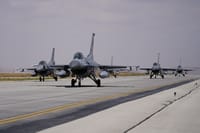
One of the most devastating failures during the October 7 Hamas invasion was the complete absence of an immediate, focused aerial response against the terrorists pouring across the Gaza border into southern Israel. An investigative report aired on Channel 12 News highlights critical lapses in command, intelligence, and readiness that morning.
At 7:40 a.m., one hour and 11 minutes after the massive ground attack began, then-IDF Chief of Staff Herzi Halevi issued a directive to the Air Force that stunned investigators: strike high-value "psychological impact targets" deep inside Gaza, such as tall buildings, broadcast stations, and incitement hubs.
The report notes this command was not carried out due to a shortage of aircraft in the air at that moment, but it nevertheless exposed a severe lack of situational awareness and intelligence among the IDF’s senior ranks. While the Chief of Staff focused on symbolic targets inside Gaza, over 1,000 Nukhba terrorists were already executing a coordinated slaughter inside Israeli territory.
Unprepared for Ground Invasion
The directive to target deep inside Gaza was issued simultaneously with Prime Minister Benjamin Netanyahu's order to pursue top Hamas leaders and the Southern Command’s declaration of "Operation Sword of Damocles," aimed at Hamas leadership and infrastructure.
However, the military directive "Parash Pleshet," intended to mobilize the Gaza Division into full emergency posture, was only partially implemented. Furthermore, the Air Force failed to make an independent decision to pivot its focus, continuing to strike Hamas tunnel infrastructure and failing to effectively engage the hundreds of terrorists actively infiltrating Israel.
The scarcity of resources was a critical factor. An internal IDF investigation published in February found that Air Force Commander Maj. Gen. Tomer Bar did not attend security consultations the night of October 6, resulting in the Air Force being wholly unprepared for a ground invasion scenario.
Late War Declaration and Limited Damage Control
The lack of preparedness was evident in the hours leading up to the attack. As late as 3:30 a.m. on October 7, only one UAV was redirected from the Judea and Samaria region to Gaza, and a mere two drones were operational over the Strip just before the invasion.
When the massive infiltration commenced at 6:29 a.m., the Air Force was still operating under normal peacetime protocol. It wasn't until 7:10 a.m., after thousands of terrorists had already breached the border, that the Air Force commander formally declared a state of war.
By 11:00 a.m., the IDF had managed to carry out 150 total strikes: 50 by fighter jets, 50 by fighter helicopters, and 50 by UAVs. Following the probe, senior Air Force officials acknowledged the devastating reality: "Without intelligence and advance preparation, preventing the disaster was impossible. We could only limit the damage."