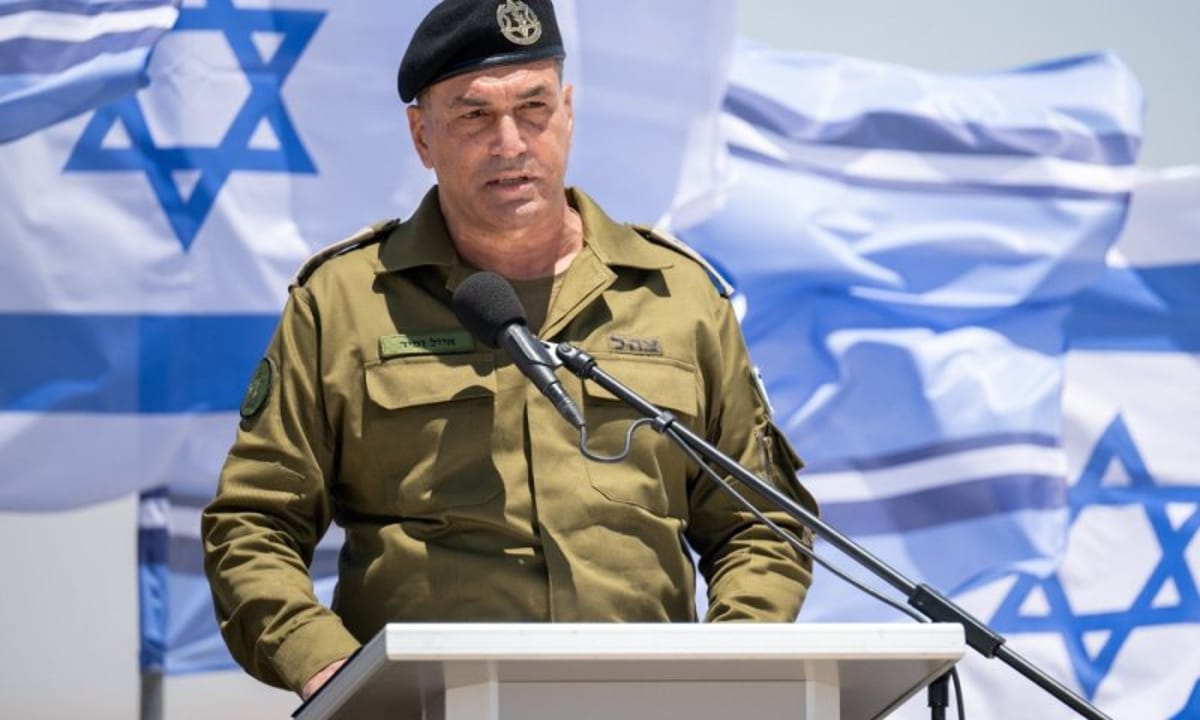
The structural integrity of Israel’s defense apparatus has taken center stage after Chief of Staff Eyal Zamir delivered an uncharacteristically sharp, public warning regarding ongoing domestic maneuvers targeting the armed forces. Speaking before a high-level military cohort at the graduation ceremony for the Alon Command and Staff College on Thursday evening, the nation’s top general addressed the building friction between security requirements and parliamentary maneuvering. Zamir utilized the high-profile platform to communicate a definitive message to legislative planners and coalition leaders, asserting that the armed forces must be completely insulated from external civilian pressures.
The military leader explicitly targeted the sharp political friction points currently surrounding pending conscription bills and proposed extensions to mandatory regular service periods. The military is currently being challenged from the outside in, with persistent attempts to drag it into political battles that simply do not belong to it, Zamir stated, directly referencing the intense societal debates that have polarized the country regarding the distribution of national service burdens. He emphasized that the professional military apparatus must remain entirely detached from partisan arenas, particularly as forces manage complex multi-front campaigns.
The core of the internal dispute centers on an acute operational manpower shortage triggered by the exceptionally long duration of the current war, a reality that has forced commanders to request a massive expansion of active combat formations. The ramifications of this war on personnel and the overall order of battle are highly visible and absolutely clear, the Chief of Staff explained, validating the systematic warnings issued by field commanders over the past several months. Zamir made it unequivocally clear that the professional leadership will not tolerate any dilution of its raw defensive capabilities to satisfy short-term political consensus, promising that the military will stand against these pressures like an iron wall.
The public stance adopted by the General Staff reflects an escalating, deep-seated disconnect between senior defense planners and the political echelon regarding the long-term management of troop resources. Throughout the recent months of intense regional operations, senior commanders have repeatedly signaled that the security challenges on the ground demand immediate, practical legislative solutions to expand the draft pool. The military establishment maintains that the recruitment of previously exempted demographics and the extension of regular service are non-negotiable operational necessities, completely independent of any backroom political negotiations.
As parliament continues to debate the specific legal frameworks governing future draft quotas, the high-intensity nature of the war continues to exert immense pressure on existing deployments. The defense leadership remains fully focused on maintaining strategic readiness across all active frontiers, including the volatile northern border and southern operations zones. By drawing a definitive line against political interference, Zamir is signaling that the survival metrics of the nation will dictate army policies, ensuring that tactical requirements on the battlefield are never bartered away for domestic legislative convenience.