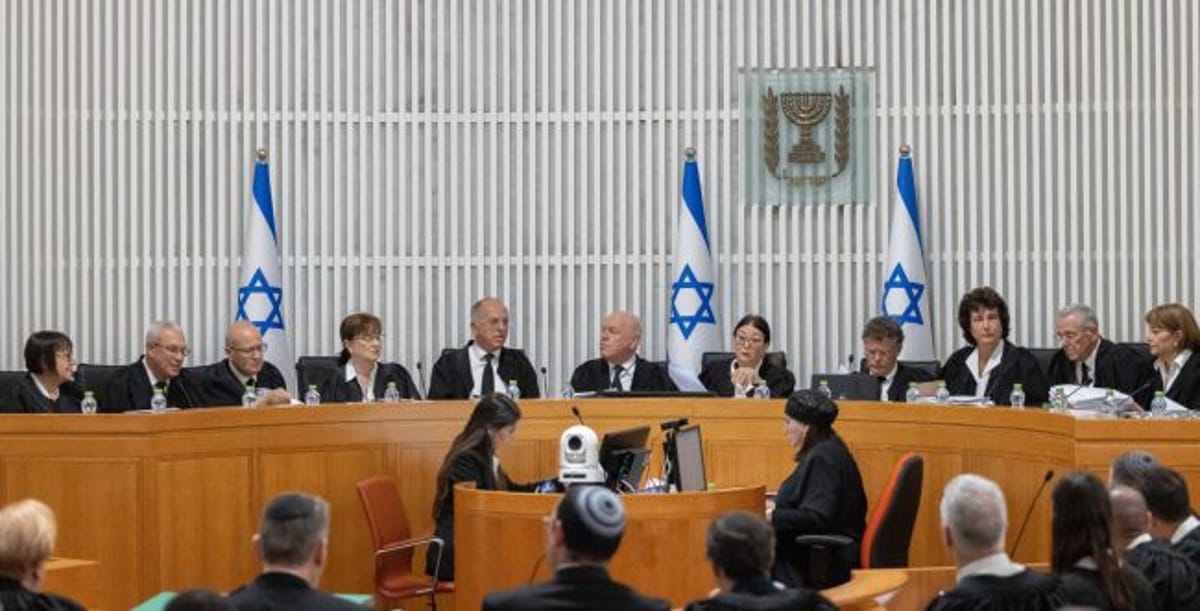
The High Court of Justice was set to hear a petition Monday challenging the state’s handling of discharged soldiers and reservists who died by suicide after military service, in cases where families say their deaths were connected to trauma from the Gaza war.
The petition was filed in January by the Jerusalem Institute of Justice and Forum Yahalomey Krav, an organization advocating for soldiers suffering from combat-related post-trauma. It is directed against Defense Minister Israel Katz and IDF Chief of Staff Lt. Gen. Eyal Zamir.
The petition asks the court to halt implementation of recommendations by a committee headed by former IDF Manpower Directorate chief Maj. Gen. (res.) Moti Almoz. The hearing was scheduled before Justices David Mintz, Gila Canfy-Steinitz and Yechiel Kasher, with bereaved families expected to attend.
The case centers on the gap between soldiers killed during active service and soldiers or reservists who return from war, are discharged or are no longer under active call-up, and later die by suicide. Under current law, the state says full military burial is generally available only to those in active service at the time of death or in specific categories set by statute.
The Almoz Committee recommended an interim support track for families while formal recognition is examined. That support may include IDF accompaniment, help in approaching the Defense Ministry and military elements at a civilian funeral, including commanders in uniform, a military wreath and participation by unit representatives.
But the committee did not recommend automatic recognition as IDF fallen soldiers or full military burial.
The petitioners argue that the recommendations create a lesser category of soldiers who “died after service,” drawing an unacceptable distinction between physical and psychological wounds. They say that when a causal link can be shown between combat service and death, there is no principled difference between a soldier who later dies from a physical injury sustained in battle and one who later dies from post-traumatic injury caused by service.
Attorney Gai Akoka, representing the families, called the case “a first-of-its-kind moral and public struggle in Israel,” and said the court should recognize such soldiers and reservists as IDF fallen soldiers.
Avi and Ola Pankinsky, whose son Gil, a Shayetet 13 fighter, died by suicide in November 2024, said they had felt “transparent” to the state and army since his death.
The state has asked the court to dismiss the petition. It said it does not minimize the pain of soldiers suffering mental trauma or families whose loved ones died by suicide, but argued that recognition requires a factual and medical examination, especially in suicide cases where the link to service may be complex.
For the petitioners, that is exactly the unresolved problem: the state offers support and symbols, but not the recognition they say the soldiers and families are owed.