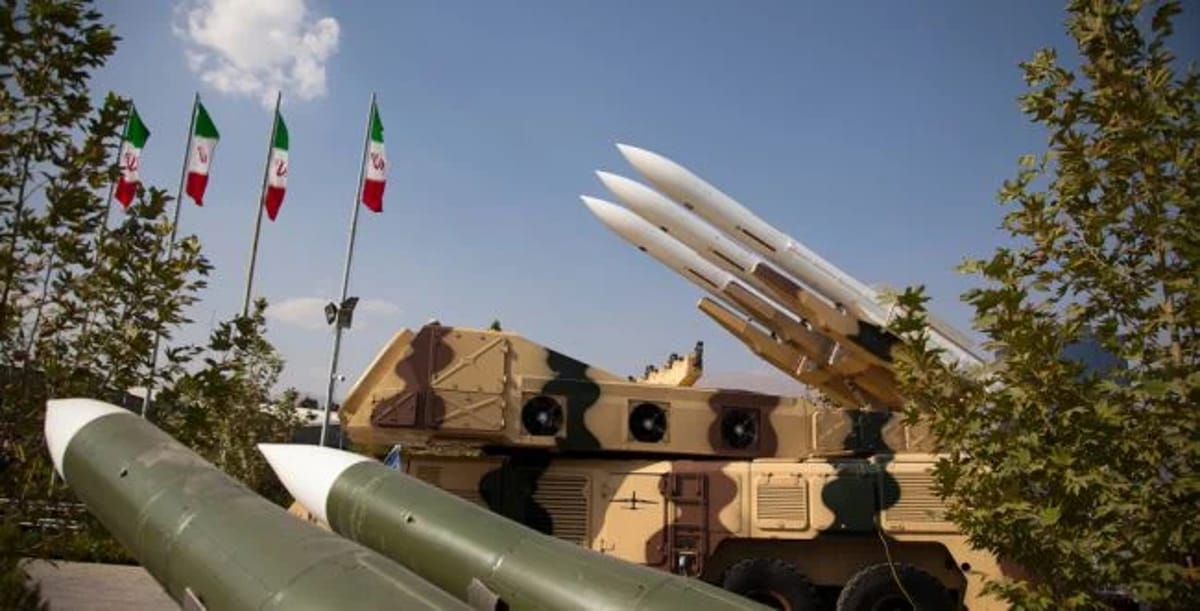
Following a destructive 12-day war this summer that ultimately settled nothing, senior officials and security analysts now view another large-scale war between Israel and Iran as an inevitability, not a possibility. The New York Times reports that both nations are actively preparing for a sequel, with Tehran rapidly increasing its missile production and Jerusalem focused on what it considers the enduring threat of Iran's nuclear program.
Iran’s new strategic gamble is sheer volume. According to Ali Vaez of the International Crisis Group, Tehran is aiming for around-the-clock production to launch a single wave of roughly 2,000 missiles to overwhelm Israel's sophisticated air defenses. During the June war, Iran launched approximately 550 ballistic missiles and 1,000–1,100 drones. While most were intercepted, these salvos still resulted in 28 deaths and sent 3,238 people to hospitals in Israel. On the Iranian side, casualties were also high, with the government acknowledging 900–1,060 deaths, while an independent monitor placed the toll nearer 1,190.
The Nuclear Program and the US Intervention
The strategic picture remains highly unstable, centered on Iran's nuclear material. Before the summer war, Iran's stockpile of enriched uranium had surged, and it remains a red line for both the US and Israel. The IAEA reported in mid-May that Iran held 408.6 kg of 60% enriched uranium and over 9,200 kg total enriched uranium, quantities far exceeding any credible civilian need. Independent analysis suggests this material is sufficient for roughly ten nuclear devices if further enriched. Post-June, Tehran has restricted international inspectors and pushed its work deeper underground, exacerbating uncertainty and risk.
The previous war was dramatically escalated by Washington's role. Nine days into the fighting, the United States conducted its first direct strikes on Iranian soil in decades, hitting nuclear and military targets at Fordow, Natanz, and Isfahan with bunker-busters and cruise missiles, following Israel's opening barrage. Iran responded with further missile strikes against Israel and threats against US assets across the region.
The Strategic Calculus
Israel's perspective is clear: The summer strikes successfully decapitated portions of Iran's air-defense, aerospace, and nuclear support networks, but the core issue, the fissile material and the hardened, deeply buried sites, persists. With Ayatollah Khamenei publicly dismissing renewed nuclear talks and Tehran accelerating its rearmament, officials in Jerusalem believe that if diplomacy collapses, preemption returns to the table.
The region is bracing for the known playbook. Iran can apply pressure through its proxies, including Hezbollah on the Lebanese front, Iraqi militias, and the Houthis at sea. Israel, in response, will target IRGC nodes, missile infrastructure, and nuclear enablers, whether openly or covertly.
The June war proved that while Israel’s multi-layered air defenses are resilient, volume and dispersion of fire can still draw blood. If Iran follows through on its threat of a 2,000-missile wave, the next war will be defined by its terrifying magnitude, dramatically increasing the potential for a catastrophic miscalculation.
“Israel feels the job is unfinished and sees no reason not to resume the war, so Iran is doubling down,” Vaez states. This sentiment captures the essence of the current uneasy truce: it is a combatants' intermission, not a curtain call. Intensified US–Israel coordination and loud European pressure at the IAEA are expected, but if talks fail, the clock tilts inevitably toward a kinetic option.