1. Tel Aviv Stock Exchange: Positive Momentum
Despite impressive and somewhat surprising gains during the two years of war, the impact on trading is expected to become even more significantly positive immediately. The stock market needs stability and optimism, and a positive trading trend is anticipated starting immediately. Should the war cease, trade relations with Israeli companies will resume and boycotts will be canceled, potentially in the crucial area of defense exports and imports.
2. The Shekel: Continued Strengthening
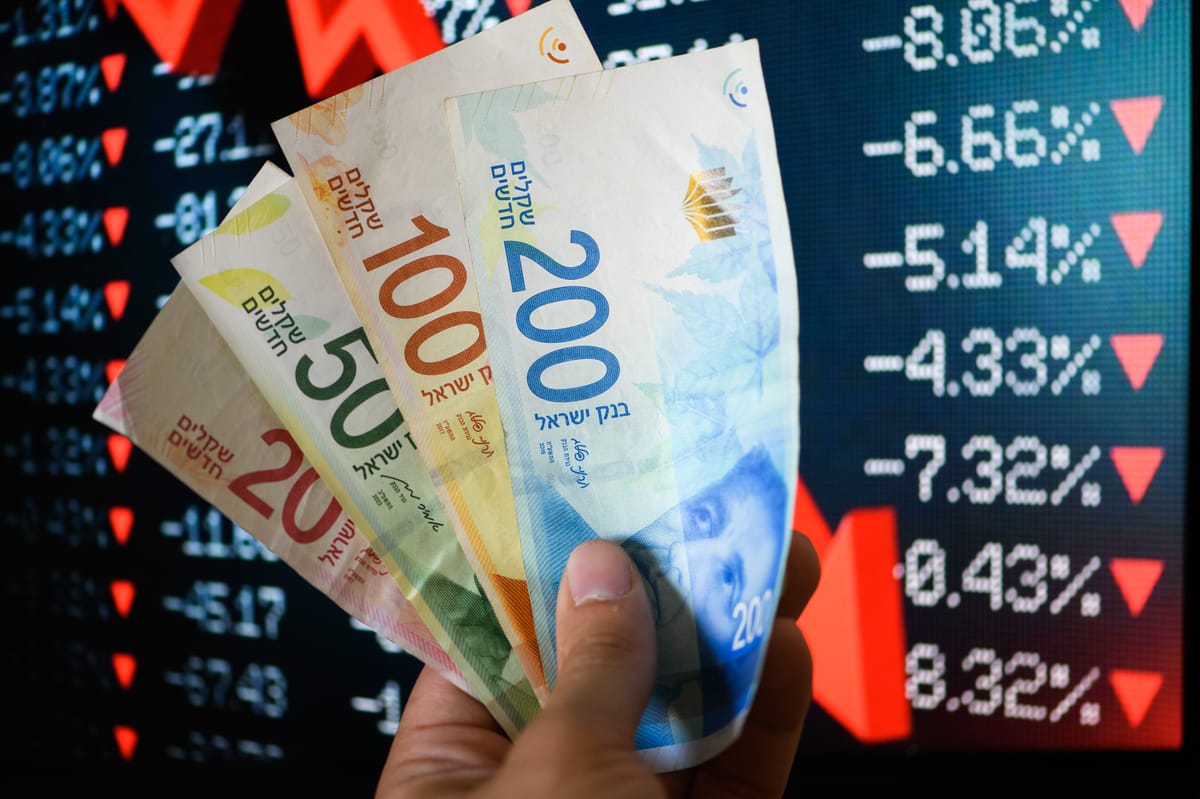
The continuous trading already saw a turning point several days ago. The dollar fell below NIS 3.30 (to 3.29), its lowest rate in three years. The Euro dropped to NIS 3.87 in continuous trading on Friday evening. Analysts estimate that when trading resumes, the Shekel will strengthen further, even in its representative exchange rate.
3. Credit Rating: Will Be Maintained
Credit rating agencies were reportedly close to deciding on a third (or even a fourth, in the case of Moody's) rating downgrade for Israel since the start of the war. Stopping the conflict will halt this intention, which will, at least initially, prevent worsening the terms of loans taken by the Israeli government globally.
4. Military Spending: Will Decrease
The war has so far cost the economy approximately NIS 330 billion, more than half of the revised 2025 state budget (NIS 650 billion). A single day of fighting, at the peak of the recent major operation, cost up to half a billion shekels. Ending the war will cut the daily expenditure to about half that amount, due to the release of reservists and the cessation of expensive strikes and bombings, even with the army remaining in the Gaza Strip.
5. Defense Budget Increase: Can Be Halted
The cessation of hostilities will give the Treasury reason not to accede to the IDF's demand for an additional NIS 20 billion. It is questionable whether it would be appropriate to transfer even the NIS 2–4 billion that was already agreed upon in principle within the 2025 budget framework.
6. Business Sector: Recovery
Reserve soldiers will be released, tens of thousands of employees will return to their workplaces, and the business sector, which was severely impacted by the extensive mobilization during the Gaza operation, will recover.
7. The Deficit: Will Shrink
The deficit, which recently ballooned to 5.2% and was feared to approach 6% by the end of 2025, will shrink.
8. Austerity Measures: Will Be Canceled
Ending the war and avoiding a larger deficit will negate the need for harsh austerity measures in 2026, which the Treasury had already begun planning, primarily painful new cuts to education, health, and welfare. It will allow for the re-promotion of infrastructure plans and the freezing of further tax hikes.
9. Interest Rate: Will Drop
The Bank of Israel, which has been extremely cautious due to inflation fears, may follow the trend in the US and, for the first time in 22 months, drop the interest rate by a quarter of a percent to 4.25% as early as next month.
10. Investors: Will Return
The cancellation and postponement of investments by international companies will be gradually revoked. This involves billions of dollars awaiting investment in Israel. Economic and commercial boycotts imposed by countries and companies on Israeli imports will also be lifted. The major beneficiaries are expected to be the defense and high-tech sectors.
Even if only some of these 10 points materialize, the Israeli economy is poised to surge forward in 2026: forecasts from the Bank of Israel and the Treasury will be revised, growth will accelerate, and the country's debt-to-GDP ratio, which has recently risen, will contract.