The State of Israel has arrived at a critical strategic crossroad as international negotiators advance toward a potential framework treaty with Iran, triggering intense domestic debate over the future of the northern front. Military strategists are warning that the political leadership must completely reject a return to the pre-October 7 containment policies that allowed hostile non-state armies to embed themselves directly along civilian borders. As terrorist elements in Lebanon attempt to project an illusion of survival and operational resilience, Israeli defense planners are being urged to maintain a high-intensity kinetic campaign to permanently reshape regional security parameters.
The current operational window between the early drafting of an international nuclear treaty and its formal execution represents a vital phase for active counter-terrorism maneuvers. Regional security experts emphasize that adversaries look to utilize this diplomatic transition to rehabilitate their domestic morale and position themselves as the primary defenders of Lebanese territory. To prevent the northern border from devolving back into a costly war of attrition, the Israel Defense Forces must aggressively accelerate their operational momentum, ensuring that the adversary is thoroughly dismantled before any international signatures are placed on paper.
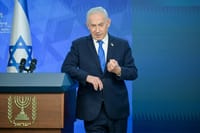
Recent targeted aerial strikes against key command nodes in ancient coastal hubs like Tyre and Nabatiyeh demonstrate a calculated expansion of Israeli defense policy beyond the immediate border fence. These deep kinetic operations are designed to communicate a clear message to both the terrorist leadership and international mediators that Israel's freedom of maneuver will not be restricted to a narrow security corridor. Prime Minister Benjamin Netanyahu has reportedly communicated these exact parameters during closed-door conversations with United States President Donald Trump, emphasizing that any regional arrangement must safeguard Israel’s independent right to neutralize emerging threats.
The domestic political landscape remains highly sensitive to the concerns of tens of thousands of displaced northern residents, who categorically reject any return to a fragile, managed status quo. Defense analysts note that the core lesson of recent national security failures is that existential threats cannot be managed through proportional responses or routine containment containment. Allowing an active terrorist entity to rebuild its rocket arsenals and establish heavily armed outposts along civilian perimeters under the guise of an international ceasefire is increasingly viewed as a recipe for future catastrophe.
Furthermore, economic analysts point out an inseparable link between the Washington-Tehran negotiations and the financial survival of regional proxy armies, warning that any financial relief granted to Iran will rapidly transform into operational capital for terrorism in Lebanon. The Israeli defense establishment, led by Chief of Staff Eyal Zamir, remains highly vigilant regarding the potential influx of foreign funding to regional adversaries if international sanctions are prematurely relaxed. Consequently, Jerusalem is being advised to maintain maximum military pressure to ensure that any final diplomatic agreement results in a genuine, verified rollback of hostile forces rather than a polite reorganization of the same danger.