As Prime Minister Benjamin Netanyahu has refrained from any official public comment on the emerging U.S.-Iran framework, a senior Israeli political official broke the silence on Sunday, issuing Jerusalem's first formal response to the rapidly developing negotiations between Washington and Tehran, talks in which Israel finds itself almost entirely on the outside.
The official confirmed that the United States is briefing Israel on the memorandum of understanding being negotiated to open the Strait of Hormuz and launch talks toward a final agreement on outstanding points of dispute. "The U.S. is updating Israel on the negotiations for the memorandum of understanding on the opening of the Strait of Hormuz and entry into negotiations for a final agreement on disputed points," the official said.
Freedom of action
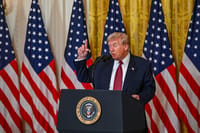
The central message from Jerusalem was on Lebanon. In a phone call Saturday night between Netanyahu and President Trump, the prime minister made one point unambiguously clear: Israel will preserve full freedom of action against threats on all fronts, including Lebanon. The concern in Jerusalem is that the emerging deal may include a clause requiring a ceasefire in Lebanon, which Israeli officials fear would constrain Israel's ability to operate against Hezbollah.
According to the senior official, Trump "reaffirmed this principle," meaning he confirmed Israel's right to maintain full freedom of action. However, the official's statement left open the question of how durable that commitment will prove once the agreement with Iran formally takes effect.
"The deal is bad because it signals to Iran that they have a weapon no less effective than a nuclear one and that weapon is the Strait of Hormuz."
- Senior Israeli official, cited by Kikar HaShabbat
Trump's nuclear pledge
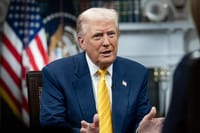
The Israeli official also conveyed Trump's stated position on Iran's nuclear program. "President Trump made clear that he will stand firm in negotiations on his consistent demand for the dismantlement of the Iranian nuclear program and the removal of all enriched uranium from Iranian territory," the statement read. Trump further clarified, according to the official, that "he will not sign a final agreement without receiving these conditions."
The pledge comes after reports in the American press suggested Iran had agreed in principle to relinquish its stockpile of highly enriched uranium — but without specific details on how or when that would be implemented. A senior Iranian source told Reuters separately on Sunday that the nuclear issue is not part of the preliminary agreement and will only be addressed in a final deal.
Opposition says: tell America no
While the Israeli government has avoided open criticism of the deal, opposition MK Benny Gantz published a sharp response Sunday, attacking the emerging framework and flanking the government from the right. "Under no circumstances can we accept a ceasefire in Lebanon as part of a deal with Iran," Gantz wrote, warning of severe strategic consequences.
Gantz emphasized the danger to Israel's northern communities: "The villages in southern Lebanon sit hundreds of meters from Metula, Shlomi, and Misgav Am, and Israel has a duty to protect its residents independent of any external factor." He concluded with an unambiguous demand: "This is exactly the case where Israel needs to tell America - no."
The broader Israeli concern
Beyond Lebanon, a senior Israeli official gave voice to a deeper strategic anxiety about the deal's message: "The deal is bad because it signals to Iran that they have a weapon no less effective than a nuclear one and that weapon is the Strait of Hormuz." The implication: by rewarding Iran's mine-laying and port blockade with sanctions relief and oil revenue, the agreement teaches Tehran that economic hostage-taking works.
Secretary of State Marco Rubio, speaking in New Delhi, said Sunday that significant developments on Iran are expected during the day. The deal has not been formally signed as of publication.