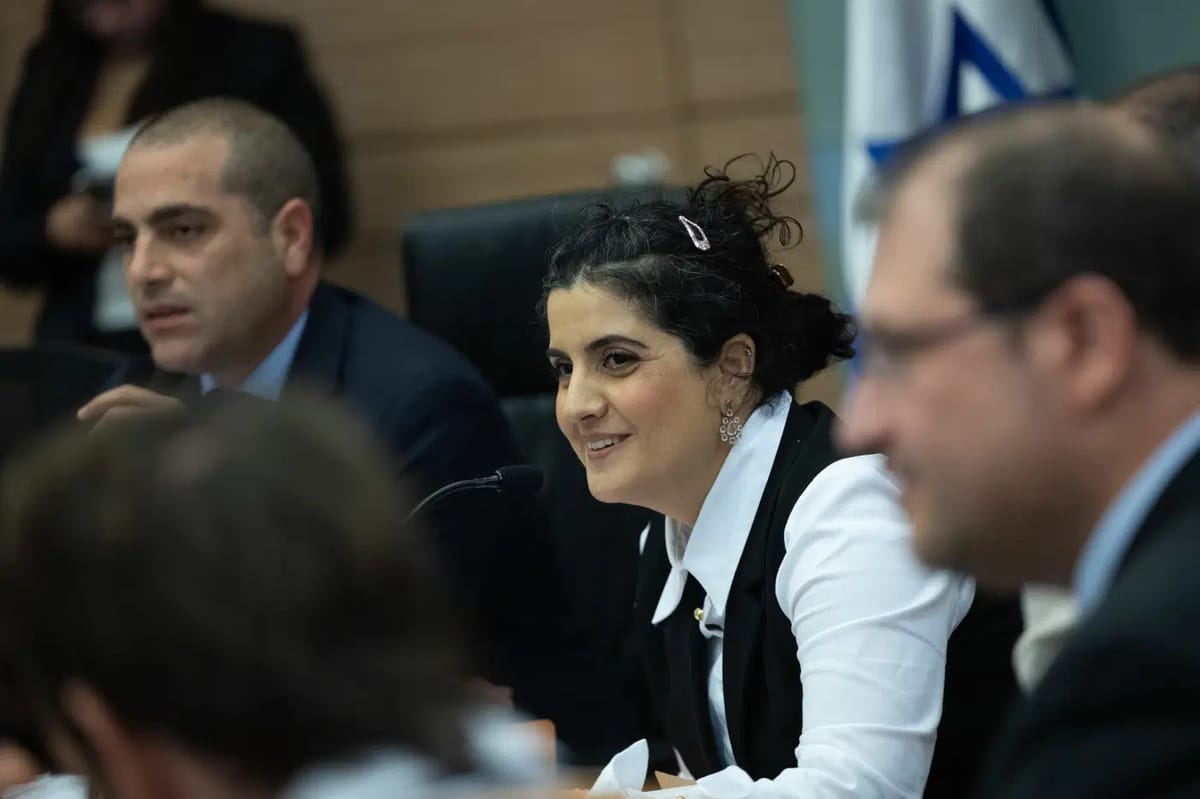
Knesset Legal Adviser Sagit Afik sent a letter to Knesset members Tuesday ahead of the vote on legislation freezing arrests of yeshiva students, warning that lawmakers with family members already facing arrest warrants or legal proceedings over failure to report for military service must formally disclose that fact before participating in the debate or vote.
In her letter, Afik explained that the bill includes mechanisms to freeze arrest proceedings against yeshiva students whose Torah study is their vocation, to halt prosecution for failing to report for service, and to suspend legal proceedings already underway against those in that category. Given that these provisions could have a direct effect on the legal standing of specific individuals, Afik wrote, any lawmaker with a family member who already has an arrest warrant issued against them for desertion or non-appearance, or who has actually been arrested or is currently in enforcement or legal proceedings that haven't concluded, faces a real or at least apparent conflict of interest if they intend to take part in the debate or vote.
Afik was careful to clarify the disclosure requirement is not disqualifying. Knesset ethics rules do not prevent a member from voting in the plenum after making the required disclosure, and there is nothing barring their participation in the vote once they've declared the personal interest. The letter states that responsibility for avoiding a prohibited conflict of interest ultimately rests with each individual lawmaker, based on their own knowledge of their personal and family circumstances.
Afik also drew a clear line on who does not need to disclose: a lawmaker whose relative simply belongs to the broad population of yeshiva students who haven't reported for service, but against whom no arrest warrant has been issued and no enforcement proceedings have begun, is not required to make a disclosure, since that group is far too broad to trigger the requirement on its own.
According to Walla, MK Aryeh Deri has three grandsons who are currently deserters, a detail that gives the disclosure requirement immediate practical relevance ahead of Tuesday afternoon's vote. The Knesset is expected to approve the bill freezing arrests of yeshiva-student deserters in its second and third readings later Tuesday, over the objections of both the Knesset's legal advisers and IDF Chief of Staff Eyal Zamir.