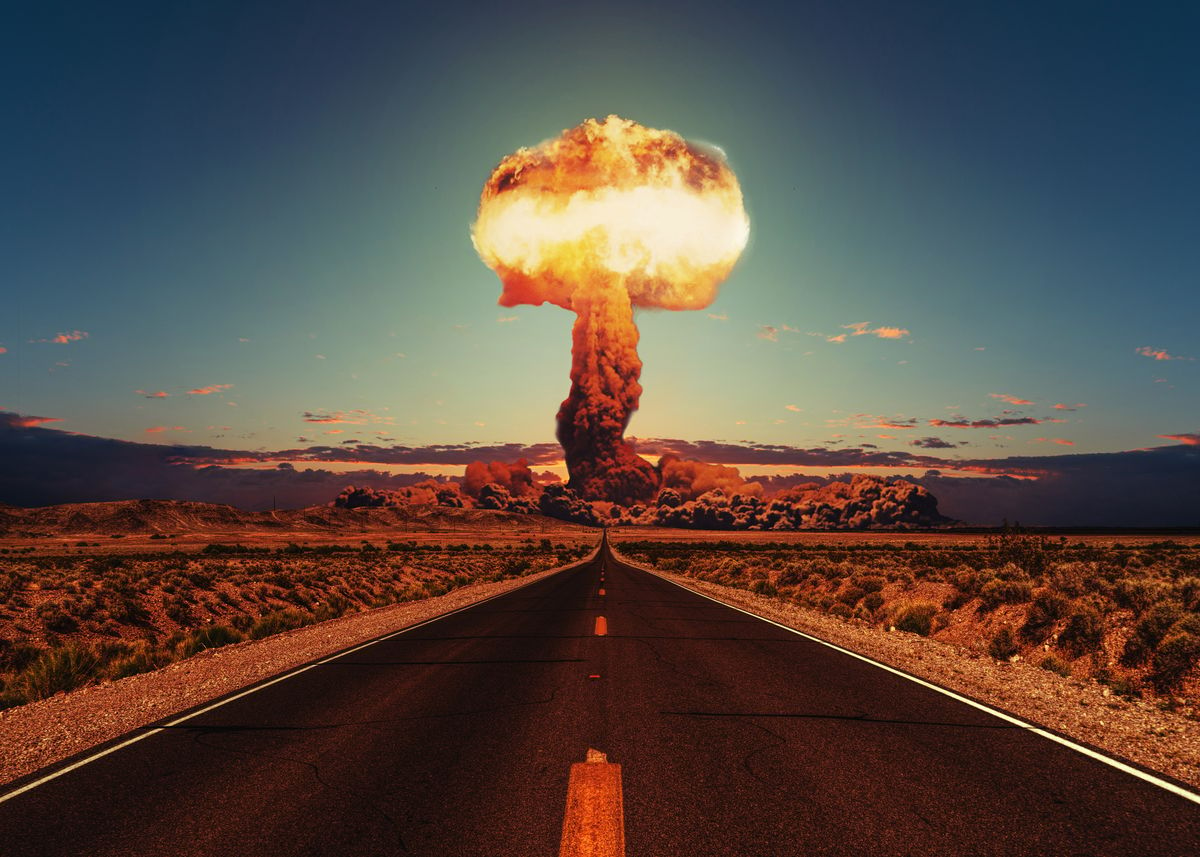
In the shadow of Israel’s historic military operation deep inside Iranian territory, an operation driven by the threat of nuclear annihilation, it's crucial to grasp why nuclear weapons are not just another form of warfare but a unique existential danger to humanity.
A nuclear bomb, unlike any conventional weapon, releases an incomprehensible amount of energy through nuclear fission or fusion, leading to devastating consequences on multiple levels. Its immediate effects include:
- Shockwave (Blast Pressure): The initial detonation generates an enormous blast wave, capable of crushing buildings, throwing vehicles like toys, and flattening entire neighborhoods within several kilometers. The pressure alone can kill or seriously injure at vast distances.
- Thermal Radiation: Temperatures at the blast center can exceed 7,000°C, instantly vaporizing materials and human beings. The blinding flash, visible for dozens of kilometers, can ignite fires and cause third-degree burns on exposed skin. In Hiroshima, entire districts caught fire within seconds.
- Ionizing Radiation: Nuclear explosions release deadly ionizing radiation, including gamma rays and neutrons. This radiation penetrates deeply into human tissue, damaging DNA and leading to acute radiation syndrome, cancer, and long-term genetic mutations.
- Electromagnetic Pulse (EMP): A high-altitude nuclear blast can unleash an EMP, crippling electric grids, hospitals, water infrastructure, and communication networks. In today’s digital world, a major EMP event could paralyze entire countries without a single direct casualty.
But the long-term damage is even more chilling. Nuclear fallout, radioactive debris carried by the wind, can contaminate soil, water, crops, and air over hundreds of kilometers. A 1-megaton ground detonation can generate lethal fallout as far as 100 km downwind. In cities like Tel Aviv, that would mean surrounding areas such as Ramat Gan, Givatayim, Petah Tikva, Bat Yam, and Herzliya could face deadly exposure within 20–25 minutes if no shelter is found.
Health impacts last for decades. Survivors of Hiroshima and Nagasaki reported skyrocketing rates of leukemia, thyroid cancer, and congenital deformities, particularly in children exposed in utero. One study found a fivefold increase in solid tumor rates among those exposed to high radiation levels.
Environmental consequences are equally dire. In places like Bikini Atoll, where the U.S. tested hydrogen bombs, radioactive contamination has persisted for over 70 years. In Semipalatinsk (Kazakhstan), where the Soviet Union conducted over 450 tests, vast areas remain uninhabitable, and residents suffer high rates of cancer and birth defects.
The global nightmare scenario is “nuclear winter.” Massive firestorms would loft soot into the stratosphere, blocking sunlight and causing temperatures to plummet worldwide, leading to failed harvests, ecosystem collapse, and potential mass starvation.
The horrific historical record speaks volumes:
- Hiroshima (1945): Over 140,000 dead by year’s end.
- Nagasaki (1945): Over 74,000 dead.
- Castle Bravo (1954): A miscalculated U.S. hydrogen bomb test that vaporized islands, poisoned entire Pacific communities, and shocked the world with its radioactive fallout.
- Semipalatinsk (1949–1989): A legacy of nuclear trauma still felt today.
As Israel strikes targets inside Iran to disrupt its nuclear program, this is not a political gambit, it is a desperate measure against a weapon capable of obliterating entire nations in seconds. The terrifying history of nuclear arms is a sobering reminder of what’s at stake.