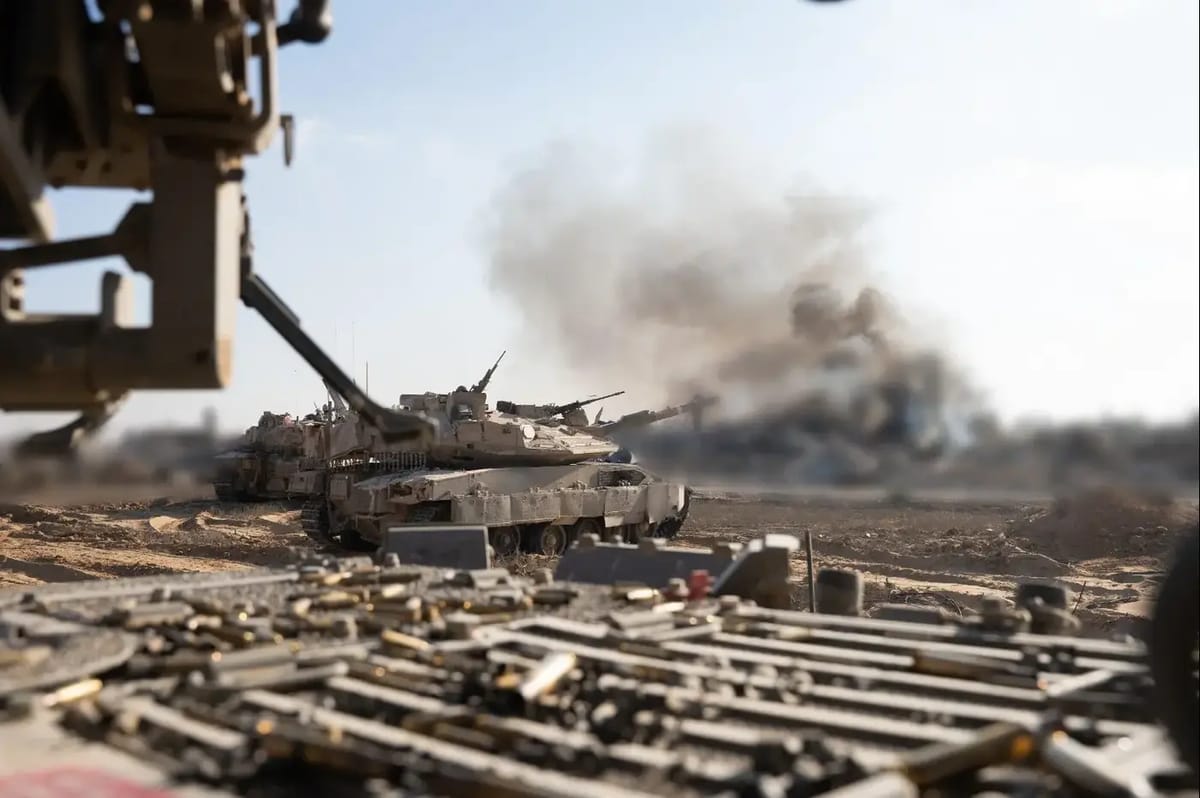
A New Form of Urban War in Rafah
The continuous war in the Gaza area has entered a new, exceptionally challenging phase in Rafah, where the tactics employed by the Hamas terror group are testing the Israeli Defense Forces (IDF). An incident today (Thursday) in the Rafah area, where four Hamas terrorists suddenly emerged from underground infrastructure shielded by collapsed buildings, underscores one of the most difficult challenges faced by the IDF.
Golani Brigade officers operating in the southern Gaza area describe the current fighting characteristics as reminiscent of the Battle of Stalingrad during World War II: a dense urban environment, completely destroyed buildings, and an extensive network of tunnels. Military history considers Stalingrad to be one of the most brutal and complex urban wars ever fought.
A senior field commander fighting in the Rafah sector explained that the sheer scale of the building destruction renders conventional military logic obsolete. "In a regular building, you have windows, an entrance, openings, rooms, and roofs. In a destroyed building, it is unclear where a terrorist might emerge. It can happen from any void. From any direction," the commander stated.
Four Critical Challenges
Hamas terrorists are expertly leveraging the devastation to evade observation and complicate the work of surveillance aircraft. The fighting in Rafah presents four core challenges:
- The Ruins: The vast destruction is utilized by the terrorists for concealment and surprise movement.
- The Tunnels: The underground network remains wide and sprawling, enabling unpredictable movement.
- Target Acquisition Time: Because terrorists use the ruins and tunnels to move rapidly, the time between initial detection and successfully engaging the target from ground and air has drastically shortened.
- The Siege: For the first time, in a classical military sense, IDF soldiers are implementing a full siege in the Rafah area. Despite the difficulty of imposing a siege in an area ostensibly devoid of non-combatant civilians and lacking food or water supply lines, the IDF is proving its capacity to master the military technique, while Hamas is simultaneously proving its capacity to severely challenge the forces on the ground.
It is estimated that over twenty Hamas terrorists remain hidden in the area, moving between the underground and the ruined buildings. Israeli intelligence suggests these trapped terrorists are running out of food and water and may attempt suicide attacks against the soldiers.
Hamas Ceasefire Violation and Israeli Retaliation
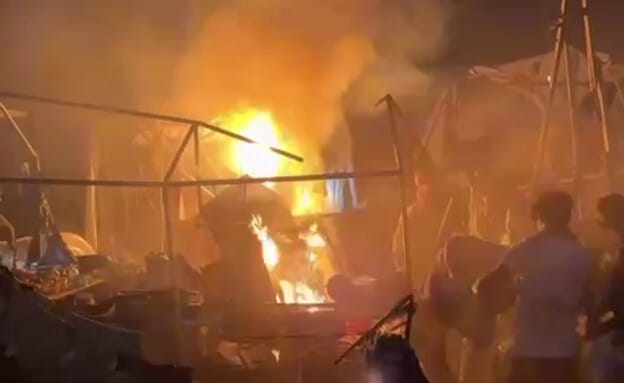
The incident today in the Jeneinah neighborhood in eastern Rafah began when Golani reconnaissance soldiers identified a terrorist covered in a blanket entering a structure. After introducing a drone into the building yielded no results, an armored personnel carrier (Namer) was sent to reinforce the area. Suddenly, two terrorists emerged from a tunnel. One fired an RPG, while the other was eliminated. The RPG-firing terrorist, after being hit by Israeli forces, escaped injured back into the tunnel shaft.
The attack wounded five IDF soldiers—three critically and two lightly to moderately. The severe nature of the incident, which represents a clear violation of the ceasefire agreement, triggered an immediate response from the highest levels of the Israeli government.
Prime Minister Benjamin Netanyahu convened a security discussion with the defense establishment's top brass, including Minister of Defense Yoav Galant and Chief of Staff Eyal Zamir. Netanyahu released a statement: “Israel will not tolerate harm to IDF soldiers, we will respond accordingly.” Chief of Staff Zamir was adamant in the discussion: “It is absolutely impossible to pass over this event in silence.” Zamir stressed: “It is unacceptable that terrorists emerge from tunnels and shafts where they were trapped, and while escaping to hiding places, they carry out terror attacks against IDF soldiers in the area.”
Following the internal deliberations, the Israeli Air Force (IAF) attacked an area in Al-Mawasi, a humanitarian zone near Khan Younis, attempting to eliminate a field commander in the Rafah Brigade. Reports from the Gaza area claimed six fatalities in the Israeli strike. A senior Israeli official told the press: "This is a severe violation of the ceasefire agreement. We are coordinating with the Americans on the matter and have clarified the gravity of the matter."
In response to the Israeli strike, Hamas security mechanisms reportedly disseminated warnings to Gazan residents via their affiliated channels, cautioning them to exercise extreme vigilance and caution regarding their movements, locations, and communications, anticipating a swift escalation from Israel.