Hamas Fears 'Stage B' and Surprise Assassinations
The leadership of the Hamas terror group is reportedly expressing growing concern over the prospect of an Israeli surprise attack, including targeted assassinations of senior figures, and a full-scale resumption of the war. These fears escalated following the elimination of the Zaytun Battalion Commander, Imad a-Salim, and the Hezbollah Chief of Staff, Haitham Ali Tabtabaei, during the ceasefire period.
In light of this tension, Israel’s security establishment anticipates that the moment Hamas senses Israel is losing patience and is close to renewing the war, the terror group will instruct its operatives to transfer the remaining fallen hostages. This move would be intended to apply pressure on Israel to transition to "Stage B" of the agreement.
Hamas leaders are currently working through informal channels to secure commitments that the demilitarization of the Gaza area and the transfer of its government will not actually happen. Despite this, the terror leadership believes the United States is likely to pressure Israel into moving to Stage B, which is expected to include: an Israeli withdrawal from the territory it controls, the establishment of a new tent city in Rafah, the reconstruction of the entire area, and the full opening of the Rafah crossing for pedestrian entry from Egypt, followed later by the entry of goods.
This assessment comes after an announcement today from the Prime Minister’s Office confirming that forensic findings delivered to Israel yesterday were not connected to the remaining fallen hostages. Security officials were reportedly not surprised, operating under the assumption that Hamas is stalling to gain time. This delay allows approximately 600 trucks carrying goods, equipment, and energy, far exceeding immediate consumption needs, to enter the area daily, enabling the terror group to stockpile significant reserves.
Rafah Crossing Announcement Sparks War
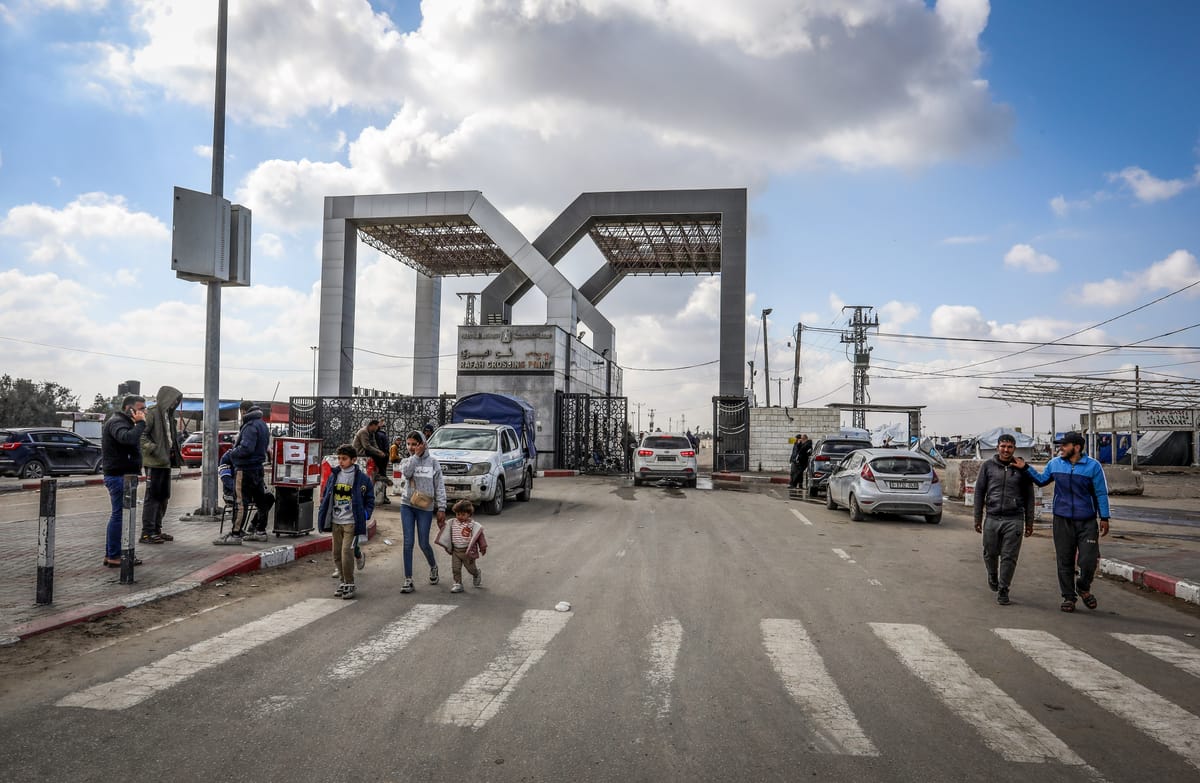
The political leadership today instructed the opening of the Rafah crossing for the exit of Palestinian residents from the Gaza area into Egypt in the coming days. While the ceasefire agreement includes the entry and exit of Palestinians, the Israeli government currently opposes allowing pedestrians to enter the Gaza area.
This announcement immediately ignited a diplomatic war with Egypt.
The sequence of events was swift:
- Israel’s Announcement: Israel stated that the Rafah crossing would open for the exit of residents only, in accordance with the ceasefire agreement. It specified that exit would require coordination with Egypt, Israeli security approval, and supervision by a European Union delegation, similar to a mechanism used in January 2025.
- Egypt’s Denial: The Egyptian Information Service quickly contradicted the Israeli statement, denying any coordination with Israel on opening the crossing for Gazan exit. Critically, Egypt asserted that if an agreement is reached, the crossing must open in both directions, for both entry and exit.
- Israeli Retort: Israeli officials responded forcefully, with one source stating: “Israel will open the crossings for the exit of Gazans to allow them to leave Gaza.” The source added defiantly: "If the Egyptians do not want to take them in, that is their problem." A security source emphasized: "Despite the Egyptian announcement, Israel is preparing to open the crossing as planned."
In a peculiar turn, the US Department of State published a post on X (formerly Twitter) welcoming the opening of the Rafah crossing but immediately deleted it. The deleted post reportedly credited the opening to "strong coordination" and stated that it would provide "increased and faster access to life-saving medical care" for the most vulnerable Gazan residents, citing it as further proof that the White House's 20-point plan was leading to a safer, more prosperous Gaza.
The Rafah crossing is a major point of contention and a source of concern for Israeli security officials, who worry that Hamas will exploit full access to smuggle weapons and dual-use materials into the Gaza area. Humanitarian aid and goods will continue to enter only through the Kerem Shalom crossing under Ministry of Defense control, following strict security inspection.