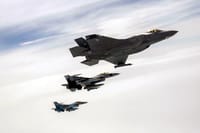
Nearly a year after being appointed his military secretary and promoted to the rank of major general, Prime Minister Benjamin Netanyahu has selected Roman Gofman to serve as the next head of Mossad. He will succeed Dedi Barnea, who is completing a five-year term highlighted by the successful “Operation Rising Lion.”
Who is Roman Gofman?
- Roman Gofman was born in 1976 in Mozyr, Belarus. He immigrated to Israel as part of the large post‑Soviet aliyah wave and later rose through the ranks of the Israel Defense Forces (IDF).
- Over his career, Gofman commanded several significant units and formations, including the 7th Armored Brigade (“Saar me‑Golan”) and the 210th Territorial Division “Bashan” in the Golan Heights.
- On October 7, 2023, during the outbreak of the war, while serving as commander of the Army Combat Training Center, Gofman went to Sderot to assist in responding to the Hamas attack and was seriously wounded.
Role under Netanyahu & Recent Promotions
In April 2024, PM Netanyahu appointed Gofman as his Military Secretary, replacing Maj. Gen. Avi Gil. As part of the appointment, Gofman was promoted to the rank of Major General (אלוף). The promotion ceremony was held on May 16, 2024, at the Kirya, attended by Chief of Staff Herzi Halevi, Defense Minister Yoav Gallant and other senior officials.
Tensions & Criticism — Why Some View Gofman as Controversial
According to reports, there has been tension between the Chief of Staff and Gofman. Some within the military establishment reportedly opposed his appointment, citing differences in security outlook, and were unhappy about Prime Minister Netanyahu bypassing their reservations.
Media and analysts have pointed out that Gofman’s rapid rise and his closeness to Netanyahu raise concerns over politicization of senior security appointments, potentially affecting the balance of civil‑military relations and decision‑making autonomy.
What’s Next?
Gofman was widely regarded as a leading candidate to become the next chief of Mossad, replacing current director David Barnea when his term ends in June. ([JDN][5])
Today, Netanyahu officially selected him for the position. For Gofman, this will be a dramatic shift, from army command and political‑military liaison to leading Israel’s foreign intelligence agency.
What Gofman’s Ascendancy Means for Israel’s Security Landscape
- Gofman represents a blend of frontline combat experience and political‑military coordination, especially relevant in the current conflict and security environment. His direct involvement in the October 7 response and survival from serious wounds give him both credibility and symbolic weight.
- His deep ties to Prime Minister Netanyahu and role as Military Secretary reveal a deliberate strategy to place trusted loyalists in key national security positions, potentially reshaping Israel’s decision‑making structure.
- As Head of the Mossad, Gofman could influence not just defense policy but broader aspects of national security, intelligence operations, and Israel’s strategic posture toward Gaza, Lebanon, Iran, and regional threats