Get our mobile app
Download on the App StoreGet it on Google Play

Self-Examination

Eisenkot: I Could Have Done More on Oct. 7

Gadi Eisenkot, who left his post as IDF Chief of Staff five years before the Hamas massacre, says he should have relocated bases near the Gaza border and criticizes Netanyahu's wartime decision-making

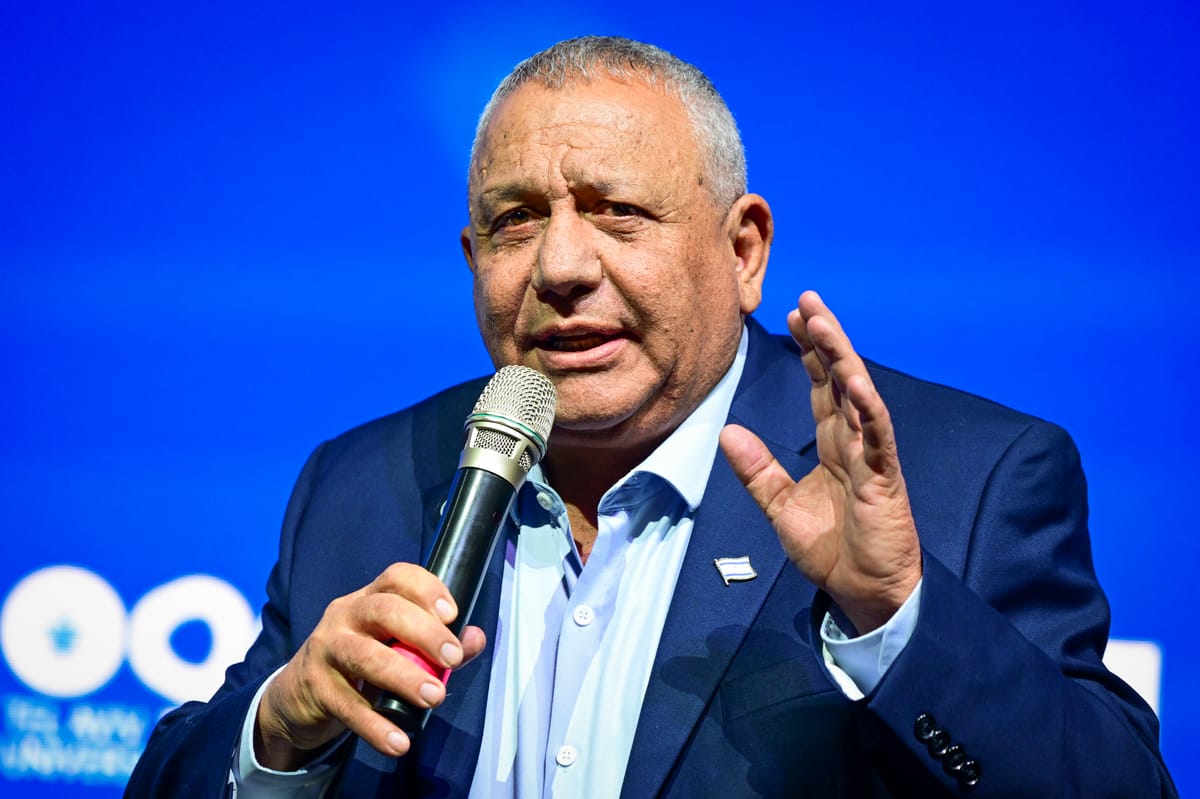
Former IDF Chief Eisenkot

Former IDF Chief of Staff Gadi Eisenkot said Friday that he bears some responsibility for Israel's preparedness ahead of the October 7 massacre, despite having left his military post five years before the Hamas attack occurred. Speaking publicly about the issue, Eisenkot identified specific decisions he now regrets, particularly regarding the placement of military installations near the Gaza border fence.

"The event happened five years after I left, and even so I asked myself what could I have done better?" Eisenkot said. He acknowledged shortcomings in defensive planning, noting that "I could have done better when I thought about our defensive posture, even though all the bases were built before my time, they're located right on the border line."

Eisenkot singled out the positioning of a division headquarters as a particular error. "The division headquarters is 900 meters from the fence, that's a mistake," he said. "And I can ask myself whether I could have seen this as a mistake and moved it back. My answer is yes."

When asked whether he could have authorized more special operations during his tenure as chief of staff, Eisenkot defended his record. "I say with full responsibility that the number of special operations carried out during my period in Gaza, Lebanon, Syria, Iran and many other places in the Middle East were unprecedented," he stated.

Eisenkot also addressed the possibility of further Israeli action against Iran and the relationship between the military and political leadership. He emphasized that as long as Israel has an elected government, the IDF is obligated to follow its decisions.


"The basic thing is that the IDF is subordinate to the elected political echelon in the State of Israel, and operates according to law," Eisenkot explained. "Therefore, when the government of Israel orders the IDF by vote according to law to act, it must act, unless it's a manifestly illegal order."

Beyond these remarks, Eisenkot leveled sharp criticism at Prime Minister Benjamin Netanyahu, claiming that personal considerations influenced decision-making during the period when Eisenkot served in the war cabinet. The war cabinet was a temporary body formed after October 7 that included opposition figures alongside Netanyahu's government.

"I saw this as a member of the war cabinet, and it was one of the reasons why Gantz and I decided to leave the government with very heavy hearts," Eisenkot said, referring to his departure alongside opposition leader Benny Gantz. According to Eisenkot, "We understood that Netanyahu's considerations are not the considerations of the State of Israel, they are not the considerations of national security."

Ready for more?

Join our newsletter to receive updates on new articles and exclusive content.

We respect your privacy and will never share your information.

Enjoyed this article?

Yes (31)
No (1)
Follow Us:

Unmissable content


Loading comments...

Also of Interest