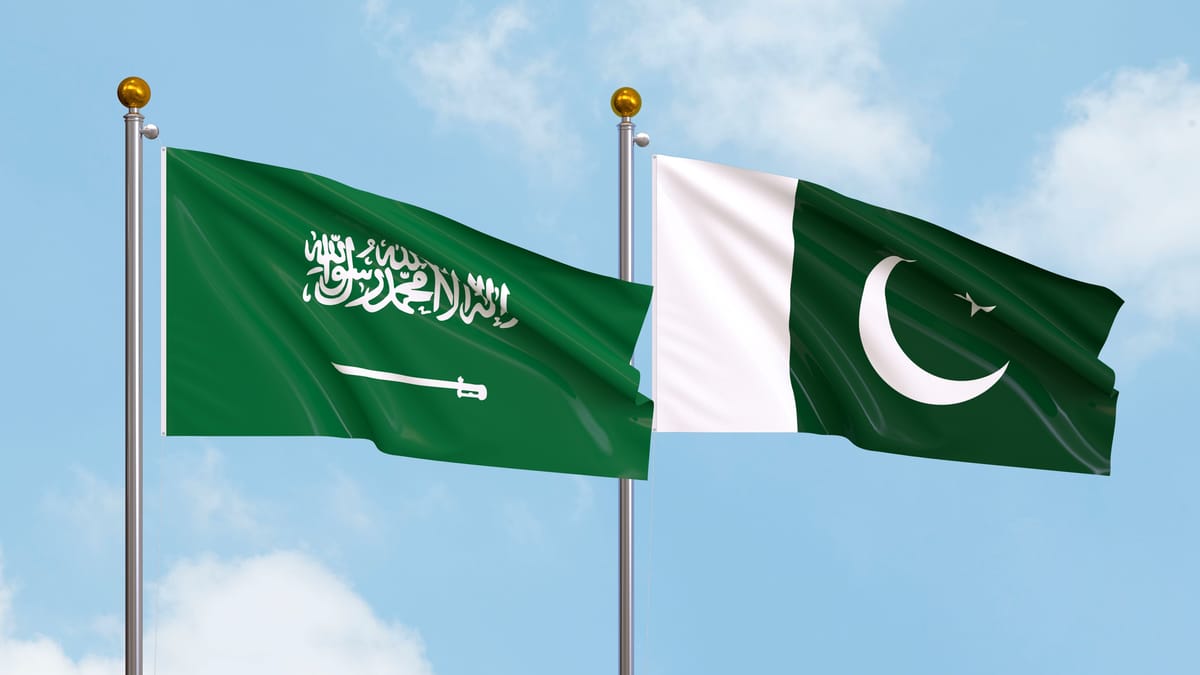
Saudi Arabia and nuclear-armed Pakistan signed a landmark Strategic Mutual Defense Agreement, pledging that any aggression against one nation will be considered an attack on both, formalizing decades of close security ties into a NATO-like commitment. The pact, inked during Pakistani Prime Minister Shehbaz Sharif's state visit to Riyadh, was celebrated with a ceremonial embrace between Sharif and Saudi Crown Prince Mohammed bin Salman, in the presence of Pakistan's army chief, Field Marshal Asim Munir.
"This agreement, which reflects the shared commitment of both nations to enhance their security and to achieving security and peace in the region and the world, aims to develop aspects of defense cooperation between the two countries and strengthen joint deterrence against any aggression," read a joint statement from both governments. Pakistan's Foreign Ministry confirmed the deal, emphasizing its roots in "bonds of brotherhood, Islamic solidarity, and shared strategic interests" dating back nearly eight decades to a 1951 Treaty of Friendship.
The timing has ignited speculation across the Middle East and South Asia. Signed just days after Israel's precision strike in Doha on September 9 targeting senior Hamas leaders, an operation that killed three commanders and prompted an emergency joint session of the Arab League and Organisation of Islamic Cooperation (OIC), the pact is viewed by analysts as Riyadh's signal of diversifying security alliances beyond the U.S. A senior Saudi official, speaking anonymously to Reuters, clarified it was "a culmination of years of discussions" not tied to specific events, but acknowledged the need to balance ties with Pakistan's rival, India. The agreement's scope, described as "comprehensive" and encompassing "all military means," has fueled questions about whether it extends to Pakistan's nuclear arsenal, though no explicit nuclear umbrella was mentioned.
In South Asia, India expressed measured concern. Ministry of External Affairs spokesperson Randhir Jaiswal stated New Delhi was aware of the discussions and would "study the implications" to "protect national interests," while noting no shift in Saudi-Indian ties, Riyadh remains India's third-largest oil supplier. The pact follows a tense May 2025 conflict between India and Pakistan, a four-day clash involving missiles, drones, and artillery that killed 70 and brought the nuclear rivals to the brink, tensions Saudi Arabia reportedly helped de-escalate. Pakistan's deepening defense links with Turkey, including warship and helicopter deals and joint exercises, further complicate the regional balance.
For Israel, the alignment raises stakes: India is a vital strategic partner in defense and technology, while Pakistan's bloc gains heft from Gulf influence. Saudi Defense Minister Prince Khalid bin Salman declared the nations "one front against any aggressor, always and forever," explaining the pact's deterrent posture.
Gulf states' wariness of U.S. guarantees, exacerbated by the Doha strike and U.S. sanctions on Pakistani missile programs under the Biden administration, underscores Riyadh's pivot. Qatar, meanwhile, nears its own enhanced U.S. defense pact, as announced by Secretary of State Marco Rubio. The agreement, building on historical Saudi funding of Pakistan's nuclear program, could reshape Eastern Mediterranean and South Asian dynamics, though experts like Michael Kugelman caution it may be more symbolic than operational.