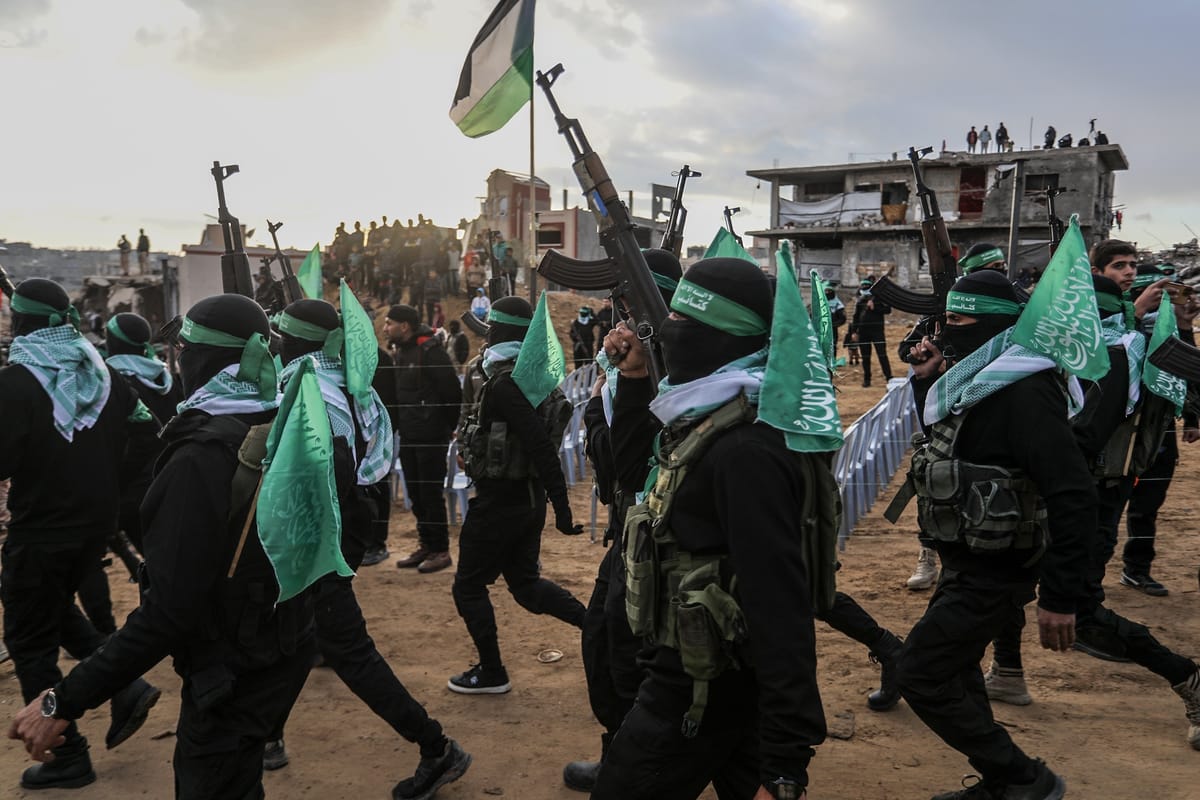
Just one week into the U.S.-brokered ceasefire that ended two years of devastating conflict in Gaza, Hamas is aggressively reestablishing its grip on the battered enclave, deploying armed forces, clashing with rivals, and executing suspected collaborators, signaling that while diminished, the group is far from eradicated.
Israeli security experts and officials estimate Hamas retains 10,000 to 25,000 fighters, down from pre-war levels but bolstered by potential new recruits fueled by widespread anger over the war's toll, which has claimed nearly 70,000 Palestinian lives according to health authorities.
Shalom Ben Hanan, a veteran of Israel's Shin Bet and fellow at the International Institute for Counter-Terrorism, noted that while Hamas's military capabilities have been "severely damaged," its potential for resurgence remains, particularly in recruitment amid the destruction.
Giora Eiland, former head of Israel's National Security Council, echoed this, estimating 20,000 fighters lost but emphasizing the ease of replenishing ranks with personal weapons like small arms and RPGs.
The group's vast tunnel network, believed to be 70-80% intact, continues to pose a major challenge, serving as a lifeline for operations and a target for ongoing Israeli efforts, including recent clashes where IDF soldiers came under fire during tunnel dismantlement.
An anonymous Israeli military official highlighted the destruction of up to 90% of Hamas's rockets and disruption of manufacturing and smuggling routes, but acknowledged the group's enduring underground infrastructure.
Politically, Hamas faces uncertainty: Its popularity has waned due to the war's humanitarian catastrophe, including famine in northern Gaza and accusations of genocide against Israel by a UN commission, yet it claims credit for shifting global opinion and maintains deep roots as Gaza's "authentic representative" since seizing power in 2007.
Ahmed Fouad Alkhatib of the Atlantic Council noted Hamas's lack of a compelling post-war agenda, but warned of its ability to suppress rivals through violence, as seen in recent killings of at least 33 people in crackdowns on crime and clans.
As negotiations stall over Hamas's refusal to disarm, a key ceasefire condition, Israeli Defense Minister Israel Katz has vowed to focus on tunnel destruction, while U.S. President Donald Trump warned that non-compliance could lead to the group's "eradication."
With Israeli forces partially withdrawn, Hamas's street patrols and public executions underscore its intent to reclaim authority, but experts like Eiland caution that true demilitarization remains elusive in a landscape scarred by conflict.