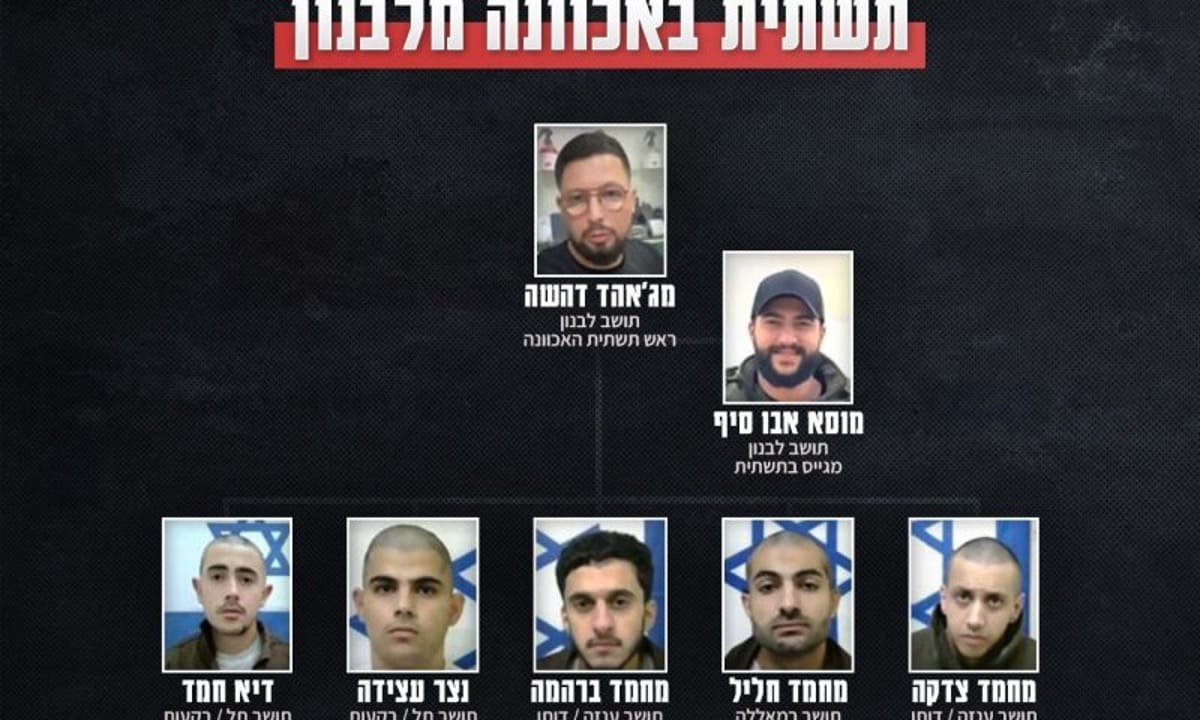
The Shin Bet (ISA) announced on Tuesday that it has dismantled a significant terror infrastructure in the Samaria region. The cell was being remotely operated by agents in Lebanon who instructed the terrorists to conduct reconnaissance and prepare for an imminent shooting attack.
The investigation revealed a complex web of recruitment that utilized social media and even gaming applications to link local Palestinian recruits with handlers abroad.
The Recruitment: From Lebanon to Samaria
The primary suspect, Muhammad Sadaqa, a resident of Anza in Samaria, was arrested in October after security forces suspected him of planning an attack. His interrogation opened a window into a massive recruitment effort:
- The Recruitment: Sadaqa traveled to Lebanon, where he was recruited by Musa Abu Saif (known as "Jibril"), a veteran terror operative.
- The Mission: Sadaqa was tasked with returning to Judea and Samaria to establish a military cell and carry out attacks.
- The Network: Upon his return via Jordan, Sadaqa recruited Muhammad Khalil (Ramallah) and Muhammad Brahma (Anza). Even after his return, he maintained constant contact with his Lebanese handlers through social media and messaging services hidden within online games.
A second, parallel cell was also uncovered involving two residents of the village of Tell: Diaa al-Din Hamad and Nasser Assida, both in their 20s.
According to the Shin Bet, these men were recruited by a Lebanese operative named "Mujahed." Under his direction, the two performed the following actions:
- Targeting: They were ordered to photograph and document a Jewish community in Samaria for an upcoming assault.
- Training: The pair conducted live-fire training sessions to ensure they were ready for the "moment of execution."
- Financing: The handlers had agreed to transfer funds to the cell for the purchase of high-grade weaponry.
The Mastermind: Mujahed Dehsha
Security officials identified the head of the entire infrastructure as Mujahed Dehsha, a Lebanese resident with deep ties to both Hamas and Hezbollah. Dehsha reportedly utilized various aliases, including "Abu Ahmad" and "Abu Wahid," to manage the cells and maintain operational security.
Indictments have been filed against all five residents involved in the plot. The Shin Bet issued a statement reaffirming its commitment to "thwarting any attempt to promote terrorist activity against the State of Israel and its citizens."