
Get our mobile app
Download on the App StoreGet it on Google Play

New findings in Flydubai attack

Terror pilot shut down engines mid-air

Italian investigation based on cockpit video and witness testimony uncovers dramatic new details: the Omani co-pilot not only forced the yoke forward in a steep dive, but appears to have cut fuel to both engines while the Boeing 737 was at altitude. 

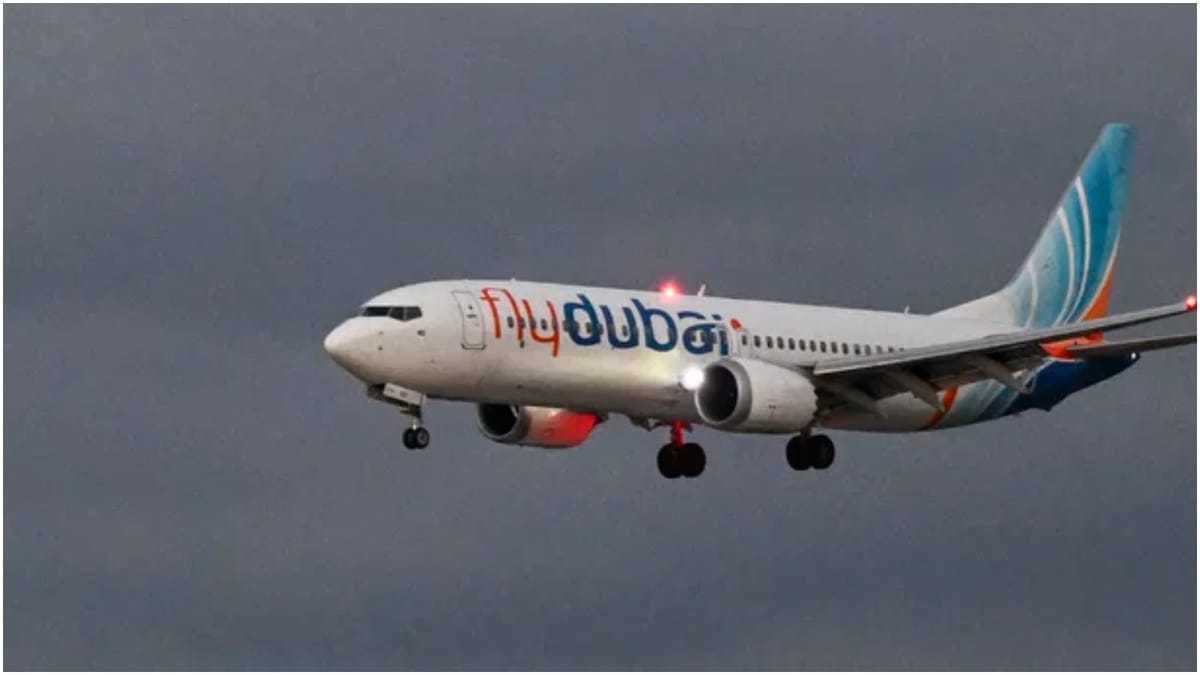
Flydubai Terror Pilot Shut Down Engines Mid-Flight, Italian Probe Reveals

A comprehensive investigation published by the Italian newspaper Corriere della Sera has uncovered dramatic new details about the attempted terror attack on the Flydubai flight from Dubai to Israel, revealing a previously unknown aspect of the incident: the terrorist co-pilot appears to have shut down the aircraft's engines entirely while the Boeing 737 was at high altitude.

The attack unfolded when Omani co-pilot stabbed the Indian captain and began forcing the aircraft into a dive toward the ground. The wounded captain managed to open the cockpit door, allowing four Israeli passengers, Yaniv Hayon, Dr. Shota Musayev, Zvika Manes, and Asaf Rejwan, to storm in and overpower the attacker. After realizing his initial plan to crash the aircraft had failed, the terrorist disconnected the autopilot, seized manual control, and shoved the yoke forward with full force, causing the plane to lose approximately sixteen thousand feet in under a minute.


Beyond the steep and dangerous dive, the Italian investigation reveals that two Boeing 737 captains who analyzed video footage from the passenger cabin concluded that the engines had been shut down. The experts identified that during the struggle to neutralize the attacker, the emergency lights in the cabin suddenly switched on.

According to the captains' explanation, on Boeing 737 aircraft the emergency lights activate as soon as the plane loses its primary electrical power source and switches to relying on emergency batteries. This can occur only when the generators stop functioning, which happens when the engines shut down.

This raises the central suspicion that will be examined in the official investigation: that the terrorist co-pilot deliberately moved the fuel supply switches to the engines from active to off position, causing them to shut down completely in mid-air.

Landing scenes at Ben Gurion Airport
Landing scenes at Ben Gurion Airport (Photo: Avshalom Sassoni/Flash90)

The newspaper's investigation draws on a wide range of evidence, including passenger statements, reports submitted to security authorities by the flight crew, testimony from airport workers and air traffic controllers, alongside analysis of various flight data.

Another significant detail revealed in the report details the sequence of emergency signal transmissions during the critical moments of the struggle. The initial emergency code, 7700, which indicates a general emergency without specifying the source, was transmitted by one of the pilots who rushed to the cockpit. Due to the general nature of the code, air traffic control did not immediately identify the nature of the developing threat.

Only after a full seven minutes was the emergency code changed to 7500, which signals pressure and genuine suspicion of a hijacking incident. By this time, tthe aircraft was already approaching Jordanian airspace, and air traffic controllers instructed it to turn around. Seven minutes later, the flight crew received instructions from air traffic control to proceed toward Tabuk for an emergency landing.

Ready for more?

Join our newsletter to receive updates on new articles and exclusive content.

We respect your privacy and will never share your information.

Enjoyed this article?

Yes
No
Follow Us:

Unmissable content


Loading comments...

Also of Interest