Get our mobile app
Download on the App StoreGet it on Google Play

Safe to fly?

Israel's aviation security: every layer

The near-disaster on last week's Fly Dubai flight offered a rare glimpse into the multi-layered security apparatus surrounding Israeli aviation (and showed what happens when one layer fails.)

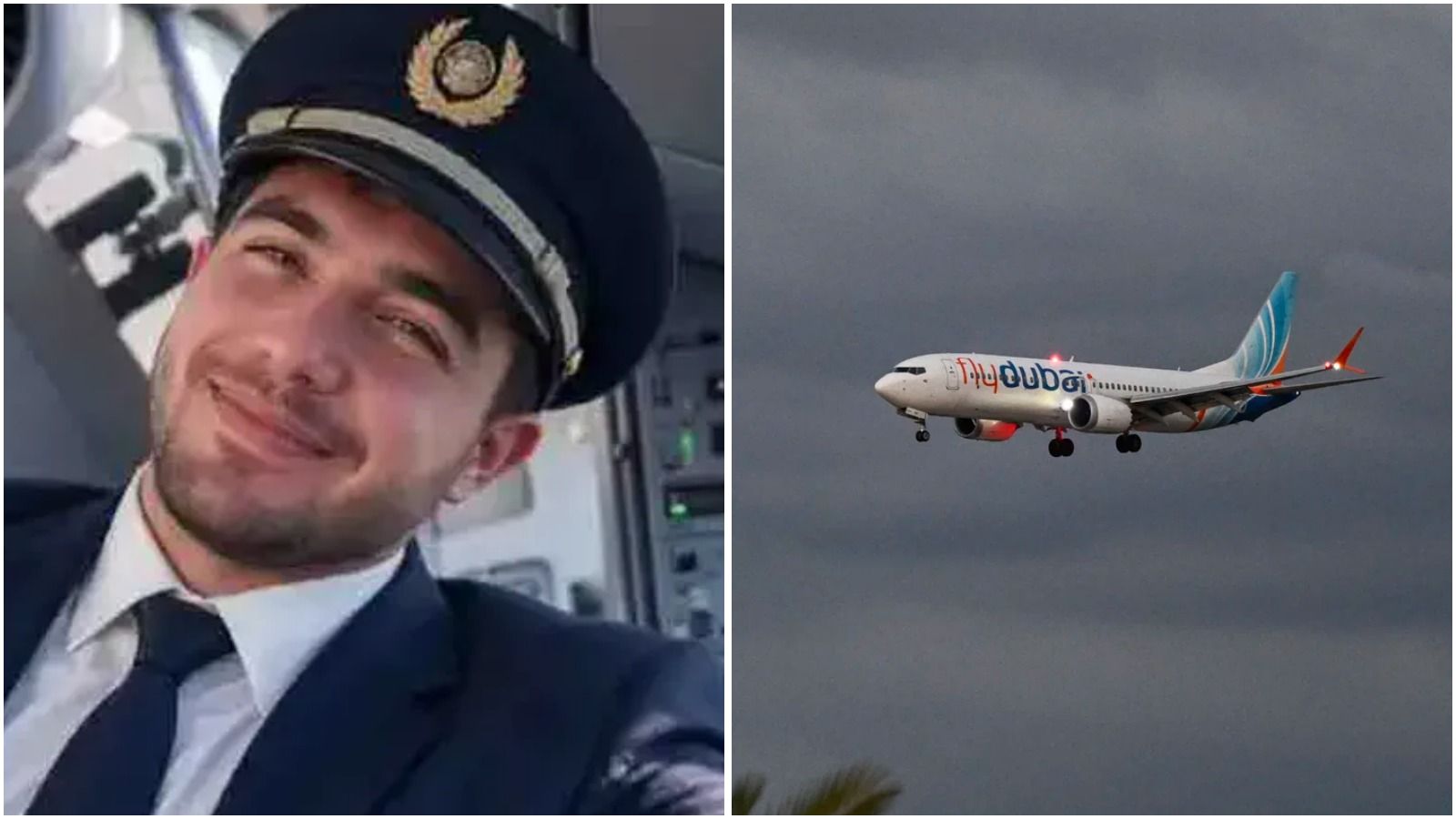
Passenger aircraft | Illustration

As the days pass, more details emerge about the dramatic incident aboard last week's Fly Dubai flight from Dubai to Israel, when the Omani co-pilot attacked the Indian captain, Smit Machchhar, with the emergency axe from the cockpit and sent the plane into a dive toward the ground.

The wounded captain managed to open the cockpit door, allowing four Israeli passengers, Yaniv Chiyon, Dr. Shota Musayev, Zvika Manes and Asaf Rejwan, to storm in and overpower the attacker.

The incident will be investigated in full, but the details already emerging offer a rare look at the comprehensive, multi-layered security apparatus protecting flights to and from Israel, designed to prevent exactly the kind of terror attack that nearly succeeded last week.

Photo: Avshalom Sassoni/Flash90

For the last century, Israel has suffered from the threat of aircraft attacks. Planes are a prized target for terror operations meant to create chaos and fear. An attack on a plane is considered extreme and terrifying because a plane holds many people who can all be harmed at once.

Technically, aircraft are highly vulnerable. They are very large and carry many people. They are easy to strike and easy to track, their location and destination are known.

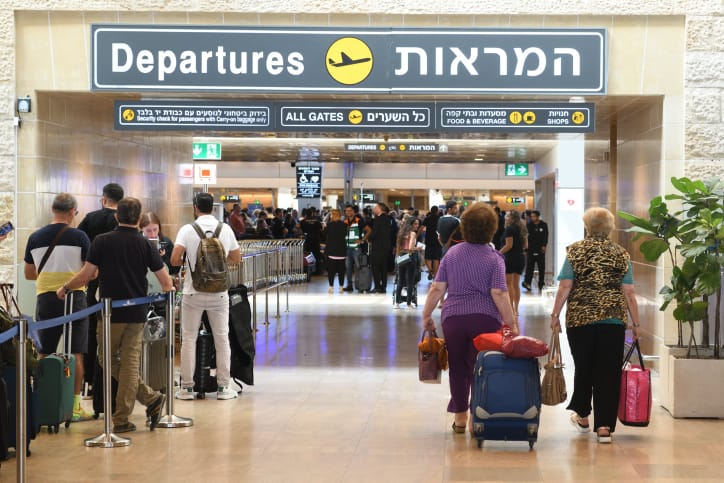
Israelis at Ben Gurion Airport
Israelis at Ben Gurion Airport (Photo: Gili Yaari/Flash90)

First security ring: the airports

Like any security system, aircraft security operates in several concentric rings. We are familiar with the security personnel at the airport, but the security apparatus actually begins much earlier.

First, there are the army and security forces outside the airport. These conduct checks designed to prevent threats of direct fire on aircraft from various weapons, or any other strike.

Beyond physical security, the Mossad operates to gather intelligence on terror organizations outside the country's borders that are planning attacks, hijackings or strikes on Israeli targets, including aviation targets, Israeli aircraft and flight routes.

When intelligence is picked up about an intention to strike a flight, a specific airport or a particular flight route abroad, the Mossad passes a focused warning to the relevant security bodies: to the Shin Bet security division (to update security guidelines, reinforce security or change inspection procedures in the field) and to the National Security Council (to consider issuing travel warnings or guidance to the general public).

In addition, the Mossad maintains channels of cooperation and intelligence sharing with intelligence organizations in various countries. In cases of a future threat to air routes or airports, the information is exchanged with the host countries to thwart the threat on their soil before it is carried out.

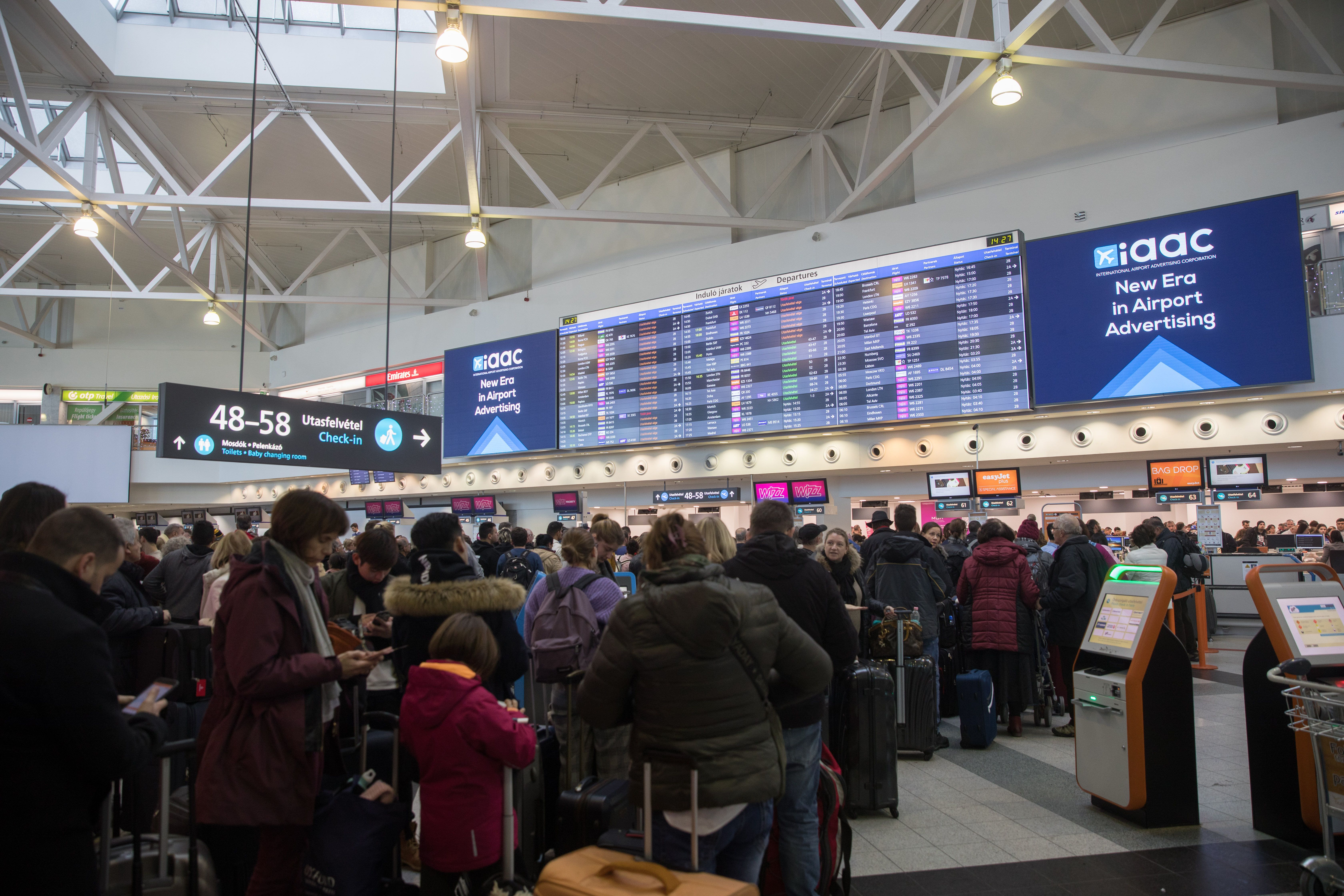
Airport. Illustration
Airport. Illustration (Photo: Nati Shohat/Flash90)

Second security ring: securing the aircraft on the ground

When a plane lands and is about to take off again, it becomes the focus of intense activity: refueling, cleaning, unloading and loading luggage, loading provisions, food and drink, and more. All this activity creates numerous risks in the form of workers and various objects approaching the aircraft. Dedicated security personnel prevent risks during these sensitive moments.

To maintain the security of the aircraft, there are various security personnel at the airport, visible and covert, who carry out different operations including surveillance, checking suspicious objects, and securing cargo.

Third security ring: passenger screening

This is the system that ensures that whoever boards the plane does so as an innocent passenger without any intention or even ability to cause harm. To this end, there is trained manpower and advanced equipment at every modern airport. The checks include searches for explosives or weapons and various dangerous materials. On the personal level, people who are suspicious for various reasons undergo in-depth interrogation that verifies their intentions.

The body that does this in practice is the Ofek Unit, which operates under the Shin Bet security division and is managed by entities connected to El Al. The unit's personnel operate at various airports around the world.

The Israeli security apparatus was established in 1972, after the massacre of Israelis at the Munich Olympics, when Israeli Prime Minister Golda Meir decided that the State of Israel must protect its assets abroad — aviation, shipping, buildings and institutions. An order that was set as Government Resolution 231.

The apparatus has changed over the years, grown greatly in scope of activity and manpower, and today provides security services not only to El Al but to all Israeli companies flying to Israel. (However, in recent years several lawsuits have been filed against El Al claiming interference with routine operations, but according to El Al, the unit operates based on Shin Bet guidelines, in accordance with government decisions.)

The Ofek Unit operates security inspectors whose role is twofold: checking passengers and cargo. Work in the passenger sector includes checking passengers and their luggage, supervising the aircraft during its time on the ground, and inspecting all entities that come into contact with it, such as: catering workers, porters, cleaners, technicians, etc.

Work in the cargo sector includes checking, using technological means, all commercial cargo loaded onto the aircraft, and is carried out in dedicated areas on the airport grounds.


Fly Dubai flight lands in Israel
Fly Dubai flight lands in Israel (Photo: Avshalom Sassoni/Flash90)

Fourth security ring: vetting the flight crew

The Security Division at the Ministry of Transportation is the regulator for foreign companies, and is supposed to enforce the parameters set with the companies. The Operations Center for Aviation Security (Mamlat), which sits under the Security Division, receives the list of aircraft entering Israel and crew members and is supposed to supervise them.

According to the existing procedure, every foreign company is supposed to submit the list of flight crews to the National Center for Passenger Profiling (Malan), a body located within the Tax Authority. However, the Mossad and Shin Bet have access to the list.

According to a law enacted in the Knesset, which divides the authorities, the Ministry of Transportation bears the central responsibility. In addition, according to a government decision made in August 2003, the Minister of Transportation is responsible for profiling and supervising civilian aircraft requesting to enter the country's airspace.

In practice, Mamlat is the security gateway for the three aviation entry routes to Israel. It is a dedicated operations room responsible for controlling procedures and security permits, and its role is to serve as a security coordination point between foreign airlines, the Airports Authority, the government and security bodies on an ongoing basis.

To streamline operations, a dedicated computer system was developed through Elbit Systems, unique of its kind in the entire world, whose purpose is to collect and process information from a variety of sources in Israel and abroad, in order to perform automatic analyses in real time. This system identifies and alerts about suspicious flights.

In addition, the Shin Bet, which is responsible for the security of Israeli companies, conveys through the Ministry of Transportation the security requirements to foreign airlines, with several requirements including a prohibition on assigning crew members and pilots from enemy countries or from countries that do not have diplomatic relations with Israel.

At the same time, if there is suspicion regarding certain crews, the Mossad becomes a partner in the inspection. The role of the Ministry of Transportation entities is to raise the suspicion and alert the Mossad.

Undercover sky marshal
Undercover sky marshal (Photo: Shutterstock)

Fifth security ring: security inside the aircraft

Security on the aircraft themselves is a sensitive and classified subject that also changes from flight to flight. Most of the security work is conducted covertly. The flight crew itself is trained to deal with various situations. There is also covert security that provides a response to hijacking threats by a single hijacker or a group.

According to a 1975 government decision, the Shin Bet places armed undercover security personnel (called "sky marshals") on every Israeli passenger aircraft. Previously, El Al planes had security personnel from the State Unit for Protection of Persons and Delegations.

Today the Ofek Unit operates covert operatives who join Israeli flights. Their role is to provide an immediate response to hijacking attempts, smuggling or harm to passengers and crew during the flight and while on the ground.

(For fans of the genre: these are the minimum fitness standards required to join as an aircraft security officer in the Ofek Unit: 3000-meter run, 13:00 minutes, pull-up - 6 repetitions with 15 kg, bench press - 6 repetitions with 70 kg, squat - 6 repetitions with 60 kg, and 300-meter run - 50 seconds.)

Ready for more?

Join our newsletter to receive updates on new articles and exclusive content.

We respect your privacy and will never share your information.

Enjoyed this article?

Yes
No
Follow Us:

Unmissable content


Loading comments...

Also of Interest