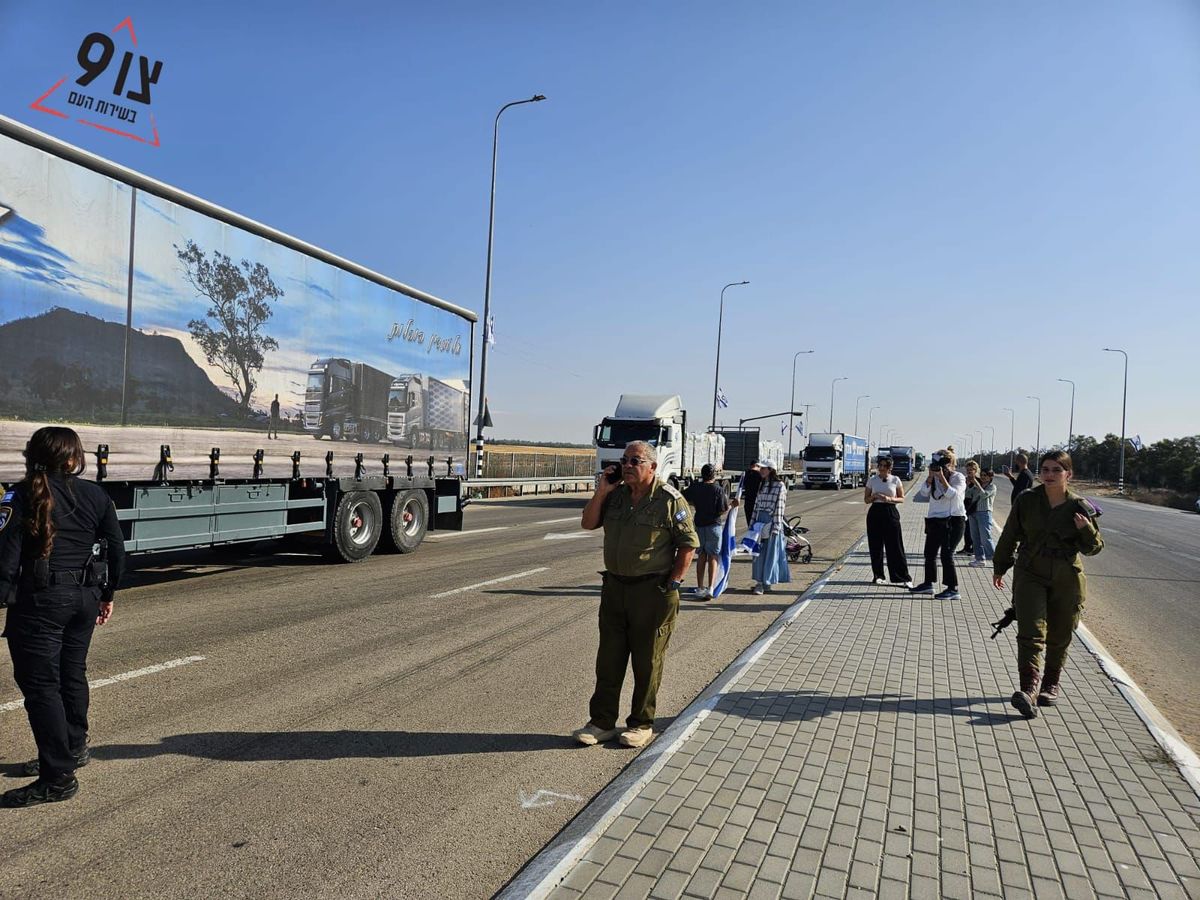
According to reports received by COGAT, Hamas security operatives on Tuesday arrested the son of one of the merchants and transferred him to Abbas Prison after the merchant refused to meet the organization's taxation demands. Following the arrest and fearing for their lives, the merchants announced they would cease coordination starting Wednesday.
Merchants report that Hamas is demanding payment of approximately 10,000 shekels, roughly $2,500, for each truck of goods entering the Strip. In addition, the terror group is requiring merchants to sell about 30% of the goods for cash. Both demands violate the commitment by approved merchants to conduct all transactions through bank transfers only. COGAT further reported that the taxation mechanism has been extended to secondary merchants and that Hamas intends to apply it to drinking water as well.
Levy said that responsibility for the consequences of the private sector's suspension lies with Hamas, and called on international actors to take immediate action to prevent the organization's interference in the aid and goods mechanism and its exploitation for economic and military strengthening. He also warned that Hamas will exploit the private-sector shutdown to spread false claims of goods shortages and Israeli non-compliance with the ceasefire agreement, in an attempt to shift blame to Israel while concealing its own direct responsibility for disrupting the flow of goods.
COGAT will continue to facilitate the regular coordination of humanitarian aid and supplies into Gaza through the UN, international organizations and donor countries, including equipment and provisions ahead of the winter season. According to COGAT's assessment, supported by professional reviews from the UN and other international experts, a volume of approximately 250 trucks per day through these channels provides an adequate response to the humanitarian needs of the population in the Strip.
The incident joins a series of cases in which Hamas has exploited aid mechanisms for terror purposes. In late August, an unusual smuggling operation was uncovered involving some 100 bottles of liquid nicotine hidden inside regular beverage bottles under the guise of a humanitarian aid shipment. COGAT ordered an immediate freeze on the authorization granted to the company to bring aid into the Strip.