
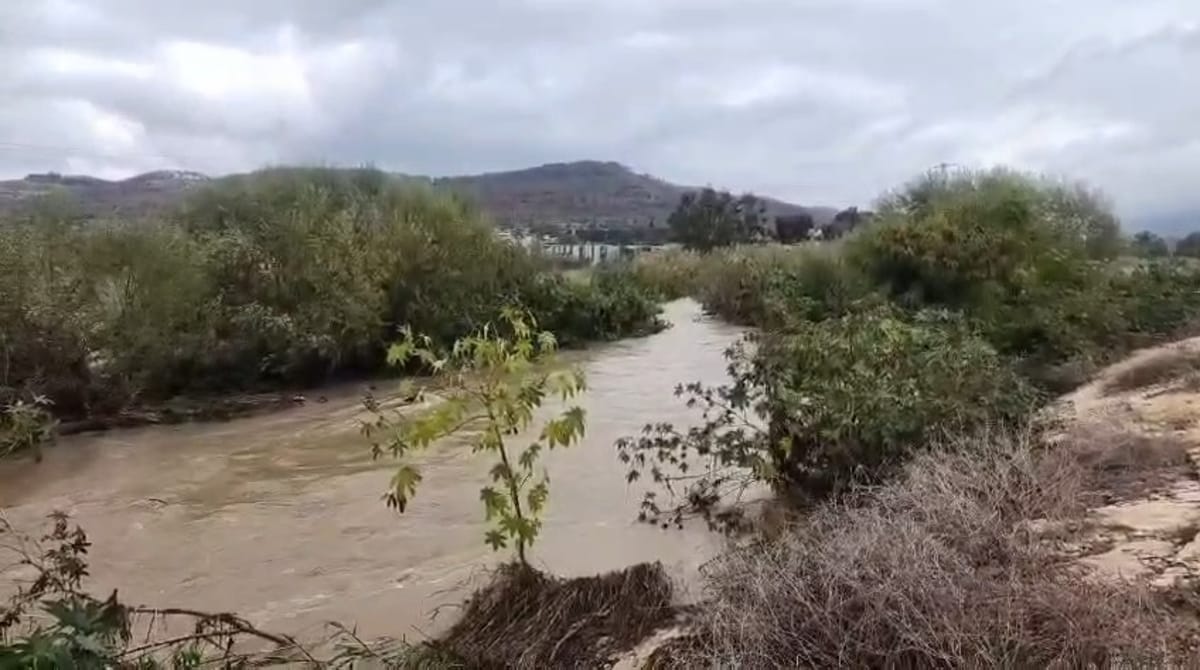
Israel’s Health Ministry and Environmental Protection Ministry warned the public on Thursday that entering several popular streams in the north may be dangerous, after water samples taken on October 20 showed bacteria levels above the Health Ministry’s safety threshold.
The warning covers the Jordan River from Yosef Bridge to Arik Bridge, the Hexagon Pool, Nahal Jilabun, Nahal Zaki, Nahal Yehudiya, Nahal Majrase, Nahal El Al, and the Carob Pool in Nahal Tzalmon.
The Health Ministry’s guideline allows up to 400 fecal coliform bacteria per 100 milliliters of water. Readings at several sites were more than double that level. The highest was at Lahavot HaBashan Bridge on the Jordan River, which measured 940, followed by the Hexagon Pool at 920 and Nahal Jilabun at 860.
Elsewhere along the Jordan River, samples measured 760 at Huri Bridge, 630 opposite Ateret, 600 at Yosef Bridge, 590 at Arik Bridge, 580 at HaHamisha Bridge and 550 at HaDodot Bridge. Readings at other sites included 700 at the Carob Pool in Nahal Tzalmon, 690 at Nahal Zaki, 540 at Nahal Yehudiya, 500 at Nahal Majrase and 420 at Nahal El Al.
The ministries said entering the water at these sites may be dangerous until test results return to normal and remain stable. The Environmental Protection Ministry said it has not identified a known source of the contamination.
Health officials said exposure to contaminated water can cause infectious diseases, with children, the elderly and people with weakened immune systems at greatest risk.
Nature and Parks Authority inspectors sample the water every two weeks at fixed points in the Upper Galilee, Golan Heights and Western Galilee, including waterfalls, pools and stream sections. The ministries said they are continuing to sample and monitor the sites and will update the public as needed.
The warning is the latest in a series this year. In August, samples at the Hexagon Pool reached 3,400 fecal coliform per 100 milliliters. In early September, readings there measured 3,100.