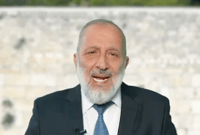
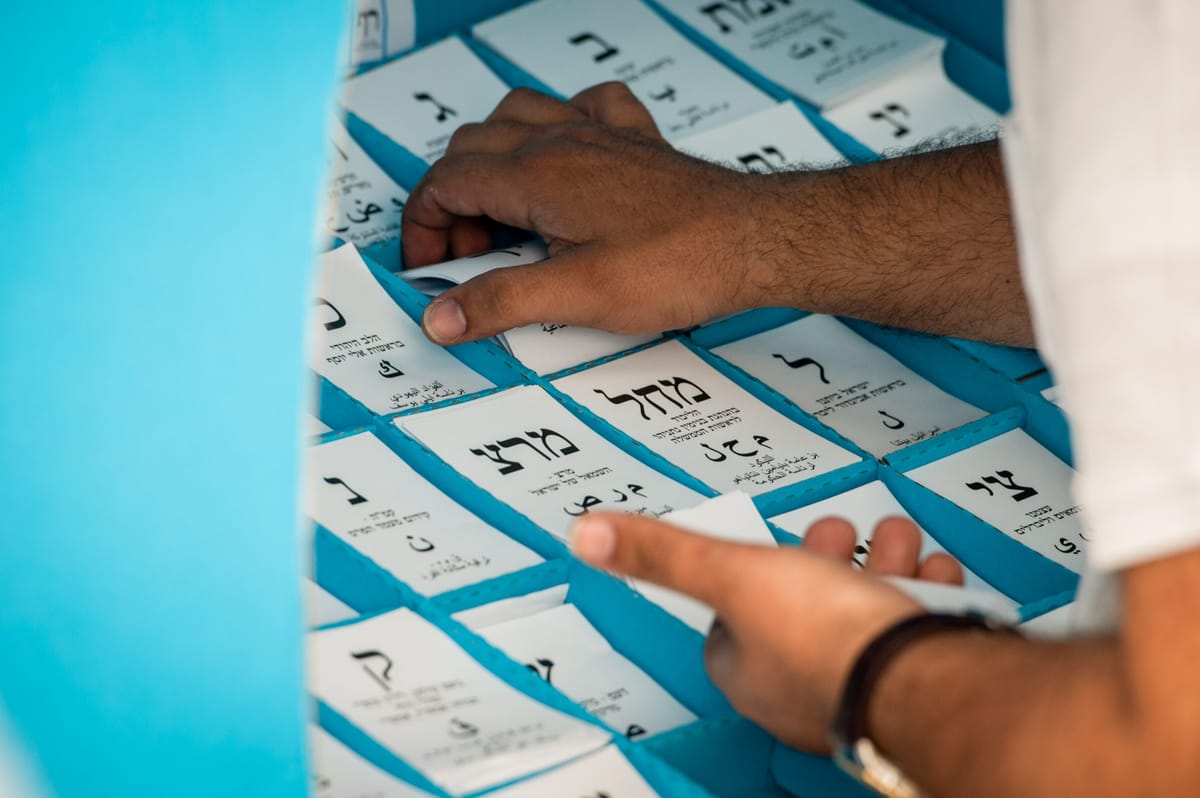
The outcome of Israel’s October 27 election may hinge less on the major parties than on the handful of small ones fighting to cross the electoral threshold, according to Dr. Menachem Lazar, director of the Lazar Research Institute.
Speaking Thursday morning with hosts Anat Davidov and Nissim Mishal on 103FM radio, Lazar pointed to the volatility of recent polling for parties near the 3.25% threshold, the equivalent of roughly four Knesset seats.
“Yesterday there were two polls. In one, Ofer Winter’s party passed, and in the other it didn’t,” he said. “The day before, it didn’t pass while the Reservists-Economic party did. So everything depends on the small parties.”
Winter, a former IDF general, heads the right-wing Amcha Israel party. The Reservists-Economic party is led by Yoaz Hendel and Yaron Zelekha. Both have hovered near the threshold throughout the campaign. Any party that falls short wins no seats, and its votes are lost to its bloc.
Lazar said voters leaning toward small parties tend to decide late. “People who intend to vote for a small party deliberate about it until the very end,” he said. He added that a high turnout would make the threshold even harder to reach, since it raises the number of votes a party needs to clear it.
Asked whether Israel is headed for another round of elections, he said the current seat projections point to no clear decision between the blocs. Even so, he said a repeat election is unlikely, because no politician in the system wants to drag the country back to the polls.
He also addressed the recent rise of Naftali Bennett’s Beyachad party. The trend “could very well continue,” he said, but described it as “mainly games within the bloc” that barely affect the overall balance between the two camps.
Under Israel’s election silence law, no polls may be published after Friday until voting ends at 10 p.m. on election day.