
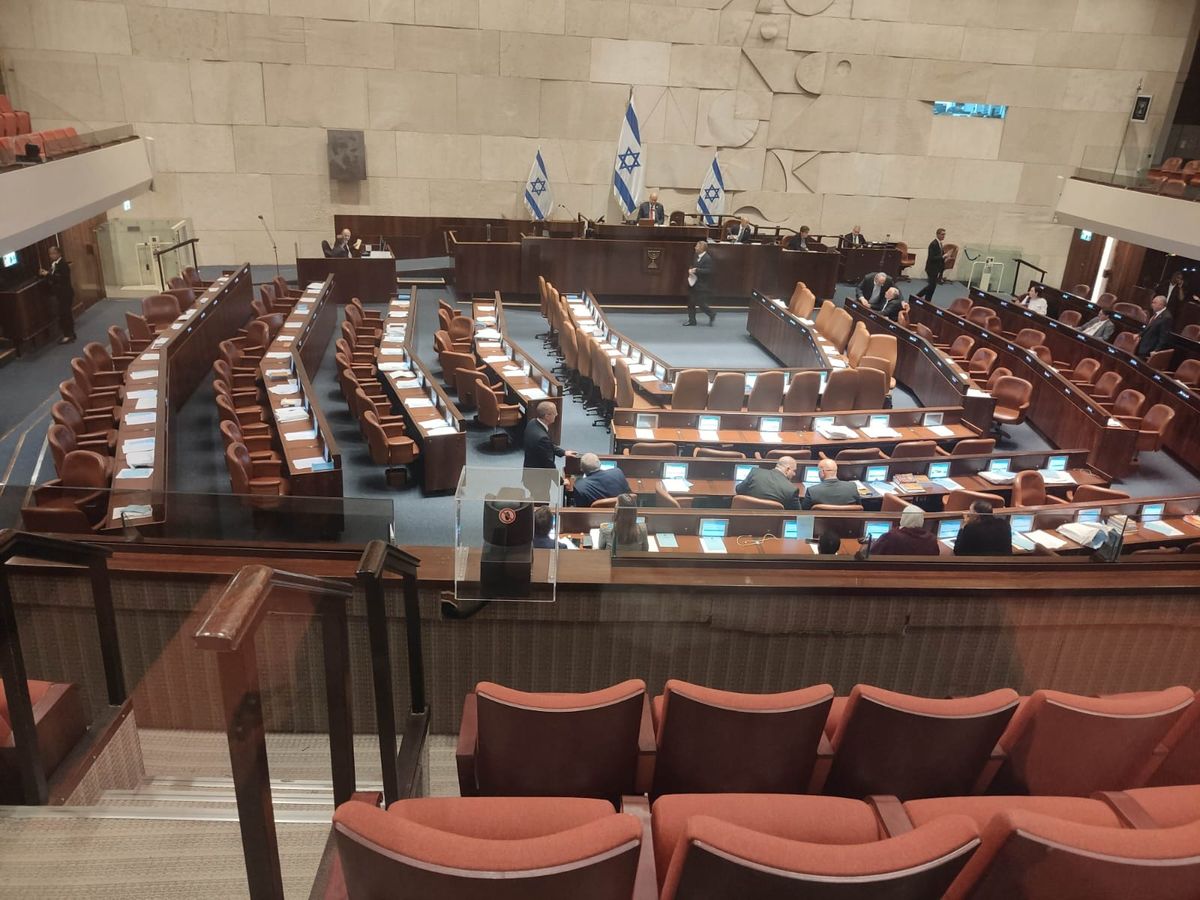
With Israel heading to the polls, one right-wing think tank is not waiting for the results to decide what the next government should do. The Yechin Center for National Strategic Studies has drafted a 60-page blueprint intended to serve as the basis for the coalition agreements that follow the election. The document covers education, the judiciary, security, governance and Jewish identity, and its ambitions are broad.
This is not the work of an outsider knocking on the door. The institute already had a hand in Education Minister Yoav Kisch’s education reform and in legislation that advanced through the current Knesset. It now hopes to anchor its ideas in the founding documents of the next coalition, and has made them specific: legislative amendments, government decisions, procedural changes and timelines for carrying them out.
Education is where the proposals reach furthest. First on the list is a new committee for the humanities that would replace the Shenhar and Kremnitzer committees, whose recommendations have long shaped how Israeli schools teach Jewish and civic studies, and redefine what a graduate of the system should look like. The institute also calls for freezing the “flexible bagrut” matriculation framework for four to five years while the results of earlier reforms are examined, and for overhauling how curricula and textbooks are supervised.
The center’s influence on the classroom predates this document. During the current term, it was linked to Kisch’s “Shorashim” (Roots) reform, which aimed to strengthen Jewish and Zionist identity in schools. The program reinforced Tanach studies, restored homeland studies as a required subject, expanded funding for identity content and invested in teacher training. When the reform was unveiled, the institute noted that it tracked recommendations from its own research into the erosion of Tanach and homeland studies, and described it as a case of research becoming policy.
Its fingerprints are visible in the Knesset as well. The institute provided professional guidance on the arbitration law for religious courts, which passed in March 2026, and submitted a position paper on the amendment governing child support in rabbinical courts, which passed in November 2025. Its researchers helped draft MK Galit Distel-Atbaryan’s bill to protect expressions of Judaism in the public sphere, which won the backing of the Ministerial Committee for Legislation. The institute has also taken up questions of Knesset authority and its legal advisers, oversight of transfers from the National Insurance Institute, and the judiciary’s influence on security policy.
The new booklet gathers these threads into a single agenda for the next government. Among its further recommendations: reshaping the “spirit of the IDF,” the military’s code of values; limiting the High Court of Justice’s reach on security matters; amending the Law of Return; and expanding Jewish identity studies in schools.