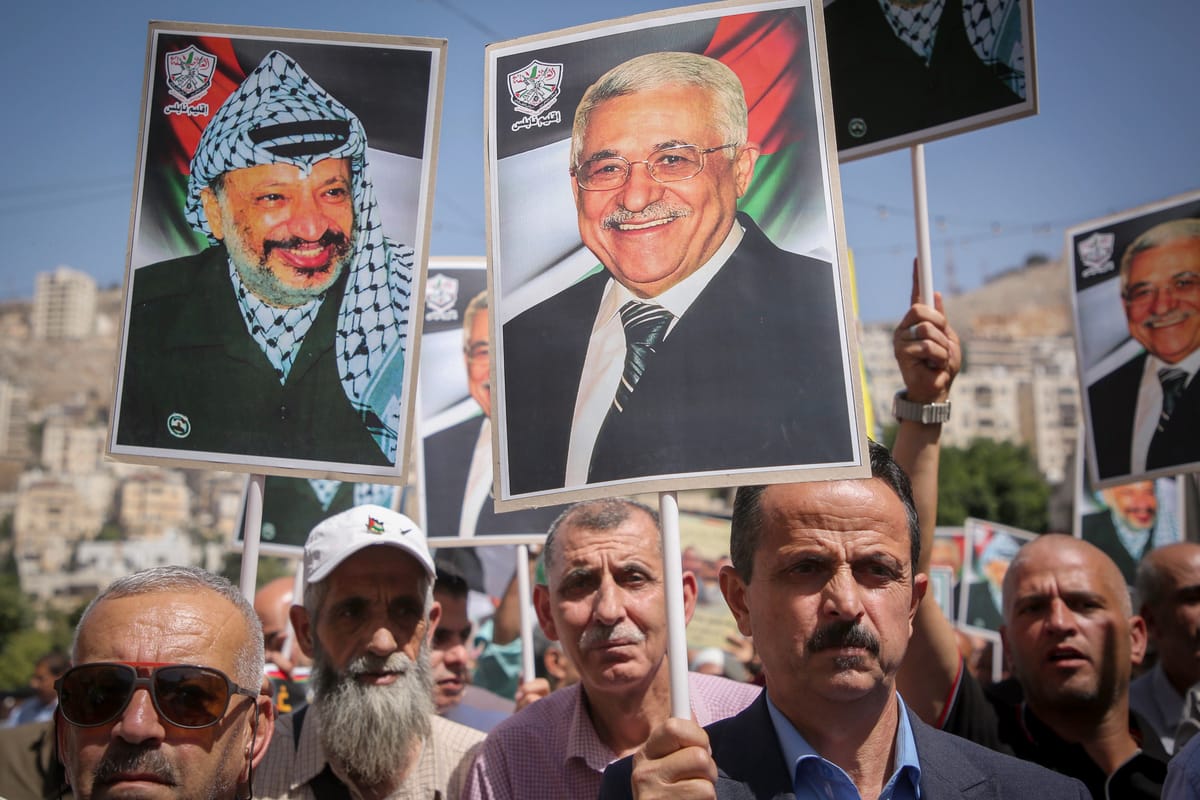
The Palestinian Authority (PA) has escalated calls for reparations from the United Kingdom following Prime Minister Keir Starmer's recent recognition of a Palestinian state. While the PA, led by President Mahmoud Abbas, has long invoked Britain's historical role in the region, the move has amplified demands that could total up to £2 trillion (approximately $2.7 trillion USD), a figure equivalent to the UK's entire annual economy.
The controversy erupted after Starmer announced the UK's recognition of Palestine on September 15, 2025, in coordination with Australia and Canada, ahead of the UN General Assembly. This symbolic step, aimed at advancing a two-state solution amid the ongoing Gaza crisis, has been criticized by opponents as premature and potentially rewarding Hamas's October 7, 2023, attacks.
Pro-Israel advocates, including UK Shadow Justice Secretary Robert Jenrick, labeled it "Chagos 2.0," referencing the recent handover of the Chagos Islands to Mauritius, which could cost UK taxpayers £35 billion in long-term leasing fees.
Abbas, speaking at the UN last year and reiterated in recent statements, has demanded "reparations in accordance with international law" for Britain's administration of Palestine under the 1917-1948 Mandate period.
This era included the Balfour Declaration, which supported a Jewish homeland and is blamed by Palestinians for displacing Arab populations during the 1948 Nakba. Legal experts cited in reports estimate the claim could start at £2 trillion, based on the modern value of land and resources "taken from the Palestinian people" post-World War II. The campaign group "Britain Owes Palestine" has echoed this, calling for an apology for alleged "war crimes" and the initiation of accountability processes, though without specifying an exact amount.
However, fact-checks clarify that no formal, quantified demand of precisely £2 trillion has been issued by the PA itself. Abbas's September 2023 UN speech sought reparations from Britain, the US, and others involved in "the catastrophe and tragedy" of Palestinians, but attached no dollar figure. Social media claims exaggerating this as an immediate "demand" for $2 trillion have gone viral, amassing millions of views, but stem from speculative analyses rather than official PA filings.
The UK government has dismissed the notion of payments, with Foreign Secretary David Lammy stating the recognition is purely symbolic and does not imply financial liability. Jenrick added that "not a penny of taxpayer money should be spent on so-called reparations," calling the claims "ahistorical nonsense."
The row has deepened political divides. Reform UK leader Nigel Farage decried the recognition as a "mistake," while Labour MPs sympathetic to the cause urge stronger action against Israel. Internationally, it aligns with a wave of recognitions, Spain, Ireland, Norway, and others in 2024, prompting similar scrutiny. Hamas has hailed these moves as "fruits of October 7," while Israeli officials warn of emboldening terrorism.
As the UK navigates this fallout, experts predict prolonged legal battles at bodies like the International Court of Justice, potentially setting precedents for colonial-era claims. For now, the £2 trillion specter remains a rhetorical flashpoint rather than an enforceable bill, but it underscores the high stakes of revisiting imperial history in a post-recognition era.