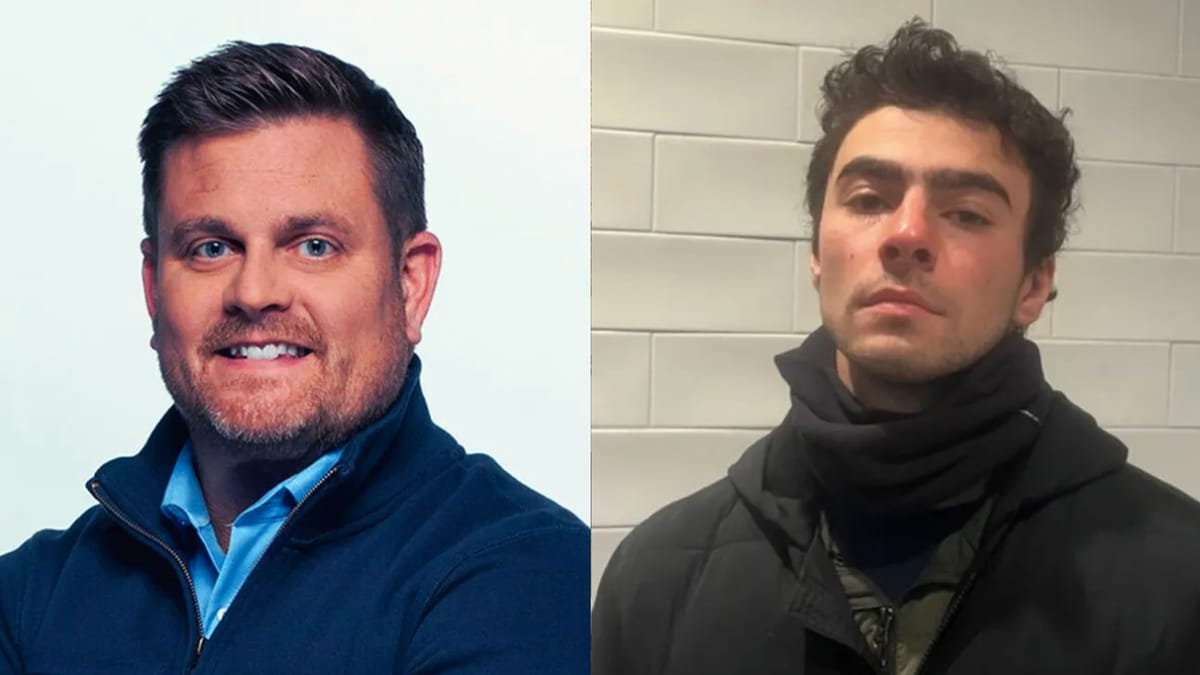
Federal prosecutors are vigorously opposing attempts by defense lawyers to remove the death penalty as an option for Luigi Mangione, the accused assassin of UnitedHealthcare CEO Brian Thompson. The Justice Department filed a massive 144-page brief last Friday, arguing that Mangione’s legal maneuvers to derail the capital case are legally unfounded and challenge decades of established precedent.
Mangione is charged at both state and federal levels for the alleged December 4, 2024, assassination of Thompson, 50, as the CEO walked toward an investor conference. While state charges in Pennsylvania, tied to the fake ID and illegal handgun found when Mangione was arrested at a McDonald's in Altoona, do not carry a capital sentence, only the federal case exposes him to the death penalty.
Defense Claims "Constitutional Crisis"
The Justice Department filing, led by Assistant U.S. Attorney Sean Buckley, directly challenged a series of defense motions aimed at dismissing the federal indictment, suppressing key evidence, and blocking prosecutors from seeking capital punishment.
The defense had previously filed motions in September and October attacking the Department of Justice's notice of intent to seek the death penalty, alleging significant constitutional violations. Prosecutors countered that these arguments were "premature," "speculative," and "unsupported by evidence."
Buckley firmly asserted that long-standing precedent grants the DOJ full authority to pursue capital punishment in a murder-through-firearm prosecution, and accused the defense of improperly attempting to reframe standard legal procedure as a "constitutional crisis."
Media Coverage and Evidence Suppression
The defense also raised concerns that the case’s extensive media coverage would prevent Mangione from receiving a fair trial. Buckley rejected this claim, writing that "publicity, even intense, is not novel in this district," and pointed to standard safeguards available to the court, such as written juror questionnaires, individualized voir dire, and witness sequestration, as adequate protection.
Separately, Mangione’s lawyers are attempting to suppress critical evidence, including documents seized from his backpack during his arrest and statements he made before he was given a Miranda warning. The defense argues that the police unlawfully interrogated him and conducted a search without a warrant.
Prosecutors countered by asserting that the arresting officers had legitimate safety concerns, including the possibility that the bag contained a bomb. They argue the search was justified as an inventory search or as incident to the arrest.
Although a New York state judge previously dismissed the domestic-terrorism charge against Mangione, the federal capital case before Judge Margaret Garnett remains intact. Garnett has not yet ruled on the flurry of new defense motions, although she has granted Mangione's request to appear in civilian clothing at Monday’s hearing.