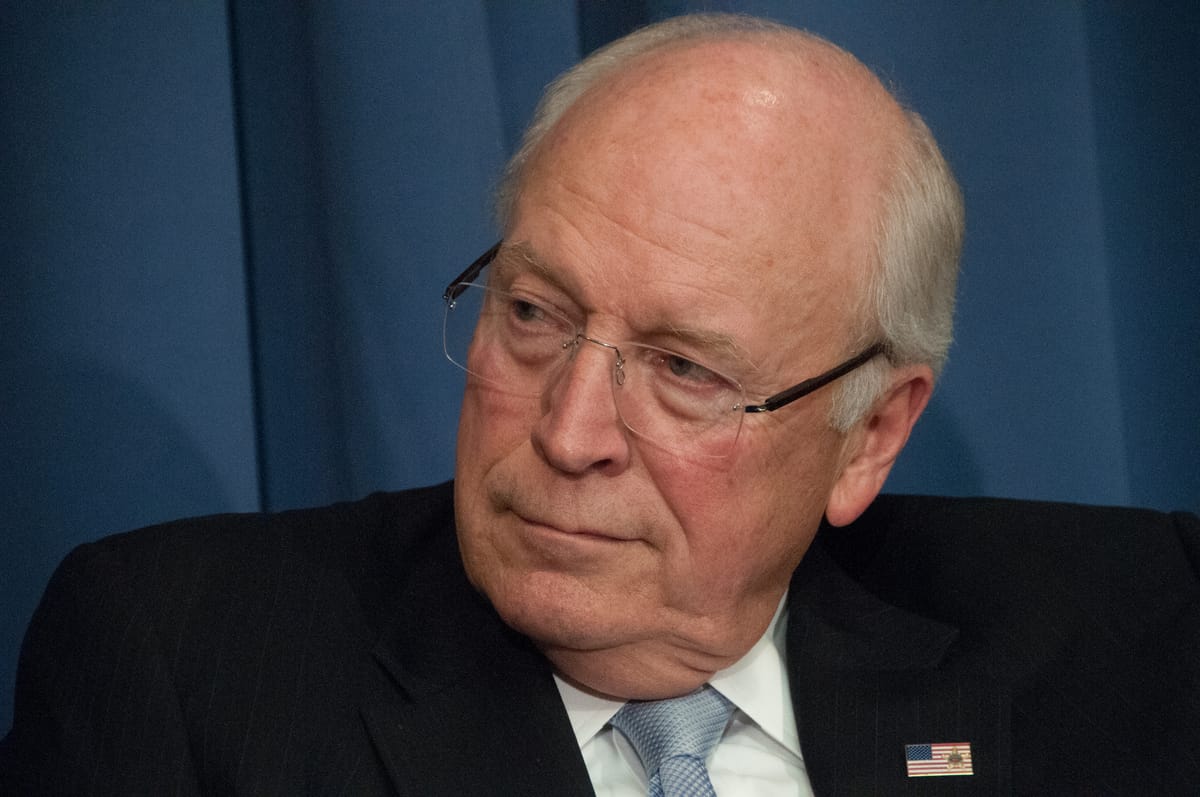
Richard B. "Dick" Cheney, the influential vice president who shaped America's aggressive response to 9/11 and became a lightning rod for debates over war, power, and partisanship, died late Sunday night at age 84, his family announced Tuesday. The cause was complications from pneumonia and longstanding cardiac and vascular disease, according to a statement from his wife of 61 years, Lynne, and daughters Liz and Mary.
"Dick Cheney was a great and good man who taught his children and grandchildren to love our country, and to live lives of courage, honor, love, kindness, and fly fishing," the family said. "We are grateful beyond measure for all Dick Cheney did for our country. And we are blessed beyond measure to have loved and been loved by this noble giant of a man."
A Life of Power and Controversy
Born January 30, 1941, in Lincoln, Nebraska, and raised in Casper, Wyoming, Cheney met his future wife, Lynne Vincent, in high school. A Yale dropout who worked power lines and faced two DUI arrests in his youth, he credited her ultimatum, "she wasn’t interested in marrying a lineman for the county," for spurring his turnaround. He earned degrees in political science from the University of Wyoming, married Lynne in 1964, and dove into Washington as an aide to President Richard Nixon.
Cheney's ascent was meteoric: White House chief of staff under Gerald Ford, six-term Wyoming congressman (rising to House minority whip), and defense secretary under George H.W. Bush, where he orchestrated the 1989 Panama invasion and 1991's Operation Desert Storm to liberate Kuwait. After a lucrative stint as Halliburton CEO during Bill Clinton's presidency, he was tapped by George W. Bush to vet VP candidates, only to end up on the ticket himself after the disputed 2000 election.
As VP, Cheney thrived in the shadows, leading Bush's energy task force (sparking a Supreme Court battle over secrecy) and advocating expansive executive powers, which he believed had been eroded post-Vietnam and Watergate. His hawkish worldview crystallized on September 11, 2001, when, from a White House bunker while Bush was in Florida, he directed the crisis response, including the order to shoot down any hijacked planes threatening D.C. landmarks.
"That moment, you knew this was a deliberate act. This was a terrorist act," Cheney later recalled in a 2002 CNN interview. It ignited his push for pre-emptive war, regime change, and a "neo-conservative doctrine" to reshape the Middle East.
Plagued by heart issues since his first attack at 37 in 1978, followed by three more in the 1980s and one in 2000, Cheney underwent a transplant in 2012, calling it "the gift of life itself" in a 2014 interview. He attended Barack Obama's 2009 inauguration in a wheelchair after a fifth attack in 2010 and relied on a heart pump in between.
In retirement, Cheney penned memoirs on his career and health battles, co-authored a book with Liz, and remained a vocal Obama critic. But his feud with Trump, initially endorsing him in 2016, exploded after January 6, 2021.
In his later years, the hardline conservative found himself at odds with his own party, endorsing Democrat Kamala Harris in 2024. This was after he appeared in a stunning 2022 ad for Liz's reelection (which she lost in a Trump-backed primary), Cheney stared into the camera: "In our nation’s 246-year history, there has never been an individual who is a greater threat to our republic than Donald Trump. He is a coward."
That stance led to his 2024 Harris endorsement, prioritizing "country above partisanship." Returning to the Capitol on January 6's anniversary, he shook hands with Democrats, hugged Nancy Pelosi, and lamented his party's drift: "It’s not leadership that resembles any of the folks I knew."
Cheney is survived by Lynne, daughters Liz (former Rep. R-WY) and Mary, and seven grandchildren.
Cheney's death marks the end of an era for a figure who wielded unprecedented influence as the 46th vice president under George W. Bush from 2001 to 2009. Often dubbed the most powerful VP in U.S. history, he was a sardonic Wyoming native who rose from congressional aide to corporate titan at Halliburton before guiding the nation through its most traumatic modern conflict.
Tributes poured in Tuesday, from Bush ("a patriot who served with unmatched dedication") to bipartisan figures reflecting on his indelible mark.
As one analyst put it, Cheney didn't just influence history, he bent it, for better or worse.