
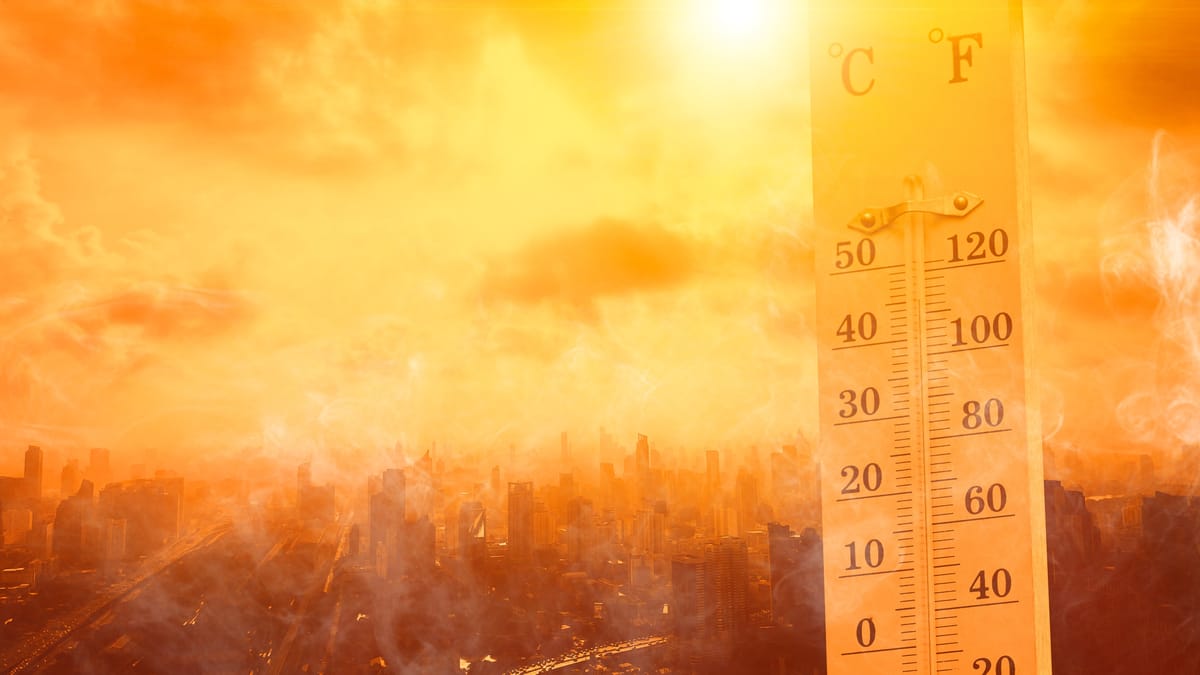
Too Hot European Summer

Global Warming Effect Spreading In Europe at Double Rate

A deadly June heatwave with over 1,300 deaths across Europe Forcing climate scientists to determine it's A human-induced global warming Direct result 

Heatwave

A catastrophic heatwave has left a trail of destruction across Europe, claiming more than 1,300 lives within just a few days.

France was hit hardest, reporting approximately 1,000 heat-related fatalities in a three-day window, while Spain recorded hundreds of additional casualties.

According to the World Health Organization (WHO), around 150 million people are currently living under extreme heat warnings, making Europe the fastest-warming continent on the planet, heating up at twice the global average.

A definitive study by the World Weather Attribution group confirmed that this extreme event would have been "virtually impossible" in previous decades without climate change. Driven by greenhouse gas emissions, extreme daytime temperatures are now ten times more frequent than at the start of the 21st century.

Even more alarming, dangerously hot nights, which prevent the human body from recovering, have become a hundred times more common, with June temperatures in Western Europe rising at triple the global average rate.


Silhouette of a man drinking water during heat wave
Silhouette of a man drinking water during heat wave (Photo: Shutterstock / Marc Bruxelle)

Infrastructure Under Fire

The climate crisis is also devastating European infrastructure, pushing energy systems to a decades-long peak due to air conditioning demands.

In France, crucial nuclear power production was severely disrupted because rivers became too warm to cool the reactors, forcing output cuts and driving up electricity prices.

June temperature records were shattered in Germany, Belgium, and the Netherlands, while the United Kingdom issued its highest-level emergency warnings for the first time.

Scientists caution that at the current 1.4°C of global warming, humanity is reaching its coping limits, proving that the rapid reduction of fossil fuels is no longer a distant goal, but an immediate necessity.

Ready for more?

Join our newsletter to receive updates on new articles and exclusive content.

We respect your privacy and will never share your information.

Enjoyed this article?

Yes (24)
No (1)
Follow Us:

Unmissable content


Loading comments...

Also of Interest