G7 leaders meeting at the Alpine resort town of Evian released a joint statement Wednesday that touched on the U.S.-Iran deal, the Strait of Hormuz, Lebanon, and Gaza, and buried in the diplomatic language were several points worth unpacking for Israel.
Here is what stood out.
On the Iran Nuclear Deal
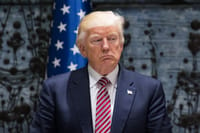
The statement praised the agreement reached under Trump's leadership, calling it a "historic opportunity" to prevent Iran from acquiring nuclear weapons. Critically, the G7 leaders went beyond the deal itself, explicitly flagging the need to address Iran's ballistic missile program and regional proxy activity, two issues conspicuously absent from the U.S.-Iran memorandum of understanding. The statement reaffirmed the consistent Western position: Iran must never acquire a nuclear weapon, and called for IAEA involvement in verifying compliance.
On the Strait of Hormuz
The deal is scheduled to be formally signed Friday in Switzerland, and the G7 backed a French-British-led multinational naval initiative to protect commercial shipping through the strait and verify the removal of mines. Notably, the leaders explicitly rejected any Iranian tolls or fees on passage, pushing back on Iranian claims that a tariff would be imposed after 60 days.
The statement also included an unusual pledge to accelerate energy supply diversification to reduce global dependence on the strait, specifically welcoming Canada's potential to add significant export capacity, a pointed message about what the past months of Iranian chokehold on global energy markets cost the West.
On Lebanon
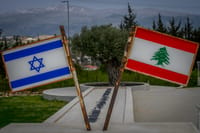
The G7 statement was more direct on Lebanon than on almost any other issue. Leaders called for an "immediate robust ceasefire" and the full disarmament of Hezbollah, alongside a Lebanese government monopoly on weapons backed by international security guarantees. Notably, however, the statement made no demand for an Israeli withdrawal, despite Iran's insistence that any permanent deal must include one. Israel has flatly rejected withdrawal, and the G7's silence on the question gives Jerusalem meaningful diplomatic cover.
On Gaza and Judea and Samaria
Leaders called for accelerating humanitarian efforts and reconstruction in Gaza, and called for an end to violence in Judea and Samaria. No explicit ceasefire demand on Gaza was included in the language reviewed.
The Broader Context
Israel has not signed on to the U.S.-Iran deal, and Trump has raised concerns that Netanyahu is going too far and hurting his efforts to reach peace, with Trump warning that "Israel would not exist right now" if not for him. The G7 statement, while endorsing the deal and calling for a "robust and comprehensive diplomatic agreement," stopped short of pressuring Israel directly, a distinction Jerusalem will not have missed.
The full text of the deal's memorandum of understanding has not yet been made public. Some reporst idnicate that the details of the MOU will never be made public.